
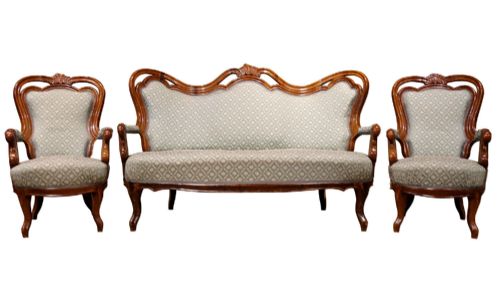
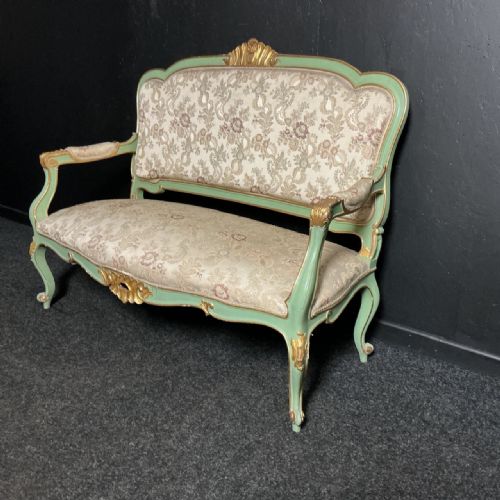
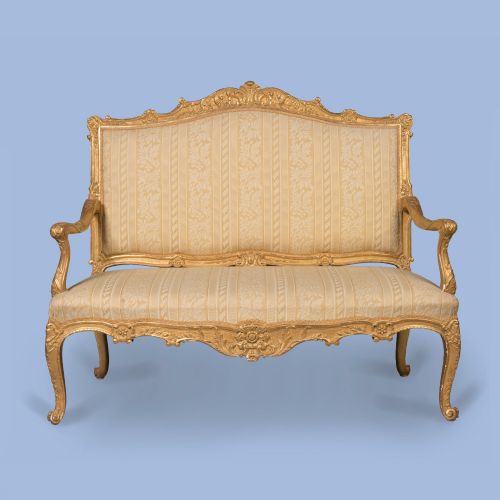


Rococo Style Canape
A rococo style canape brings flamboyant curves and carved woodwork into a room, offering both decorative presence and classic seating.

Rococo Style Canape
A rococo style canape is an upholstered settee or sofa rooted in the eighteenth-century French aesthetic, though the examples on this page span the nineteenth and twentieth centuries. Buyers encounter French, Continental, German, English, and Swedish interpretations that adopt the signature serpentine lines and asymmetrical scrollwork of the Louis XV period.
Most pieces date from the nineteenth century, including Victorian revivals and specific decades up to the mid-twentieth century. Forms range from two-seat settees and love seats to larger salon suites paired with armchairs.
Makers and workshops across Europe produced these seats as statement pieces for formal reception rooms and boudoirs. The design relies on low-flung frames, cabriole legs, and continuous carved crest rails that flow directly into the arms.
Materials and construction methods
The structural framework relies on hardwoods like walnut, beech, and timber that accept deep carving along the crest rails and aprons. Giltwood and painted finishes appear frequently, alongside exposed wood surfaces finished with a clear polish to highlight the grain.
Upholstery materials include silk, velvet, damask, and modern textile replacements applied over traditional spring or webbing foundations. Gilt surfaces often show hand-applied gold leaf over a prepared gesso layer on walnut or softer timber.
Some boudoir settees feature upholstery so vibrant that nineteenth-century gossip columnists practically required sunglasses to report on the occupants.
Factors determining quality
The crispness and depth of the hand carving dictate the distinction between standard production and master craftsmanship. Superior frames display undercut foliage and scrolls that emerge fully from the wood rather than shallow surface stamping.
The integrity of the timber joinery and the weight of the gilt or painted finish separate exceptional pieces from simpler utilitarian seating. Heavier walnut frames with retained original gilding hold a different status compared to later painted pine or light beech alternatives.
The Rococo Style Canape Glossary
- Canape
- An upholstered sofa or settee with a wooden frame, typical of French seating design. The term often denotes pieces with exposed carved woodwork and an open arm structure.
- Cabriole leg
- A furniture leg that curves outward and then tapers inward to a foot, mimicking animal limbs. This form is fundamental to rococo revival seating.
- Giltwood
- Timber coated with gold leaf or gold paint to create a metallic decorative surface. It defines many grand salon pieces on this page.
- Damask
- A reversible figured fabric woven with patterns created through contrasting warps and wefts. It frequently appears as the primary upholstery on period salon suites.
- Salon suite
- A matched set comprising a settee and companion armchairs intended for a formal drawing room. These groupings share identical carved details and textile coverings.
Rococo Style Canape: Frequently Asked Questions
Where did the rococo style originate?
The style developed in France during the reign of Louis XV as a reaction against the heavier baroque aesthetic.
Craftsmen embraced asymmetry, natural curves, and shell motifs, which later inspired nineteenth-century revival pieces across Europe.
How do I care for antique upholstery?
Protect delicate textiles like silk and damask by keeping them out of direct sunlight and using professional cleaning methods.
Avoid placing heavy weights on antique frames to preserve the fragile joinery in the arms and back.
What is the difference between a settee and a canape?
A settee is a general English term for a wide seat accommodating multiple people, while a canape specifically references French-inspired forms.
Canape frames generally feature more pronounced cabriole legs and elaborate crest carving in the rococo manner.
Can these sofas fit in modern rooms?
Their compact proportions make them suitable for placing against living room walls or at the foot of a bed.
Neutral or brightly painted frames blend effectively with contemporary minimalist interiors while retaining historical character.
How do I identify a revival piece?
Nineteenth-century revival items often display machine-assisted elements combined with hand carving, alongside nineteenth-century hardware.
Examining the underside reveals timber seasoning and construction techniques distinct from eighteenth-century originals.