

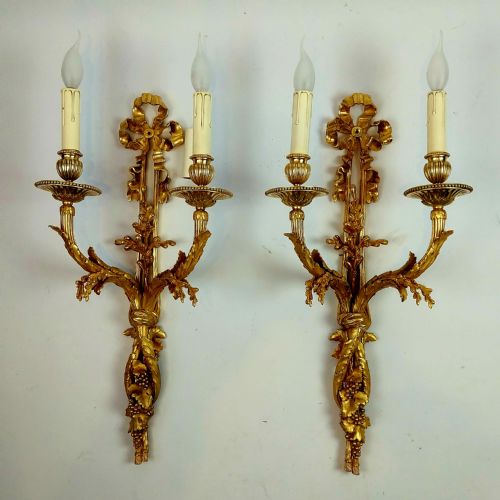


Rococo Revival Wall Sconce
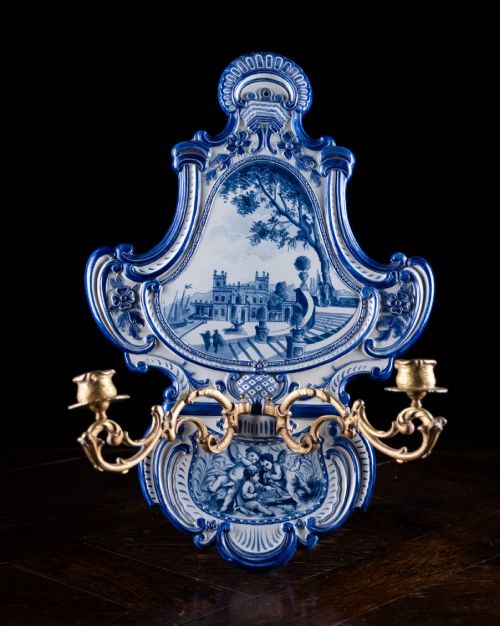
These rococo revival wall sconces bring extravagant scrolling forms and gilt surfaces to interior walls, offering practical illumination with dramatic historical style.
Rococo Revival Wall Sconce
A rococo revival wall sconce takes decorative cues from eighteenth-century French and English design, frequently appearing as single or multi-branch light fittings, brackets, and mirrors. The pieces on this page span the Victorian era into the early twentieth century, incorporating later interpretations alongside nineteenth-century examples.
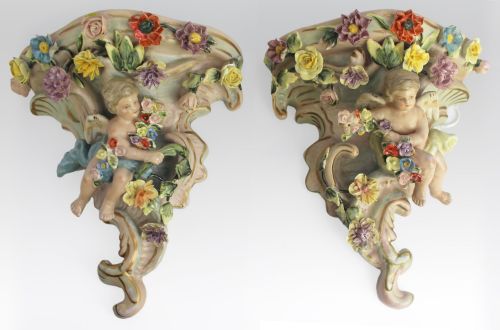
Forms include gilt bronze and ormolu two-arm sconces, brass wall lights, and porcelain cherub corbels, often designed to hold candles or electric bulbs. Buyers frequently encounter French Louis XV revival models alongside English Chippendale revival pieces and Victorian variations.
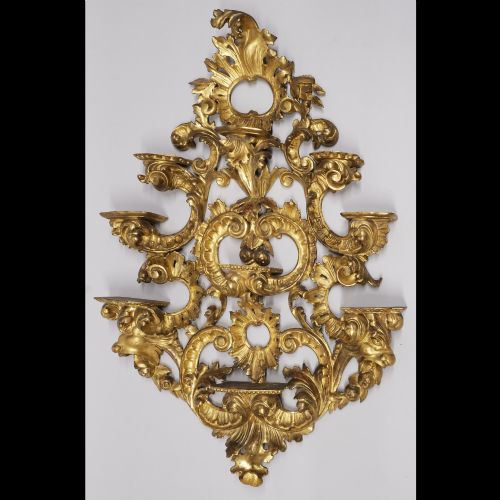
Mounting brackets and wall lights in this grouping utilise materials such as gesso, carved giltwood, and ceramic components. Their primary function remains decorative wall projection, combining ornamental shelves or mirrors with functional candle arms.
Materials and construction
Gilt bronze, ormolu, and brass provide the metal structure for many arms and backplates, shaped through casting and chasing to achieve asymmetrical scrollwork and foliage. Giltwood and gesso alternatives rely on carved wooden foundations coated in gold leaf or metallic paint.
Porcelain and ceramic elements appear in figures and plaques, integrated into metal frameworks for continental and English models. Glass components, particularly in mirror plates and girandoles, reflect candlelight across surrounding walls.
Rococo Revival Wall Sconce Retail Price Guide 2026
Typical asking prices for rococo revival wall sconce among the pieces listed under this phrase on Sellingantiques today, from the lower quarter to the upper quarter. They describe what is for sale here now, not the wider market.
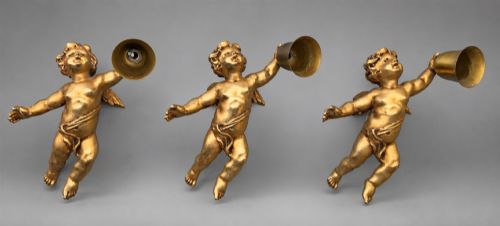
Porcelain cherubs occasionally peer out from behind candle arms, keeping a watchful eye on the evening illumination.
Distinctions in execution
The refinement of the casting and carving determines the definition of foliage, scrollwork, and figurative details like cherubs. Crisp chisel work on ormolu and deep undercutting in carved giltwood separate superior examples from softer, more mechanically produced items.
The integrity of the gilding and the weight of the metal components indicate the original expenditure on materials. Heavier bronze castings and well-preserved gold leaf retain their presence better than thin brass or flaking paint finishes.
The Rococo Revival Wall Sconce Glossary
- Ormolu
- Gilded bronze, typically mercury-gilded, used extensively on French lighting fixtures to provide a bright metallic finish. It requires careful cleaning to preserve the original surface.
- Giltwood
- Timber carved and coated with gold leaf, frequently utilised for mirrors and brackets in nineteenth-century interiors. The underlying gesso layer supports the delicate leaf.
- Girandole
- A branched wall sconce featuring a mirrored backplate that reflects and multiplies the candle flame. These fixtures combine illumination with decorative wall mirrors.
- Corbel
- A structural or decorative bracket projecting from a wall to support a shelf or light fitting. Rococo examples often feature scrolls and figures.
- Louis XV Revival
- A nineteenth-century design movement copying the asymmetrical curves, C-scrolls, and naturalistic motifs of the mid-eighteenth-century French court. It dominates many of these sconces and mirrors.
Rococo Revival Wall Sconce: Frequently Asked Questions
How do I hang a heavy sconce safely?
Heavy giltwood or bronze fixtures require direct attachment to wall studs or appropriate masonry fixings rather than plaster alone. The weight of the metal arms or wooden body demands secure load-bearing support.
Consult a professional installer if the backplate lacks pre-drilled mounting points or if the wall composition is uncertain. Ensuring proper weight distribution protects both the antique fixture and the wall.
How should I clean gilt bronze and ormolu?
Dust metal surfaces gently with a soft brush or dry microfiber cloth to remove surface particles. Avoid abrasive polishes, harsh chemicals, and modern metal cleaners that strip away the original gilding.
Moisture can damage underlying gesso or wood in composite pieces, so keep liquids away from vulnerable joints. Professional conservation is recommended for heavily tarnished or fragile surfaces.
What is the difference between a sconce and a bracket?
A sconce specifically incorporates candle arms or light fittings designed to illuminate a space. A wall bracket functions primarily as a shelf or decorative support for objects rather than holding candles.
Some overlapping forms, such as console mirrors with shelves, combine elements of both types. Examining the backplate and any drip pans clarifies the intended original use.