
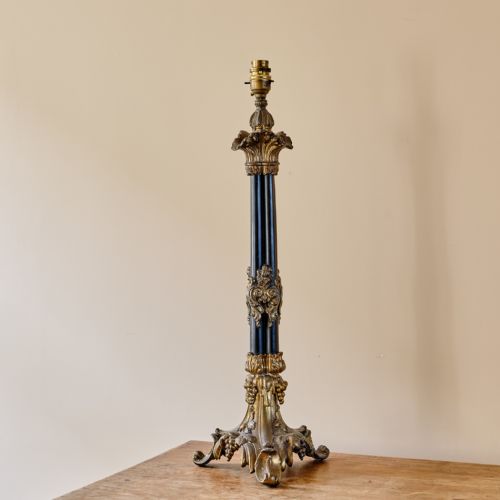
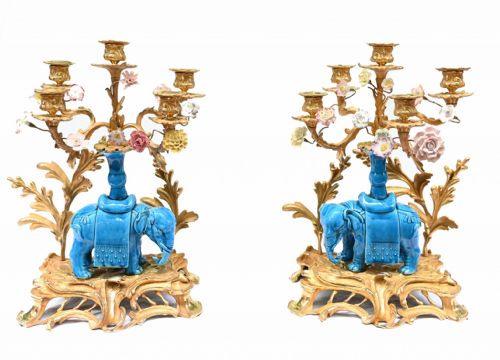
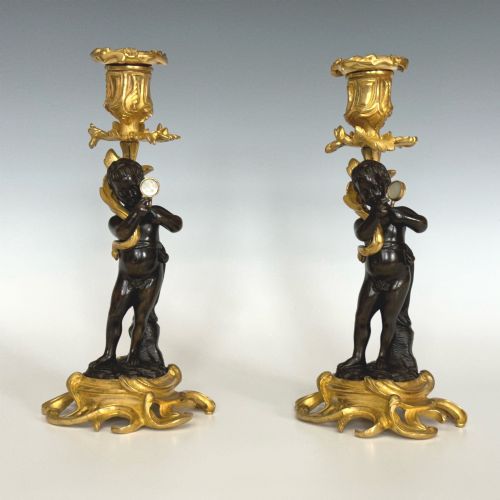


Rococo Revival Table Light
These rococo revival table light fixtures bring ornamental curves and nineteenth-century grandeur to a room.
Rococo Revival Table Light
A rococo revival table light encompasses ornate lamps, converted candelabra, and electrified candlesticks originating predominantly from the nineteenth century.
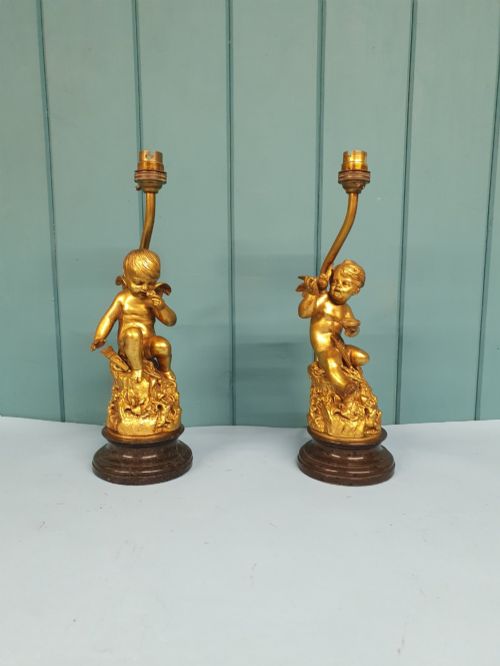
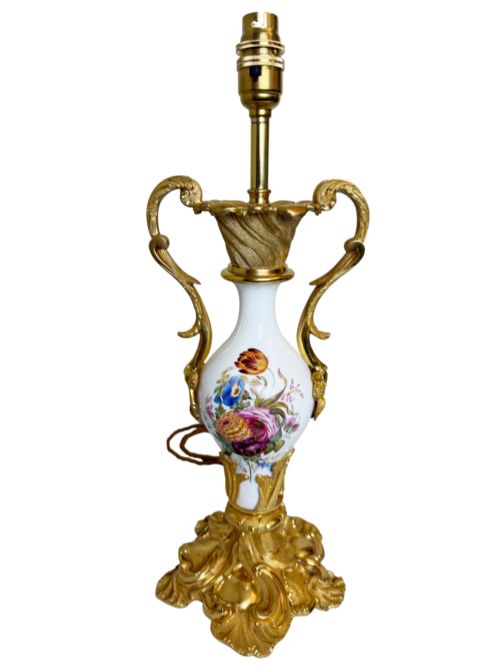
Buyers will frequently encounter gilt bronze, ormolu, and porcelain figural pieces featuring cherubs and floral motifs.
The selection ranges from Victorian pairs to French and German porcelain designs adapted for illumination.
Materials and construction
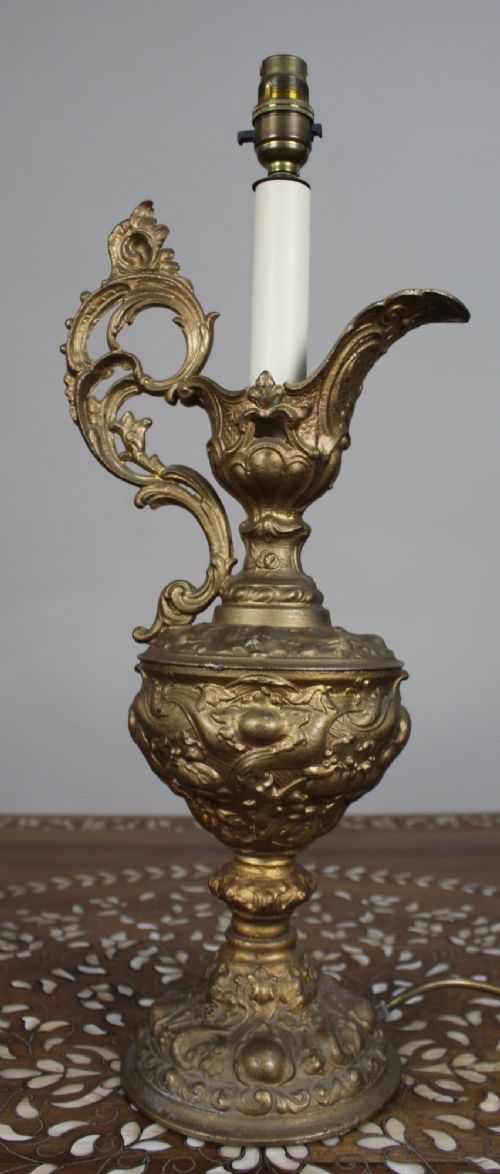
Metalwork relies on cast bronze, brass, ormolu, and silver plating, shaped into elaborate scrolls and asymmetrical forms.
Porcelain elements, including painted sections and figural components, combine with fabric shades and glass to complete the structure.
Cherubs feature on a surprising number of these lamps, dutifully holding up torches and branches.
Distinctions in quality
The finesse of the metal casting and the detail in hand-painted porcelain distinguish finer examples from standard production.
Weight, crispness of chisel work on ormolu, and the integration of electrical conversions dictate the standing of a piece.
Sitzendorf·Dresden
The Rococo Revival Table Light Glossary
- Ormolu
- Gilded bronze, where a mercury-gilding technique creates a durable gold-coloured surface on cast bronze objects. It forms the shimmering mounts of many nineteenth-century lamps.
- Candelabra
- A branched candlestick designed to hold multiple candles, frequently converted later into table lamps. These pieces often feature sculptural figures like cherubs.
- Torchère
- A tall ornamental stand or lamp modelled to resemble a torch-bearer. They appear in pairs in nineteenth-century French lighting.
- Tazza
- A wide, shallow saucer-like dish supported on a stem and foot. In this selection, ormolu versions demonstrate similar decorative metalwork to the table lights.
Rococo Revival Table Light: Frequently Asked Questions
Are these lamps originally electric?
Most pieces originated as oil lamps, candelabra, or candlesticks and received electrical wiring during later conversions.
Original nineteenth-century fittings make way for modern lamp holders while retaining the antique base.
How do I date a brass lamp?
Dating relies on manufacturing techniques, material patination, and stylistic markers recorded across the nineteenth century.
Cast construction and hand-chiselling point to earlier periods compared to later twentieth-century reproductions.
Where were these lamps made?
Origin points span France, Germany, and Britain, with distinct regional preferences in porcelain painting and bronze casting.
French workshops frequently utilise ormolu and cherub motifs, whereas German factories produce detailed porcelain figures.
How do I clean gilt bronze?
Maintenance requires only gentle dusting with a dry, soft cloth to protect the delicate metallic surface.
Harsh chemical cleaners or polishes strip away the historical gilt layer and damage the underlying bronze.