

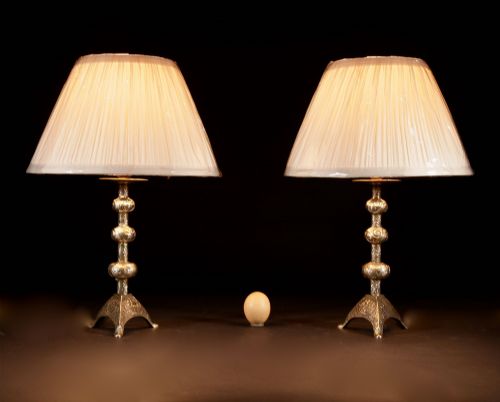
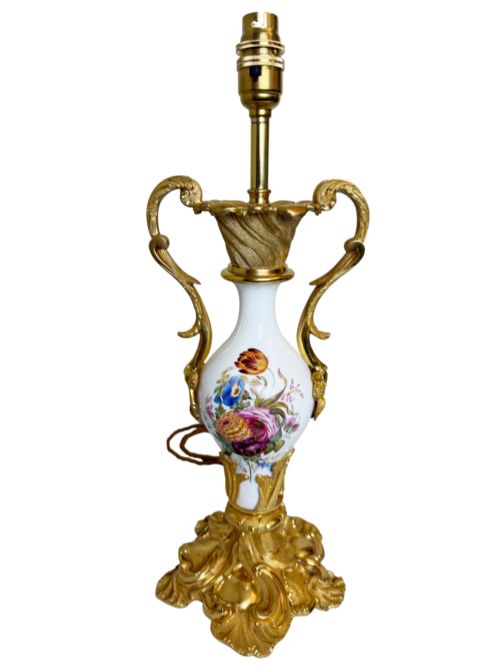
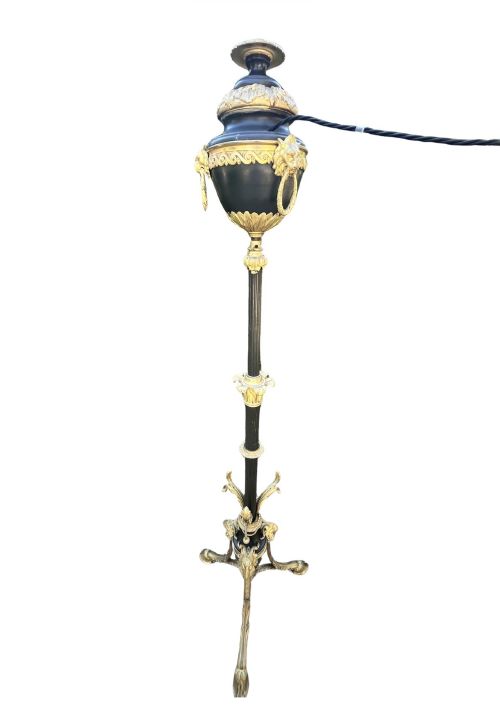
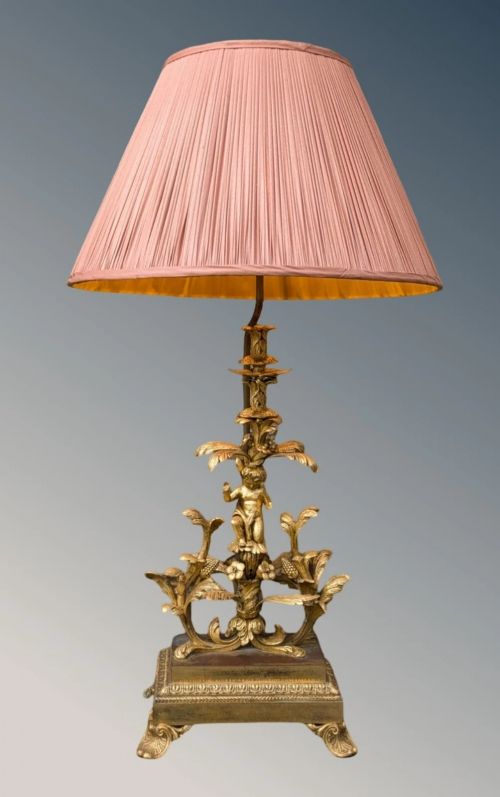


Ornate Brass Reading Lamp
An ornate brass reading lamp brings heavy metalwork and adjustable height to a desk or corner, combining period heft with practical illumination.
Ornate Brass Reading Lamp
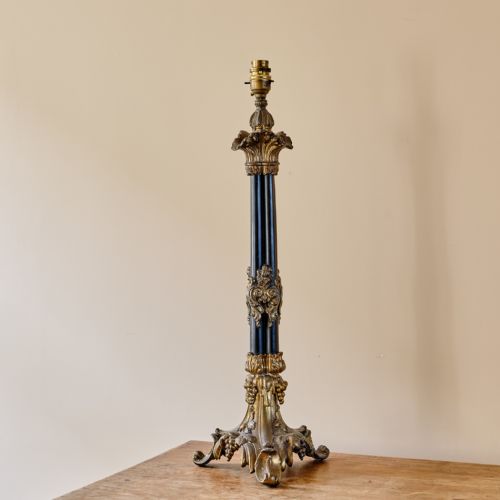
When you search for an ornate brass reading lamp, you encounter heavy metal lighting fixtures primarily produced during the Victorian, Edwardian, and Art Nouveau periods. These pieces span standard lamps, floor lamps, and table lamps, often featuring complex cast ornament, floral openwork, or classical column designs.
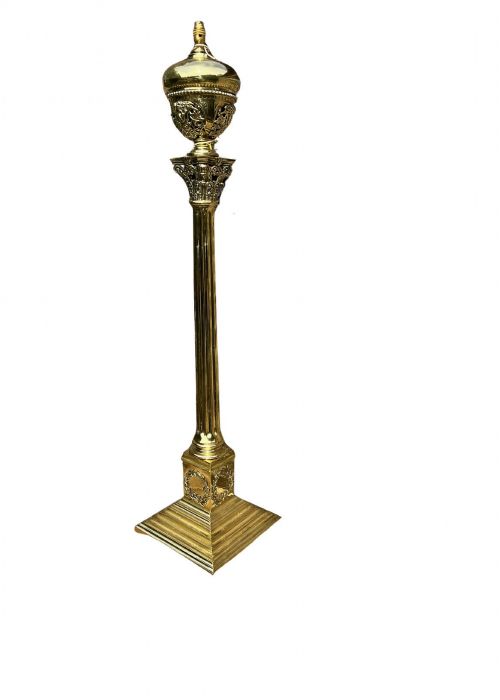
The most common examples on this page are standard lamps and table lamps in brass, gilt bronze, or cast brass, frequently dating from the late nineteenth century and the early twentieth century. Many incorporate adjustable mechanisms, scroll arms, or Corinthian column capitals that reflect Revival styles.
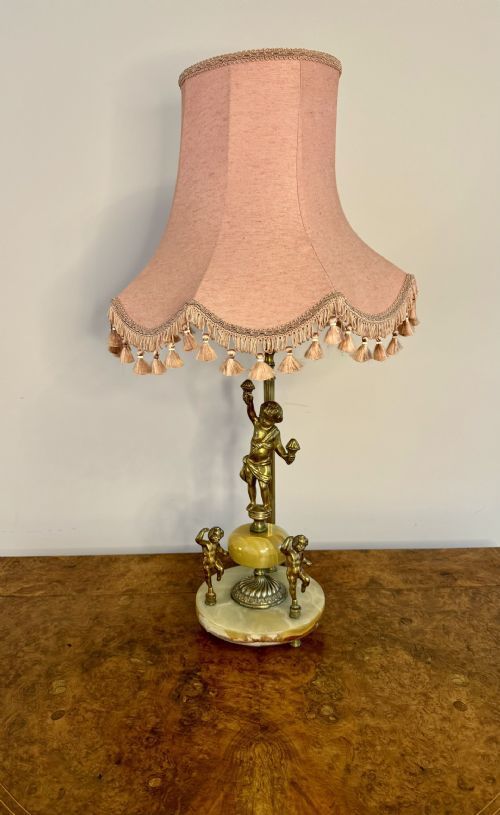
Makers and manufacturers such as Wild and Wessel and Messenger appear among these pieces, alongside French ormolu works and domestic British production. Forms range from simple adjustable columns to elaborate figural pieces with cherubs or oriental motifs.
Materials and construction methods
These lamps utilise brass, cast brass, gilt bronze, and bronze as primary structural metals, often combined with marble, onyx, or fabric and silk shades. Foundries cast the heavy bases and decorative shafts using traditional sand-casting techniques before finishing the surfaces by hand.
Adjustable models employ sliding brass tubes and rise-and-fall mechanisms that required precise engineering to hold heavy oil fonts or electrical fittings securely at various heights. Decorative elements like floral openwork and scroll arms are typically cast separately and joined to the main column by threaded rods or pins.
Listings feature brass, bronze, and gilt bronze combined with onyx, marble, and silk across Victorian, Edwardian, and Art Nouveau periods.
Distinctions in manufacture and design
Quality rests in the crispness of the cast ornament and the weight of the metal used in the base and column. Finer examples display deeply chased surface details on gilt bronze or cast brass, whereas simpler pieces rely on thin pressed brass components.
The sophistication of the mechanical parts also separates tiers of production, particularly in adjustable standard lamps and rise-and-fall mechanisms that move smoothly without slipping. Well-executed proportional design in Corinthian columns or Art Nouveau whiplash curves indicates superior workshop origin.
Wild and Wessel·Messenger
The Ornate Brass Reading Lamp Glossary
- Standard lamp
- A tall floor-standing lamp designed to illuminate a room or provide task lighting beside a chair. They frequently incorporate heavy weighted bases to support extended heights.
- Corinthian column
- An architectural column style featuring an ornate capital decorated with acanthus leaves. Victorian table and standard lamps often adopted this form in cast brass.
- Gilt bronze
- Bronze metal that has been coated with a thin layer of gold or gold-coloured alloy. It provides a warm, durable finish seen on finer nineteenth-century lighting.
- Rise and fall
- A mechanical system using weights or a ratchet to allow the lamp height to adjust up and down. This design was essential for reading lamps and oil lamps.
- Ormolu
- French term for gilding applied to bronze or brass objects. It is characteristic of decorative French lighting from the nineteenth century.
Ornate Brass Reading Lamp: Frequently Asked Questions
How do I date a brass floor lamp?
Dating relies on stylistic clues such as Neoclassical columns, Art Nouveau organic curves, or heavy Victorian cast ornament. Construction methods like sand casting and the presence of old wiring or oil conversion parts also offer clues.
Periods represented in these pieces generally span from the mid-nineteenth century through the 1920s. Examining the weight, manufacturing marks, and base design helps narrow down the decade of production.
What is a standard lamp?
A standard lamp is a tall floor lamp designed to stand beside furniture and cast light downward for reading or ambient room illumination. They emerged in various forms throughout the Victorian and Edwardian eras.
These pieces typically feature heavy weighted bases to maintain stability when extended to eye level. Materials range from simple turned brass to elaborate cast bronze with floral motifs.
How do I care for antique brass?
Antique brass benefits from gentle dusting and occasional cleaning with a soft cloth to preserve its natural patina. Avoiding harsh metal polishes prevents the loss of historic surface character.
Keeping the metal away from excessive moisture protects both the brass and any integrated marble or onyx bases. Stable indoor humidity ensures that associated fabric or silk elements last longer.