


Rococo Revival Shelf Clock
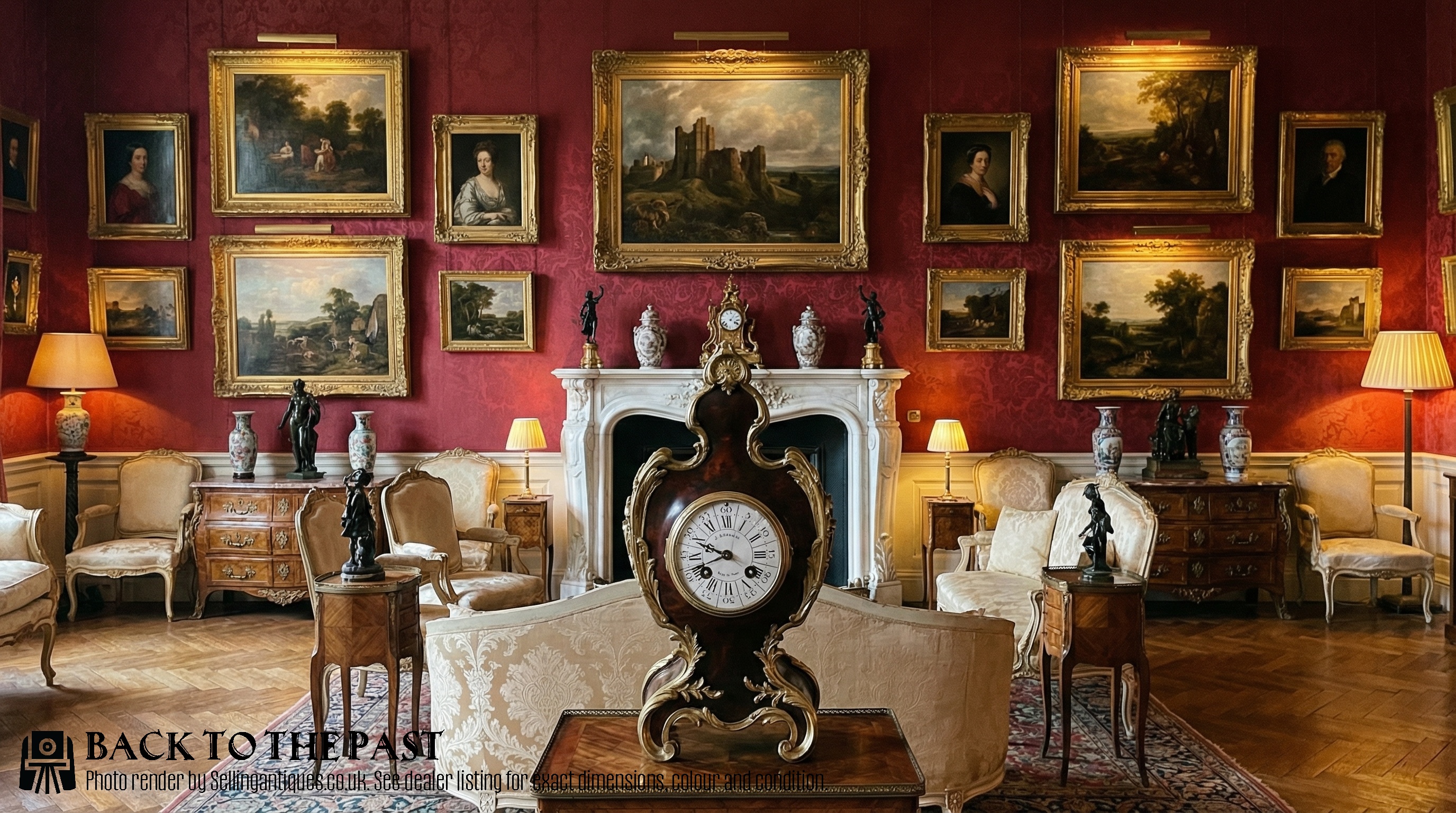
A rococo revival shelf clock brings lavish nineteenth century French and Victorian ornamentation to a mantelpiece.
Rococo Revival Shelf Clock
A rococo revival shelf clock combines exuberant nineteenth century styling with dependable timekeeping for the domestic interior. These pieces take the form of mantel clocks and bracket clocks, emerging primarily from Victorian and nineteenth century workshops.
Buyers meet examples spanning from the early nineteenth century through to nineteen hundred, with French and Victorian interpretations dominating the selection. The cases display elaborate scrollwork and asymmetrical flourishes typical of the revival of earlier court styles.
Materials and construction
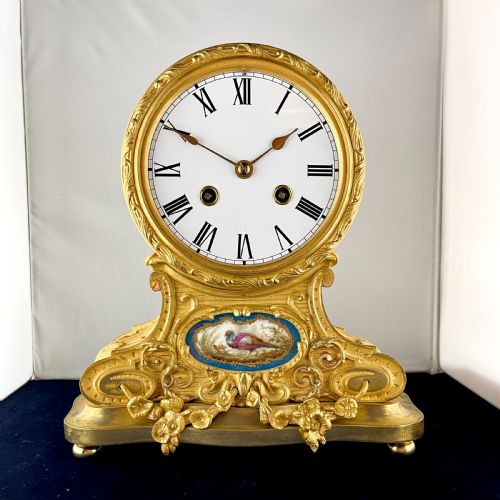
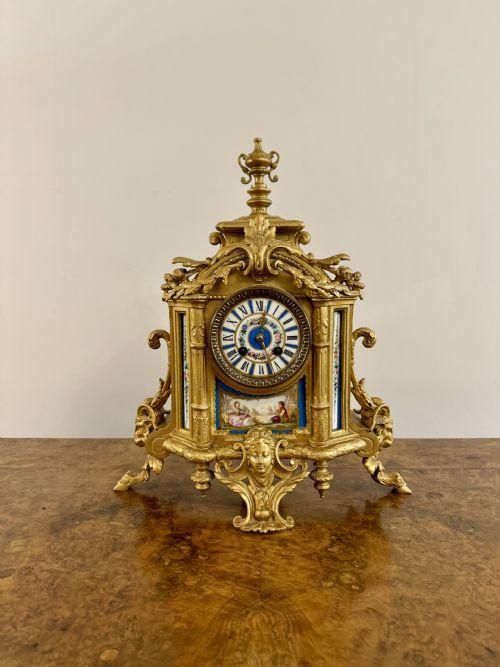
Makers utilised cast bronze, ormolu, and gilt metal as the primary structural foundations for these ornate cases. Hand-painted porcelain panels and enamel dials were frequently integrated into the metalwork to provide colour and contrast.
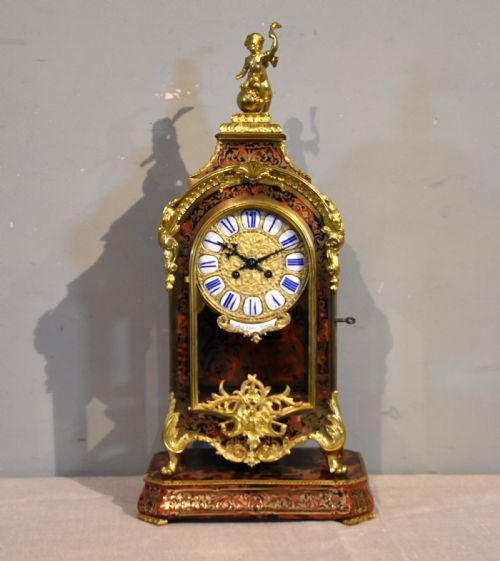
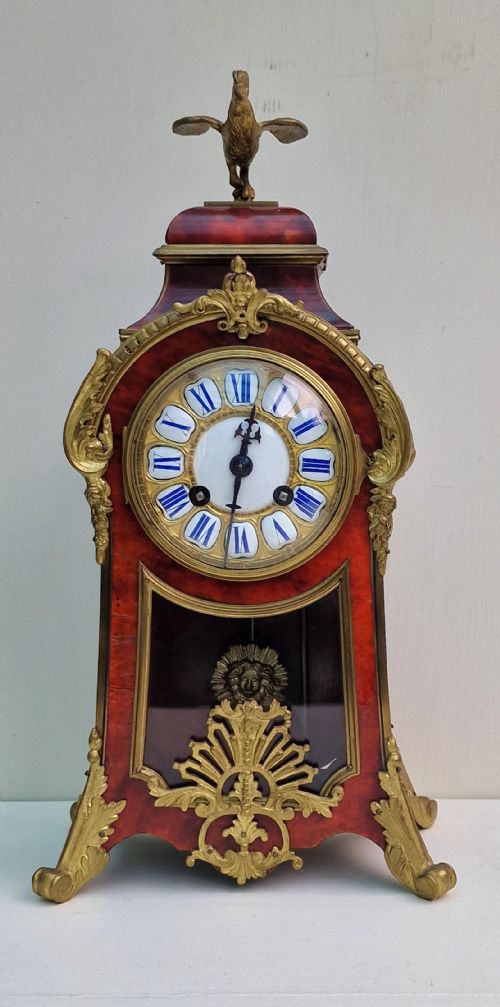
Glazed side panels appear in four glass sided designs, allowing light to pass through the movement. Tortoiseshell, marble, and boulle marquetry surface treatments add further texture to the more elaborate nineteenth century bodies.
What separates the grades
Quality rests in the crispness of the bronze casting and the depth of the gilding rather than mere surface shine. Superior pieces exhibit hand-chased detail that defines the scrollwork without softening the edges.
The integration of finely painted porcelain panels and the precision of the eight day striking movement distinguish workshop output. Simpler gilt metal housings stand apart from heavy solid ormolu and intricate four glass constructions.
Phillipe H Mourey·P H Mourey
The Rococo Revival Shelf Clock Glossary
- Ormolu
- Gilded bronze produced through mercury amalgamation or modern electroplating techniques. This finish gives the metal a warm, buttery gold appearance that withstands the passage of time.
- Boulle
- Marquetry technique involving tortoiseshell and brass inlay developed during the seventeenth century and revived later. It creates a striking pattern of dark shell and polished metal across the clock case.
- Sevres
- Porcelain produced by the famous French royal factory known for rich colours and hand-painted scenes. These plaques often decorate the front or sides of nineteenth century French mantel clocks.
- Drumhead
- A circular clock case housing mounted upon a matching or contrasting base. This distinct silhouette appears frequently among nineteenth century gilt bronze examples.
- Palais Royal
- A style and provenance associated with luxury goods retailed near the historic Paris location. These decorative items often combine fine metalwork with glass or porcelain elements.
Rococo Revival Shelf Clock: Frequently Asked Questions
What is a rococo revival shelf clock?
A rococo revival shelf clock is a decorative nineteenth century timepiece designed to sit on a mantelpiece or bracket. It draws on earlier French court aesthetics with elaborate scrolls, floral motifs, and asymmetrical designs.
These pieces function as both timekeepers and sculptural ornaments for the home. They combine metal casting with porcelain, glass, or marble elements to create a dramatic focal point.
How do I wind an eight day clock?
An eight day clock requires winding approximately once a week using a matching key inserted into the dial holes. Care must be taken not to overwind the mainsprings.
Keeping the clock on a level surface ensures the pendulum swings evenly. Professional servicing maintains the internal mechanical gears over time.
Where were these mantel clocks made?
Many of these clocks originated in France during the nineteenth century, often destined for export or high end domestic retailers. Victorian makers in Britain also produced similar revival designs.
French workshops utilised specialised bronze founders and porcelain painters. Retailers in locations such as the Palais Royal distributed these luxury goods to discerning buyers.
How do I identify a Victorian piece?
Victorian clocks often incorporate stylistic cues from Louis XV and Louis XVI revivals alongside British domestic preferences. Materials like marble and hand painted porcelain frequently feature in these examples.
Examining the construction of the movement and the style of the dial helps determine the manufacturing period. Maker signatures on the bronze work or backplate offer further clues to origin.