
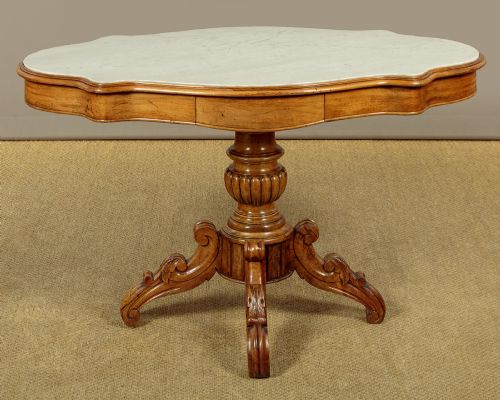


Rococo Revival Pedestal Table
A rococo revival pedestal table brings nineteenth-century serpentine curves and rich woods into a room with undeniable presence.
Rococo Revival Pedestal Table
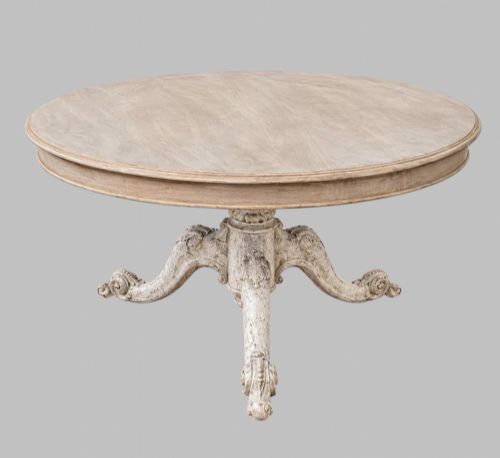
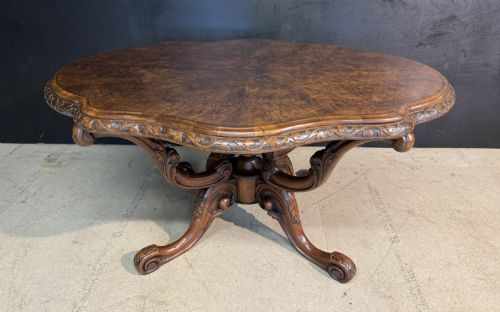
When you search for a rococo revival pedestal table, you find nineteenth-century centre tables, card tables, and occasional tables defined by organic shapes and central supports. The Victorian examples on this page often feature shaped walnut or rosewood tops resting on carved pedestals.
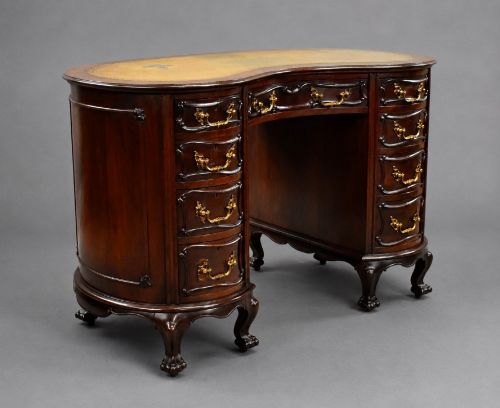
Makers produced these pieces in forms such as tea tables, breakfast tables, and desks, drawing on French and Italian rococo revival styles. You meet variations with marble tops, marquetry inlay, and foldover leaves designed for nineteenth-century drawing rooms.
Materials and construction methods
Craftsmen utilised timber veneers like burr walnut, flame mahogany, and rosewood over solid carcase woods, often shaping the edges into serpentine outlines. These surfaces frequently display detailed marquetry or polished finishes that highlight the grain.
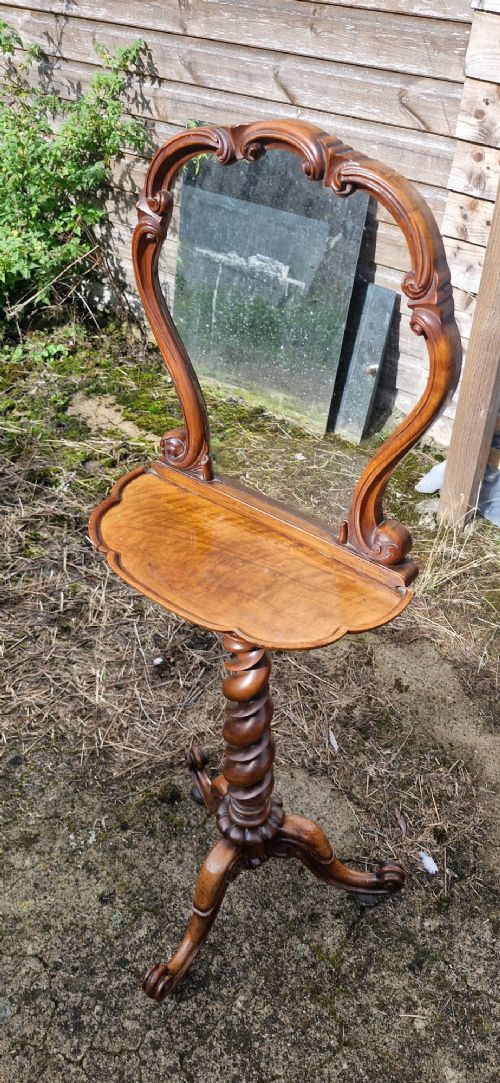
Support structures combine turned and carved pedestals with splayed legs, sometimes incorporating marble inserts or brass fittings. Cabinetmakers shaped these timbers to create the characteristic fluid lines associated with the style.
Materials recorded on this page include walnut, burr walnut, rosewood, mahogany, brass, marble, ceramic, and glass.
Judging execution and finish
The distinction between tiers rests on the crispness of the carving and the selection of timber veneers. Better examples display carefully matched burr walnut or rosewood grain across shaped tops without disruption.
Construction depth also separates standard production from finer work, visible in the stability of the central pedestal and the precision of joints on card table mechanisms. The integration of inset marble or detailed marquetry indicates higher workshop ambition.
Edwards & Roberts
The Rococo Revival Pedestal Table Glossary
- Centre table
- A freestanding table designed to be viewed from all sides rather than pushed against a wall. These pieces typically sit in the middle of a Victorian drawing room.
- Burr walnut
- A highly figured timber taken from the wart or burl growths of the walnut tree. Cabinetmakers prized it for its swirling patterns.
- Serpentine top
- A table surface with a curved edge resembling a snake's movement, alternating convex and concave sections. This contour defines much nineteenth-century seating and table design.
- Foldover tea table
- A table with a hinged top that doubles in surface area when opened for dining or card games. The pivoting mechanism reveals a polished interior surface.
Rococo Revival Pedestal Table: Frequently Asked Questions
How do I use a centre table?
A centre table stands freely in the middle of a room, serving as a display surface for lamps, ceramics, or books. Because the design allows access from all sides, it anchors the furniture arrangement.
In period settings, these tables held decorative centrepieces or functioned as gathering points. Today they serve similar roles in living spaces and halls.
How do I date a Victorian table?
Dating relies on timber choices, construction techniques, and stylistic markers recorded across the nineteenth century. Walnut and rosewood dominate the period from 1850 onward.
Details such as carved pedestals and marble inserts help narrow the decade of production when compared against dated examples.
Where were these tables made?
While many originate from British workshops during the Victorian era, regional variations include French, Italian, and Swedish origins. Each region brought distinct carving habits and timber preferences to the style.
Importers and London firms like Edwards & Roberts distributed these diverse pieces to domestic buyers.