


Rococo Revival Low Table
These rococo revival low table pieces offer ornate carved flourishes and curved timber frames that anchor a traditional interior scheme with period drama.
Rococo Revival Low Table
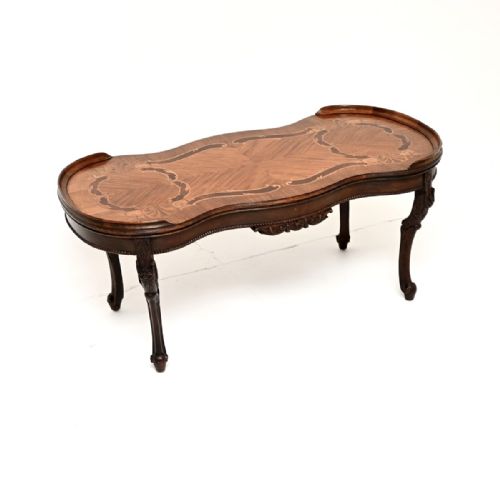
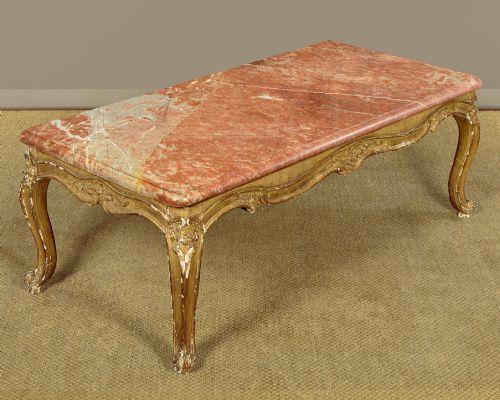
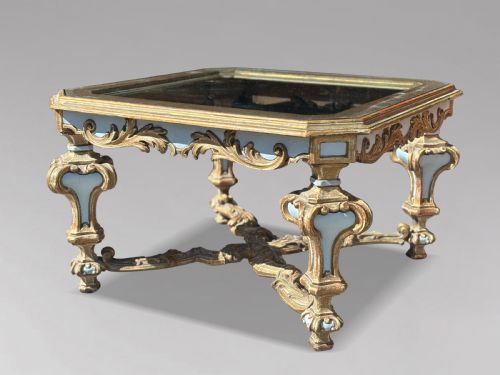
A rococo revival low table brings elaborate 19th-century styling and ornamental woodwork into modern entertaining spaces as a coffee table or low centre table. The selection spans Victorian and early 20th-century production, incorporating French Louis XV revival and Italian baroque revival influences alongside direct English interpretations. Buyers encounter walnut and mahogany frames paired with marble inserts, inlaid marquetry, or giltwood finishes.
Most examples originate from the Victorian period through to the 1930s, reflecting changing domestic habits that converted taller centre tables into low coffee tables. These pieces often feature shaped tops, figural wood grains, and cabriole legs characteristic of the revival styles. The category also includes related low seating forms and stools sharing identical ornamental vocabulary.
Construction and materials
Cabinetmakers utilised dense hardwoods such as walnut and mahogany to support deep sculptural carving and curved structural forms. Figured walnut veneers and intricate marquetry provide decorative surface pattern across table tops, whilst fruitwood and boxwood supply contrasting inlay details.
Giltwood and gold leaf finishes applied over carved wooden frames deliver the rich metallic lustre central to the revival aesthetic. Inset marble slabs and polished copper provide durable, decorative surfaces supported by solid timber underframes.
A dressing table nursing chair hides amongst the low tables, proving Victorians loved sitting low down.
Judging quality and craftsmanship
Superior examples display crisp, hand-carved detailing along the cabriole legs and aprons, where the depth of relief work remains sharp and well-defined. Inferior versions rely on softer moulding or superficial surface decoration that lacks the sculptural vigour of genuine period work.
The selection of timber grain, particularly figured walnut and precise marquetry layout, separates standard production from exceptional cabinet work. Structural integrity in the joints and the quality of integration between marble tops and wooden frames dictate long-term durability.
B Battioli Varese·Harrods
The Rococo Revival Low Table Glossary
- Cabriole leg
- A furniture leg that curves out and then in, mimicking animal limbs with a knee and foot. This curved form defines much of the rococo revival aesthetic.
- Marquetry
- Decorative patterns created by fitting thin pieces of wood veneer onto a structural surface. It allows for intricate floral or geometric designs across table tops.
- Giltwood
- Wood that has been covered with a thin layer of gold leaf or powder. This technique adds bright reflective highlights to ornate carved frames.
- Low centre table
- A low-profile occasional table designed for central placement in a room. These pieces form the primary functional ancestors of modern coffee tables.
Rococo Revival Low Table: Frequently Asked Questions
How do I style a rococo revival low table?
Position the table centrally in a traditional or eclectic living space where its carved timber and marble surfaces can stand out. Balance the ornate aesthetic by pairing it with simple upholstery or clean-lined modern seating.
Keep surface decoration minimal to allow the wood grain or marquetry inlay to remain visible. Ensure the table height aligns comfortably with surrounding seating arrangements.
How do I tell Victorian from later pieces?
Victorian examples generally date from the mid to late nineteenth century, displaying solid mahogany or walnut construction with hand-finished joinery. The carving on these pieces tends to show deep relief and traditional patination.
Later pieces extending into the 1930s often incorporate revival styles with alternative manufacturing techniques or applied decorative finishes. Examining the underside and joint construction helps clarify the likely production period.
Are marble tops original to these tables?
Marble inserts frequently appear on Italian and French revival low tables to provide a durable and decorative surface. These stone tops are generally heavy slabs fitted directly into rebated wooden frames.
Inspect the seating edge where the marble meets the timber to understand how the stone is secured. Replacement tops are common in antique furniture due to historic breakage.