





French Inlaid Tea Table
A french inlaid tea table brings continental refinement to a room, offering a decorative surface designed for entertaining.
French Inlaid Tea Table
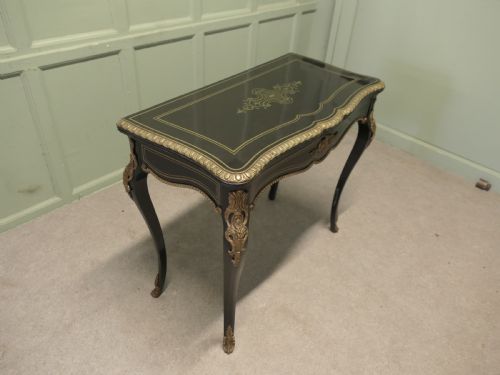
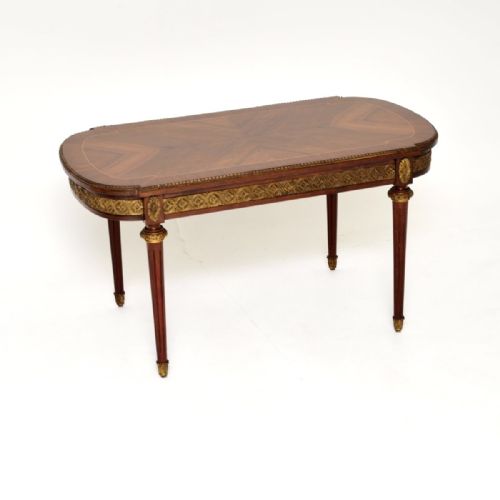
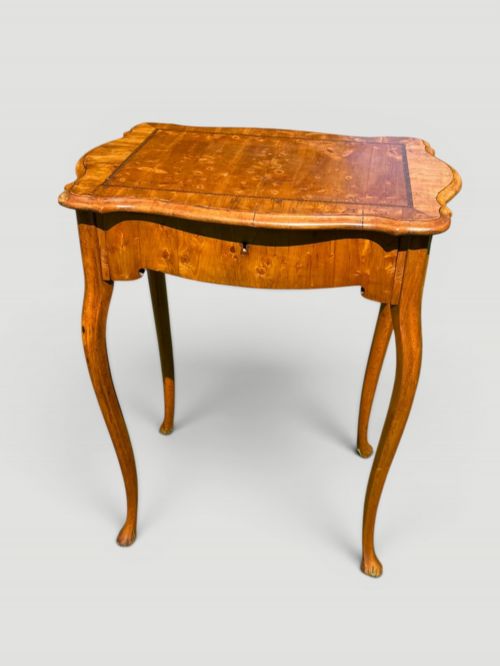
A french inlaid tea table encompasses various forms such as occasional, centre, and card tables originating from continental and revival workshops. These pieces span multiple decades and centuries, incorporating diverse decorative motifs into domestic furniture.
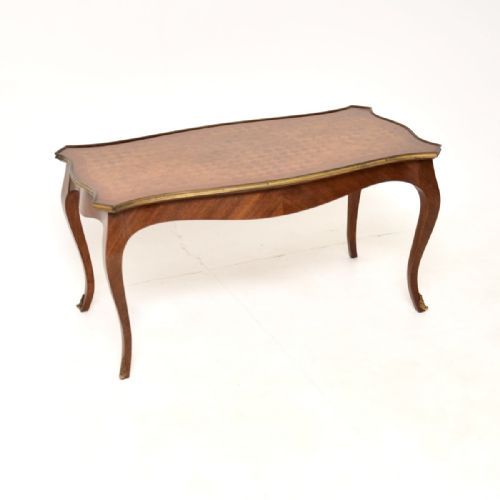
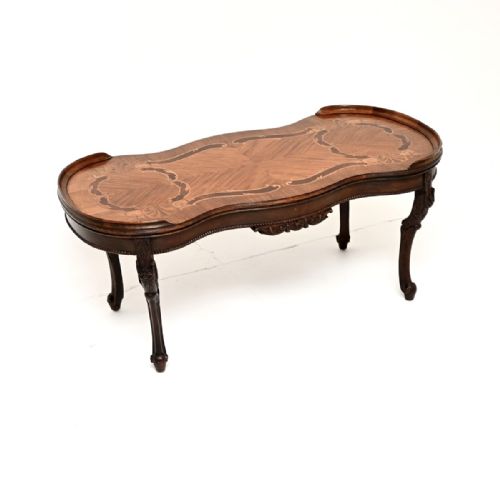
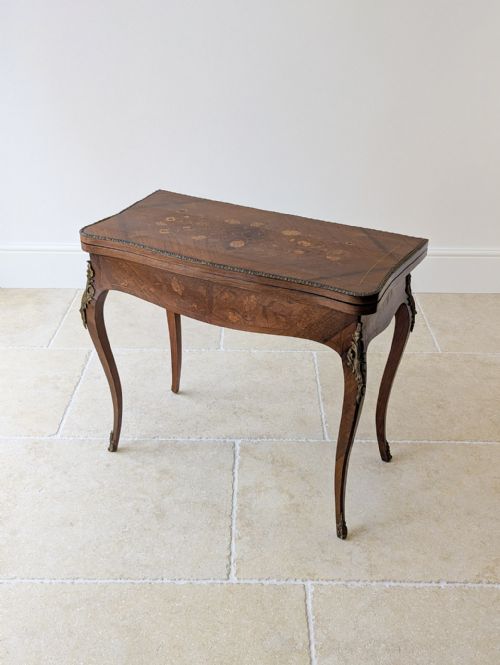
The selections on this page demonstrate the enduring popularity of Louis XV and Louis XVI styles, alongside Victorian interpretations. Buyers will encounter both smaller occasional pieces and larger centre or games tables.
Woods such as walnut, rosewood, kingwood, and satinwood form the primary structure of these tables. Marquetry and parquetry ornamentation define the surface aesthetic across the selection.
Materials and Construction
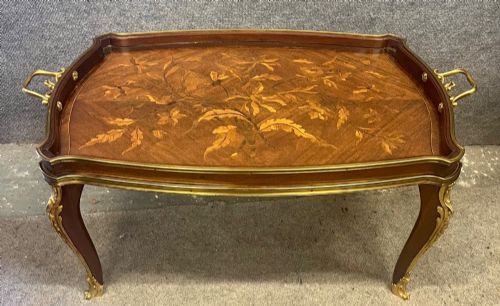
Cabinetmakers utilised hardwoods including walnut, rosewood, satinwood, and kingwood as the structural and decorative foundation for these pieces. Marquetry inlay and parquetry patterns were meticulously hand-cut and fitted into the timber surfaces to create intricate floral and geometric designs.
Ormolu mounts and brass stringing often accentuate the contours of the tables, highlighting the joints and edges. These metal elements were cast and chased before being applied to the timber framework.
The listings feature walnut, rosewood, satinwood, and kingwood alongside brass and ormolu mounts across various nineteenth and twentieth-century periods.
Assessing Quality and Execution
The distinction between tiers of quality lies in the precision of the marquetry and the choice of timbers. Finer examples display tightly fitted veneers and sophisticated pictorial or geometric inlay without visible gaps.
The presence of crisp ormolu mounts and substantial secondary timbers elevates a piece above standard production items. Attention to detail in the carving of the framework and the stability of folding mechanisms also differentiate the grades.
Edwards & Roberts·Gillows·Ince & Mayhew
The French Inlaid Tea Table Glossary
- Marquetry Inlay
- Decorative patterns formed by fitting small pieces of veneer into a prepared surface. This technique allows for elaborate floral and pictorial depictions across tabletop surfaces.
- Ormolu
- Gilt bronze ornamentation applied to furniture. It provides metallic contrast against dark timbers like walnut and rosewood.
- Parquetry
- Geometric wood inlay arranged in repetitive patterns such as cubes or chequers. This technique demonstrates precision in woodworking.
- Card Table
- A specialised table featuring a fold-over top designed for gaming or social pastimes. These often conceal a baize-lined playing surface beneath the hinged leaves.
- Étagere
- A set of open shelves or tiered stands used for display. These pieces combine utility with decorative veneering.
French Inlaid Tea Table: Frequently Asked Questions
What is a French inlaid tea table used for?
These tables served primarily for social functions such as serving tea, displaying decorative objects, or hosting card games in domestic reception rooms.
Today, they function well as accent pieces or bedside surfaces in traditional and eclectic interiors.
How do I identify a Louis XV style table?
Louis XV style pieces typically exhibit curved cabriole legs, asymmetrical floral marquetry, and restrained ormolu mounts. The overall silhouette emphasises flowing lines rather than rigid symmetry.
Later revival pieces from the nineteenth century often adopted these same characteristics while incorporating contemporary construction methods.
What is the difference between marquetry and parquetry?
Marquetry involves cutting diverse veneers to create pictorial or floral scenes across the timber surface. It allows artisans to depict complex natural subjects with multiple wood tones.
Parquetry relies on geometric shapes arranged in repeating patterns, creating architectural symmetry rather than illustrative pictures.
How do I care for a wood inlaid surface?
Keep inlaid furniture away from direct sunlight and extreme temperature fluctuations to prevent the delicate veneers from lifting or splitting. Regular dusting with a soft cloth preserves the polished finish.
Avoid applying silicone-based polishes, opting instead for traditional waxes suitable for antique timbers.