


Rococo Revival Hearth
These rococo revival hearth pieces bring ornate nineteenth century French and English style to a fireplace.
Rococo Revival Hearth
A rococo revival hearth selection centres on nineteenth century fire screens, stools, chenets, and mirrors designed for the fireplace. These furnishings emerge from Victorian and nineteenth century periods, spanning decades such as eighteen sixty through nineteen ten.
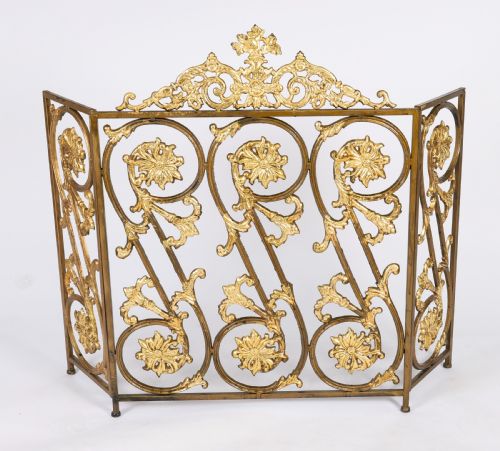
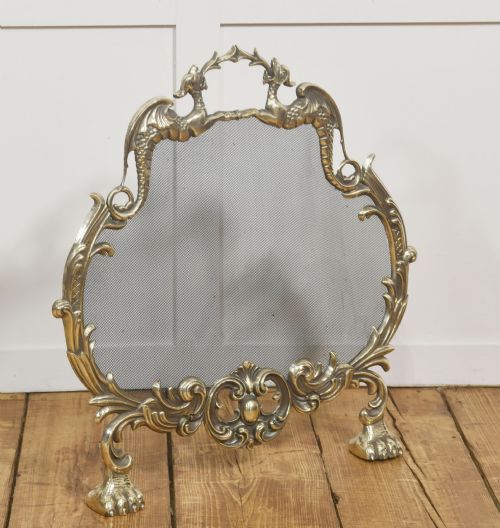
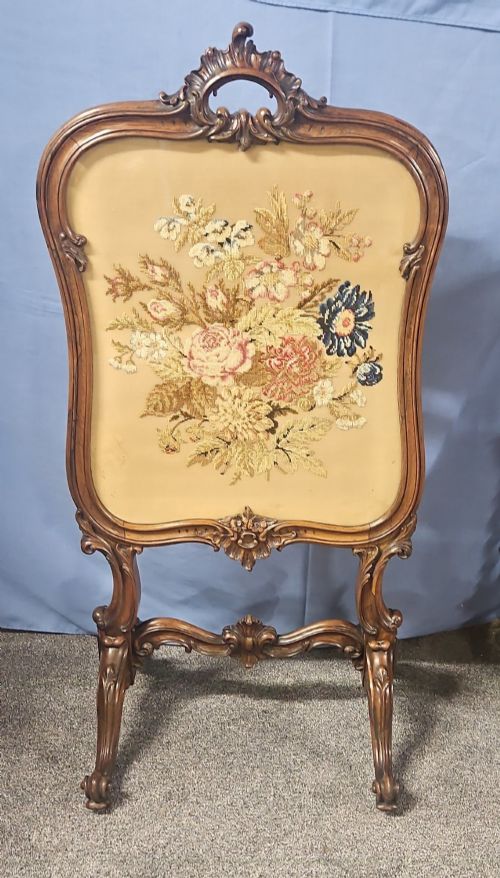
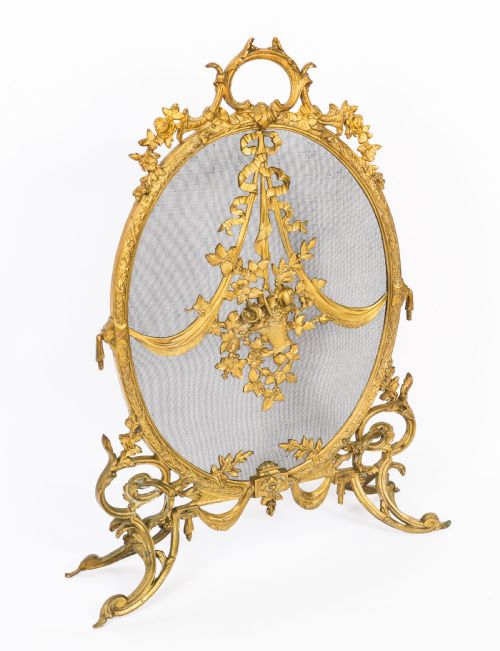
The fire screens dominate this group, taking forms in brass, carved walnut, and gilt bronze. Many incorporate wire mesh panels, textile inserts, and wool needlepoint or tapestries.
Associated seating pieces like walnut and rosewood stools appear alongside fire dogs and overmantel mirrors. These items reflect French rococo revival, Louis styles, and Victorian interpretations of eighteenth century curves.
Materials and construction
Makers shaped these hearth furnishings from cast brass, gilt bronze, and carved woods including walnut, mahogany, rosewood, and oak. Metalwork components utilise openwork casting and wire mesh, while wooden frames feature hand carving.
Textile panels rely on traditional needlepoint, wool embroidery, and tapestries secured within the rigid frames. Gilded surfaces and ormolu finishes provide the characteristic metallic sheen associated with revival styles.
Fire screens occasionally feature hidden mesh behind tapestries, built to stop rogue sparks while keeping the needlework safe from stray embers.
Distinctions in quality
Quality rests in the crispness of the metal casting and the depth of the wood carving. Finer examples display intricate asymmetry and substantial gauge brass or bronze rather than light stamped metal.
Textile quality separates standard pieces from finer ones through dense needlepoint work and well preserved tapestry panels. The precision of joinery in walnut and rosewood frames dictates the enduring structural integrity.
The Rococo Revival Hearth Glossary
- Chenet
- An ornamental metal fire dog placed at the front of a hearth to support logs. These often feature cast bronze or brass decoration matching the rococo style.
- Fire screen
- A movable decorative panel placed before a fireplace to shield occupants from radiant heat when the fire is low. They frequently incorporate embroidered panels or wire mesh.
- Needlepoint
- A type of canvas work embroidery executed with yarn using a tent stitch. It forms the pictorial panels seen within nineteenth century screen frames.
- Ormolu
- Gilded bronze mounts applied to furniture and decorative metalwork. The technique involves mercury gilding on a bronze base to produce a bright gold appearance.
- Overmantel mirror
- A large mirror designed to hang directly above a mantelpiece. These often share the carved wooden framing details found on companion hearth items.
Rococo Revival Hearth: Frequently Asked Questions
What is a rococo revival fire screen?
A rococo revival fire screen is a nineteenth century decorative panel placed in front of a fireplace to block excess heat when no fire burns. These screens use carved wood or cast metal frames containing fabric panels or mesh.
They reflect the nineteenth century revival of eighteenth century French design, featuring C-scrolls and naturalistic motifs. Many incorporate wool needlepoint or tapestries.
How were nineteenth century fire screens used?
These screens served a practical purpose in nineteenth century parlours by protecting people from the intense glare and heat of an open coal fire. They could be repositioned around the room as needed.
Over time their function shifted toward decorative display, showcasing fine needlework and intricate metal casting. Today they serve primarily as focal points for Victorian fireplace settings.
What materials make up these hearth items?
The pieces utilise cast brass, gilt bronze, wire mesh, and various hardwoods including walnut, rosewood, and mahogany. Textile elements consist of wool, wool needlepoint, and tapestries.
Metal components are often cast and chased, while wooden frames feature hand carving. Gilding and ormolu finishes appear frequently across the metal elements.
How do I identify a Victorian screen?
Victorian screens generally date from the nineteenth century and show revival styles such as French rococo or Louis formats. They employ woods like walnut and metals like brass.
Key indicators include carved wooden scrollwork, needlepoint inserts, and sturdy pedestals or feet. The construction methods and patination of the wood and metal assist in confirming the period.