


Gilt Fireplace Irons
Gilt fireplace irons bring warmth and French or Regency flair to a hearth, combining heavy iron strength with bright gilded mounts.
Gilt Fireplace Irons
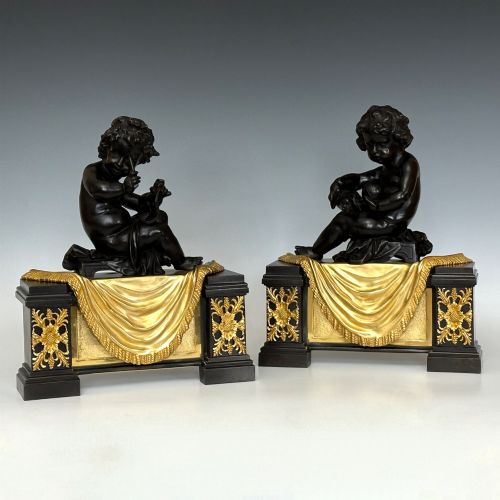
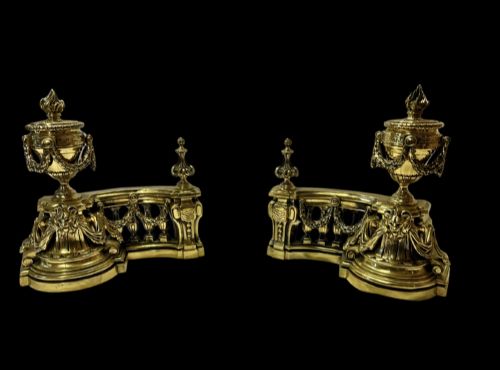
When you search for gilt fireplace irons, you encounter hearth furniture and accessories designed to support logs and complete a fireplace setting. These pieces span periods from the mid-eighteenth century to the late nineteenth century, taking forms such as chenets, fire dogs, and tool rests. French Rococo, Louis XVI, and Regency styles dominate the selection.
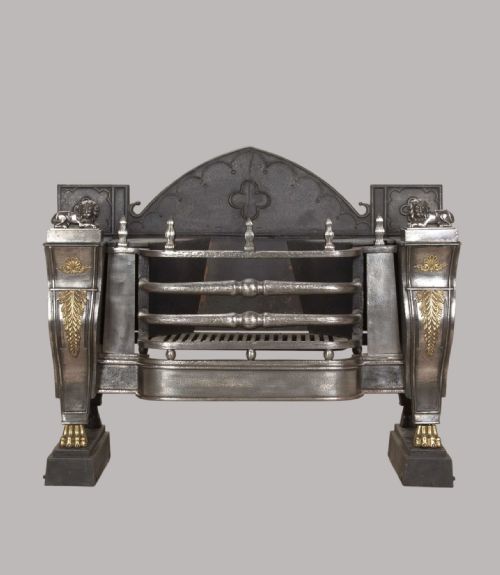
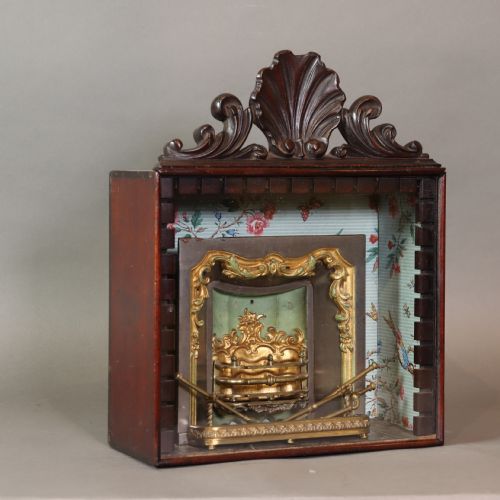
The objects most frequently met on this page are pairs of chenets and fire dogs manufactured from cast iron or bronze, enhanced with ormolu or parcel-gilt details. Alongside these stands, the listings include adjustable brass fenders and matching sets of steel and gilt brass fire irons. Miniature salesman samples also appear among the larger functional items.
How they were made
Maker workshops forged the structural bodies from cast and wrought iron to withstand intense hearth heat. Bronze and brass provided the foundation for decorative mounts, shaped through casting before receiving their gilding.
Makers applied ormolu and parcel-gilt finishes to highlight intricate chased details, particularly on French Rococo and Empire designs. Iron components frequently paired with gilt brass or bronze mounts to balance utilitarian durability with display elegance.
Listings span the eighteenth and nineteenth centuries, featuring brass, bronze, cast iron, and ormolu across French and English aesthetic traditions.
What varies in quality
Quality separates mass commercial foundry output from crisply chased, finely cast bronze and ormolu work. Superior pairs display deep relief in their cherubs, scrollwork, and classical motifs, whereas lesser examples lose definition in the casting.
The integration between the iron support and the decorative gilt mount dictates the overall standard. Robust construction paired with well-preserved fire gilding marks the upper end of the range.
The Gilt Fireplace Irons Glossary
- Chenet
- An ornamental support used at the front of a hearth to hold logs, synonymous with a fire dog. These pieces often feature prominent gilt bronze or brass embellishments.
- Ormolu
- Finely ground high-carat gold applied to a bronze base using a mercury amalgamation technique. This finish produces a rich, durable golden lustre on decorative fireplace mounts.
- Fender
- A low metal guard placed around the hearth to contain stray embers and ash. Versions listed here include adjustable brass and iron configurations.
- Fire grate
- The iron basket or structure that holds the fuel within the fireplace opening. Regency and classical examples often incorporate detailed ironwork.
Gilt Fireplace Irons: Frequently Asked Questions
What is the difference between chenets and fire dogs?
Chenets and fire dogs serve the same function of supporting logs within a fireplace, though the term chenet frequently denotes French decorative designs with elaborate gilt mounts.
Both sit at the front of the hearth, often sold as matched pairs alongside companion tool rests and fenders.
How do I style gilt fireplace irons in a modern room?
These pieces function as sculptural metalwork even when the hearth is unlit, bringing warmth and texture to a chimney breast.
Pair them with complementary brass or bronze fire tools to anchor the focal point of the room.
Were these irons used for burning wood or coal?
The heavier iron structures and grates accommodated coal or wood depending on whether the piece was designed as a hob grate or an open hearth support.
Many French chenets served primarily a decorative role while holding logs above the ash floor.
How can I tell a Regency piece from a Rococo Revival piece?
Regency items typically favour restrained classical lines, geometric balance, and strict symmetry derived from ancient architectural forms.
Rococo Revival pieces, by contrast, embrace asymmetrical scrollwork, naturalistic foliage, and exuberant cast ornament from the mid-nineteenth century.