

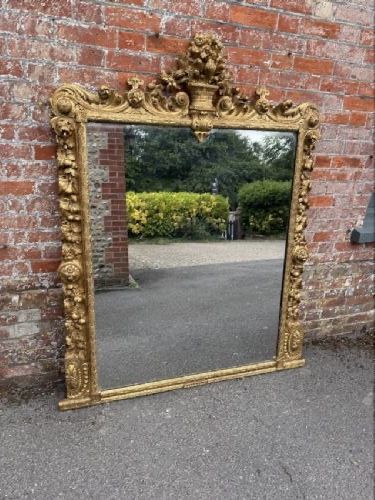
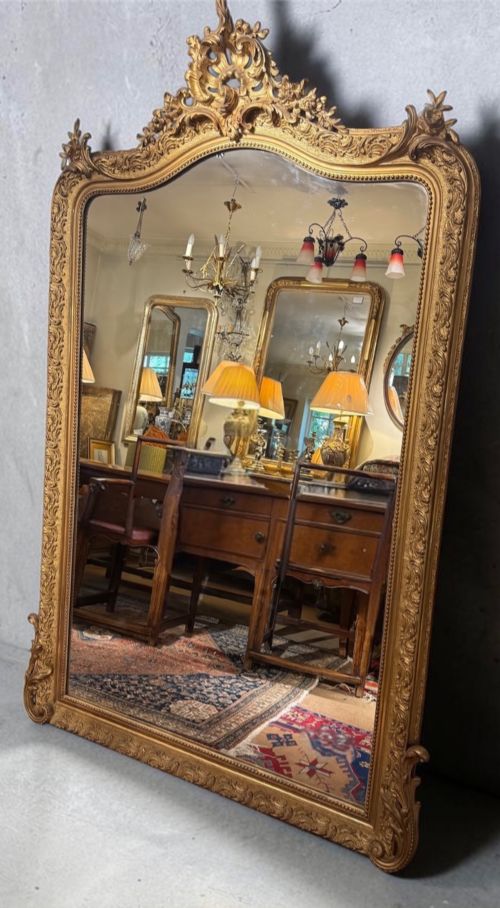
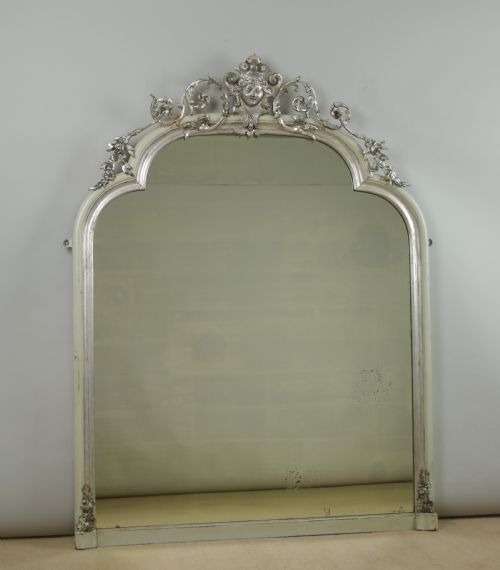


Rococo Revival Crest Mirror
A rococo revival crest mirror brings exuberant 19th-century curves, asymmetric cartouches and gilt surface to a room.
Rococo Revival Crest Mirror
A rococo revival crest mirror centres on elaborate ornamentation at the top, drawing the eye upwards through scrolls, shell motifs and carved cartouches. These pieces span the 19th century into the early 20th century, emerging in Victorian Britain and France with strong French rococo revival influences.
Buyers encounter substantial overmantel mirrors alongside wall mirrors, pier mirrors and smaller brass or rosewood framed variants. The forms range from large arched and cushion frames to shield shapes and painted finishes.
Dating stretches across the Victorian era from the 1850s through the 1880s, alongside pieces from 1900, 1910 and the 1920s. The core aesthetic remains ornate, decorative and heavily tied to giltwood and gesso production.
Materials and construction methods
Makers built the primary frames using carved wood, pine or rosewood, applying layers of gesso to build up the intricate scrollwork and relief details. Composition ornament was often pressed into moulds for repetitive decorative elements.
Gilding was achieved using gold leaf or applied gilt finishes over the prepared gesso and wood base. Brass alternatives utilised cast metal techniques, while painted and silvered overmantel mirrors incorporated contrasting surface treatments alongside traditional glass plates.
Rococo Revival Crest Mirror Retail Price Guide 2026
Typical asking prices for rococo revival crest mirror among the pieces listed under this phrase on Sellingantiques today, from the lower quarter to the upper quarter. They describe what is for sale here now, not the wider market.
Judging quality in frames and crests
Quality rests in the depth and sharpness of the hand-carved wood details versus softer, moulded composition ornament. Crisp shell motifs and well-defined central cartouches show superior craftsmanship.
The integrity of the gilt surface and the preservation of the original gesso layer dictate the visual richness of the piece. Fine mirrors maintain harmonious proportions between the main glass plate and the elaborate crest above.
The Rococo Revival Crest Mirror Glossary
- Cartouche
- An ornamental tablet or frame resembling a rolled-up scroll, frequently placed centrally on the crest of these mirrors.
- Giltwood
- Wood that has been covered with thin gold leaf or gilt paint. This finish creates the bright reflective surface characteristic of the period.
- Gesso
- A plaster mixture applied to wood frames to provide a smooth base for carving or moulding intricate relief decorations before gilding.
- Overmantel mirror
- A large mirror specifically designed to hang above a fireplace mantel. These form a major portion of the larger surviving examples.
- Girandole
- A branched wall mirror fitted with candle sconces. The candle holders reflect light back into the room from the glass surface.
Rococo Revival Crest Mirror: Frequently Asked Questions
Where should I hang a large overmantel mirror?
These large frames sit naturally above a fireplace mantel to anchor the room and reflect light. They also function effectively on primary reception room walls as statement pieces.
Ensure the wall construction supports the considerable weight of carved wood, gesso and glass, securing the mirror with appropriate fixings.
How do I clean a giltwood frame safely?
Dust the ornate scrollwork gently with a soft dry brush to remove particles without disturbing the delicate gold leaf or gesso surface. Avoid liquid cleaners or chemical agents entirely.
Excessive moisture damages aged gilding and composition material, so dry maintenance remains the safest approach for historic frames.
What is the difference between an overmantel and a pier mirror?
Overmantel mirrors are typically wide horizontal or archtop formats built to span the width of a fireplace opening. Pier mirrors are designed for the narrow wall space between windows.
Both utilise rococo revival crests and gilt frames, but their original architectural placement dictated their differing proportions.
Are brass versions from the same period?
Late 19th-century makers produced cast brass wall mirrors featuring mask crests and detailed metalwork alongside traditional wooden frames. These offer an alternative metallic finish.
They share the ornate decorative vocabulary of the Victorian era while providing a heavier, cast metal construction.