

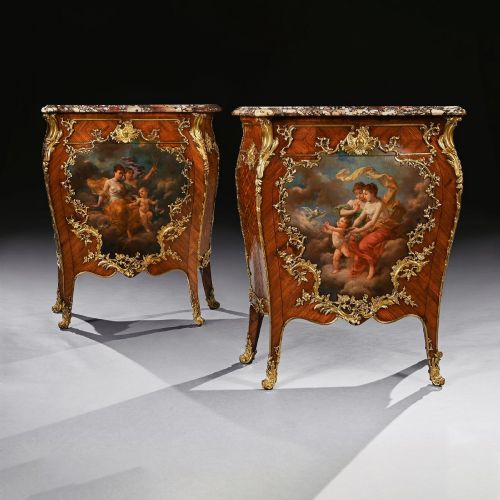


Rococo Revival Commode
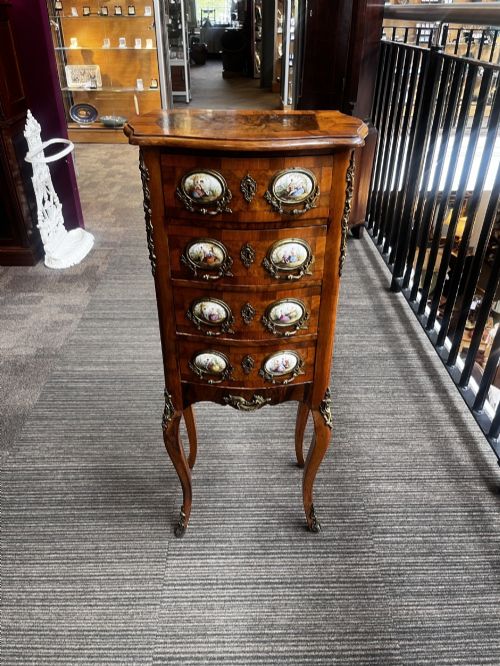
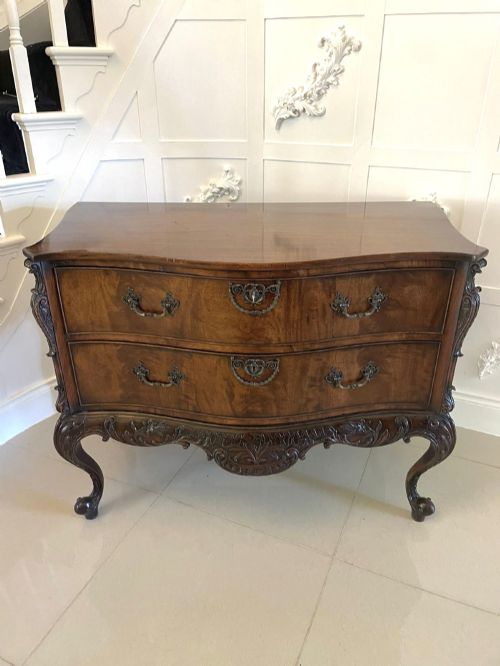
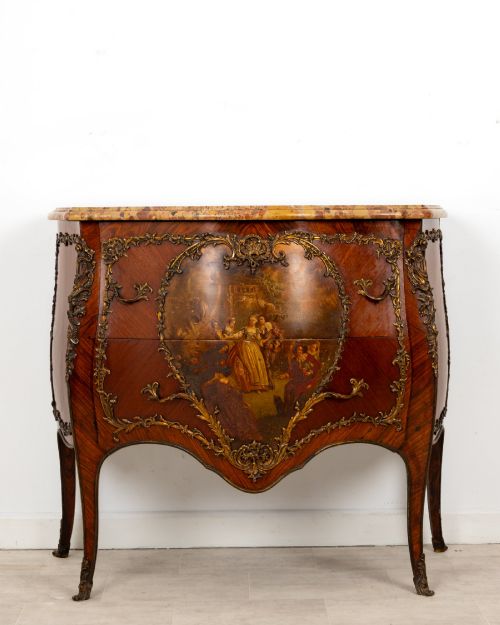
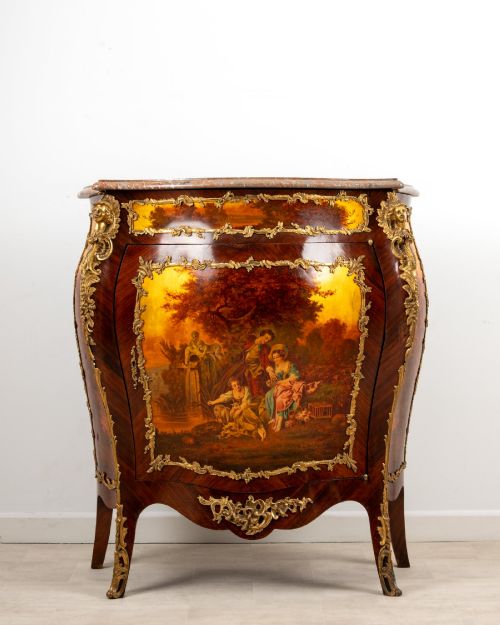
These rococo revival commode pieces combine serpentine timber forms with elaborate ormolu mounts, bringing nineteenth-century French style directly into a room.
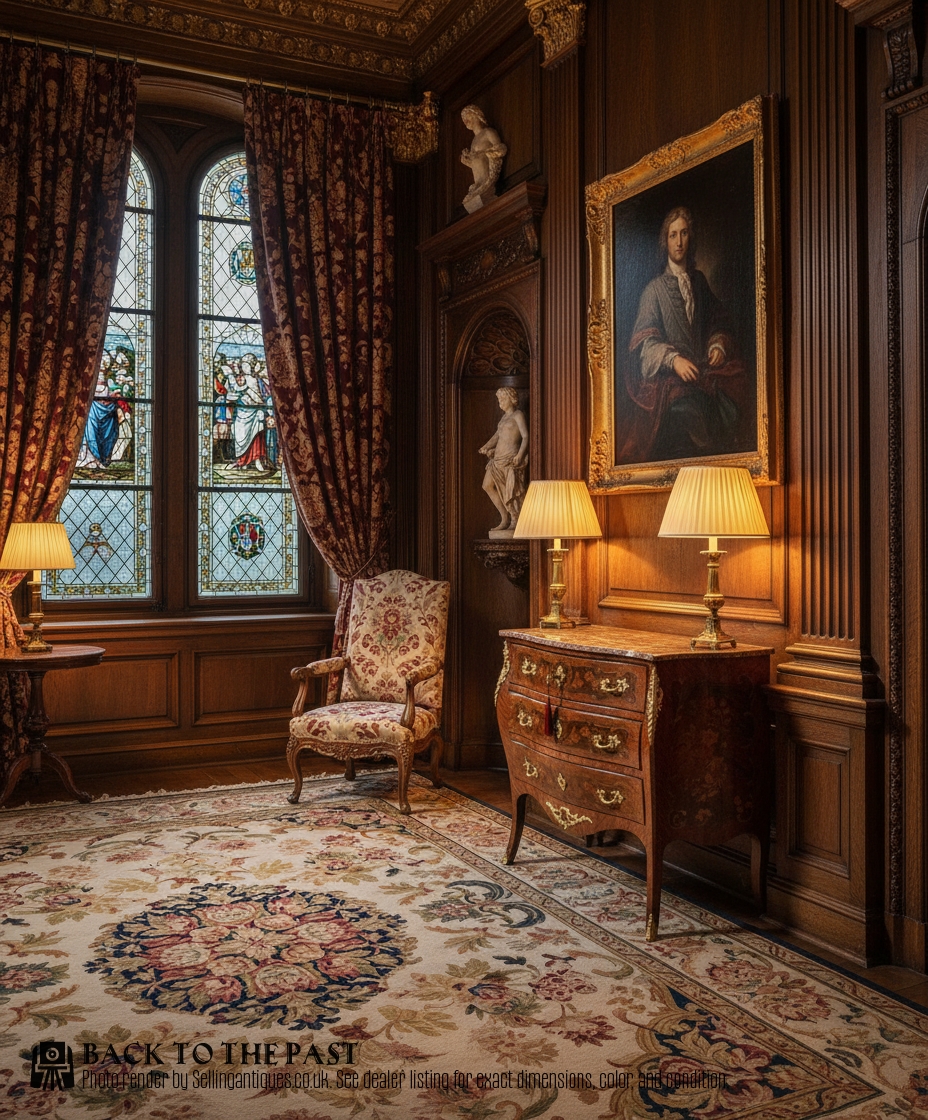
Rococo Revival Commode
A rococo revival commode brings serpentine lines, bombé profiles, and ornamental mounts into domestic interiors, drawing heavily from eighteenth-century French inspiration. When searching this phrase, a buyer encounters pieces primarily from the nineteenth century alongside items dated around nineteen hundred, nineteen ten, and nineteen twenty.
The forms on this page span chests of drawers, side cabinets, dressing tables, and bedside tables. French Louis XV revival and Victorian rococo revival styles dominate the selection, often featuring distinctive marble tops and painted wood surfaces.
Kingwood, mahogany, walnut, and rosewood serve as the primary foundational timbers for these chests of drawers and cabinets. Buyers are most likely to meet French or Victorian interpretations featuring elaborate marquetry and gilt-bronze accents.

Materials and construction methods
Cabinet makers utilised choice timbers including kingwood, rosewood, mahogany, and walnut as the foundational carcase for each rococo revival commode. These woods frequently received intricate marquetry patterns or elaborate painted finishes in the Vernis Martin tradition.
Ornate cast ormolu and gilt-bronze mounts decorate the corners, handles, and aprons of the commodes, echoing the curvilinear aesthetic. Heavy marble slabs form the upper surfaces on numerous examples, providing a contrasting stone top above the timber body.
Several pieces include music cabinets, proving that nineteenth-century musicians also required curved timber housing for their scores.
Distinguishing quality across pieces
The refinement of the ormolu and gilt-bronze mounts separates standard items from superior examples. Finely chased metalwork shows crisp detail and tactile depth rather than flat, repetitive casting.
The complexity of the timber work and marquetry indicates the maker's skill level. Pieces displaying intricate floral inlay, figured mahogany, or detailed Vernis Martin painted scenes sit firmly at the higher end of the range.
The Rococo Revival Commode Glossary
- Bombé
- A swelling, outward-curving front and sides characteristic of advanced cabinet making. This bulging contour requires considerable skill in veneer matching and timber shaping.
- Ormolu
- Gilt bronze mounts applied to furniture edges, corners, and feet for decorative effect. The technique involves applying finely ground gold to a bronze base.
- Marquetry
- Fitted pieces of coloured wood veneer assembled to create pictorial or geometric designs on furniture surfaces. Craftsmen cut these thin timber sections with precision to form elaborate patterns.
- Vernis Martin
- A simulated Japanese varnish technique developed in France during the eighteenth century and revived later. It produced luminous painted scenes on cabinets and commodes.
- Serpentine
- A furniture front or top shaped with a double curve, concave in the middle and convex at the ends. This flowing contour defines much of the revival style.
Rococo Revival Commode: Frequently Asked Questions
What is a rococo revival commode?
A rococo revival commode is a decorative storage chest or cabinet inspired by the curved, ornate styles of the eighteenth-century French court. These pieces typically feature serpentine shapes and elaborate metal mounts.
Craftsmen produced these items primarily during the nineteenth century and the early twentieth century. They serve as both functional drawer units and decorative focal points in a room.
Where were these cabinets made?
Many of these pieces originate from France, particularly Paris workshop traditions, while others reflect British Victorian manufacturing. Makers in both regions embraced French Louis styles during the nineteenth century.
French pieces frequently incorporate Vernis Martin finishes or kingwood veneers. British interpretations often utilise figured mahogany and walnut.
How do I care for a marble top?
The marble slabs fitted to these cabinets require gentle cleaning with a soft damp cloth and neutral soap. Avoid acidic liquids like vinegar or citrus juice which can etch the polished stone surface.
Protective felt pads beneath objects placed on the marble will prevent scratches. Regular dusting keeps the stone finish looking clean and preserves its natural sheen.
How do I identify a revival piece?
Revival pieces combine nineteenth-century manufacturing techniques with eighteenth-century design motifs. Examine the timber construction, interior drawer linings, and fixing methods to determine the exact period.
The presence of machine-sawn timber or nineteenth-century hardware alongside Louis XV revival styling points directly to this later period of manufacture.