

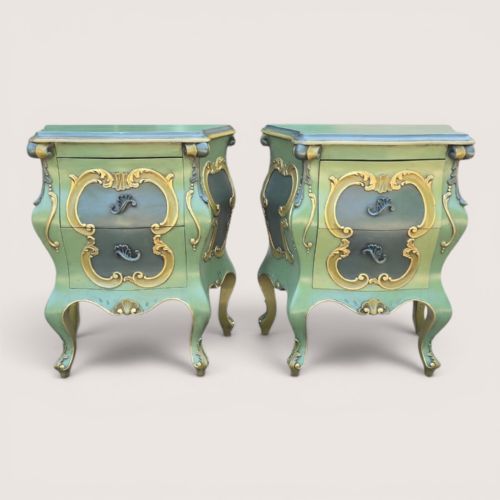
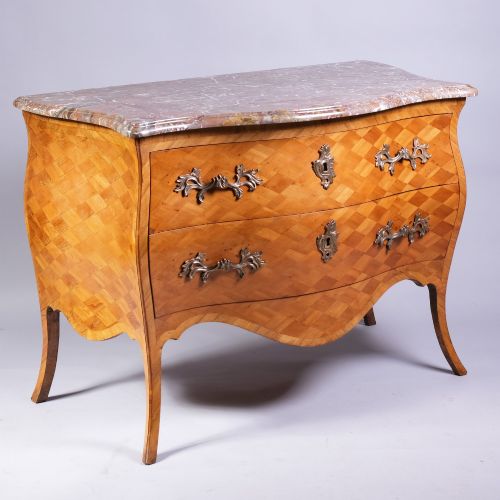


Curved French Drawers
Curved french drawers bring undeniable movement to a room, offering serpentine or bombé profiles that catch the eye and soften corners.
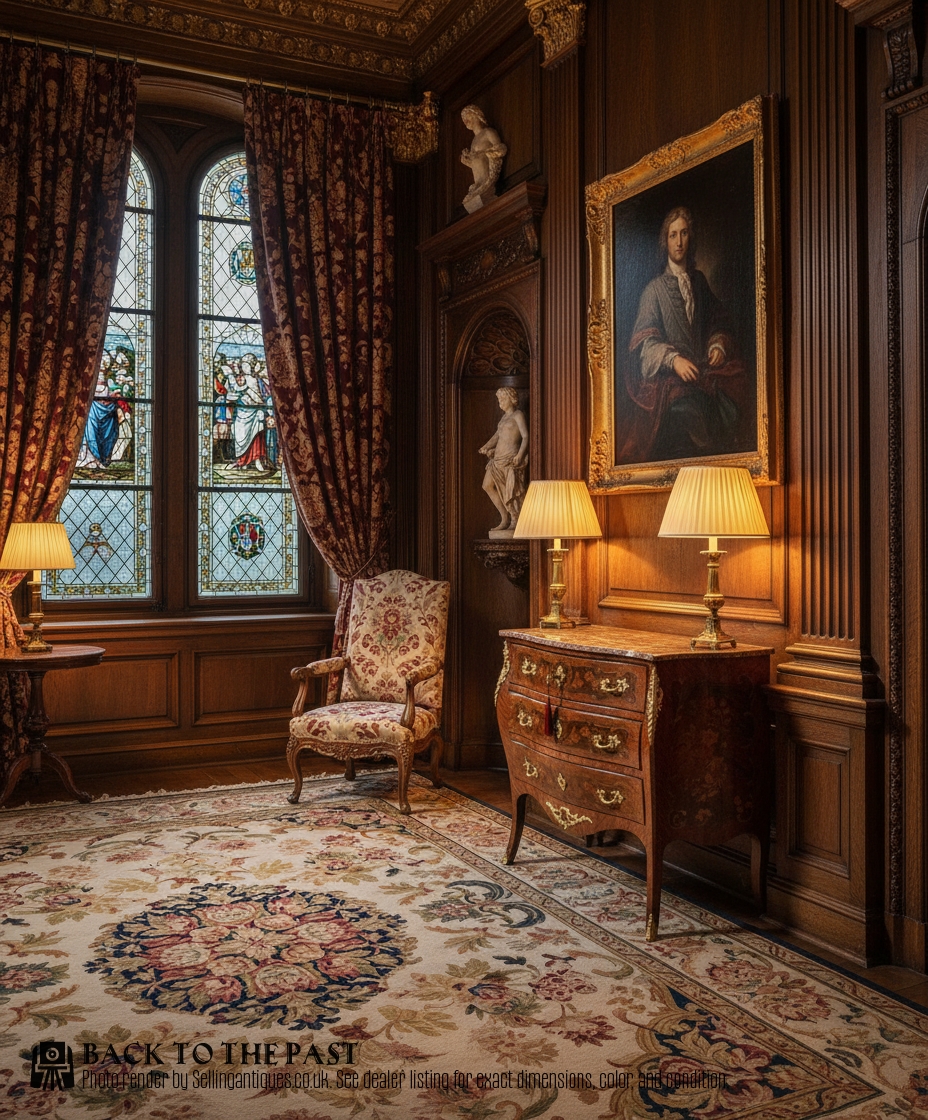
Curved French Drawers
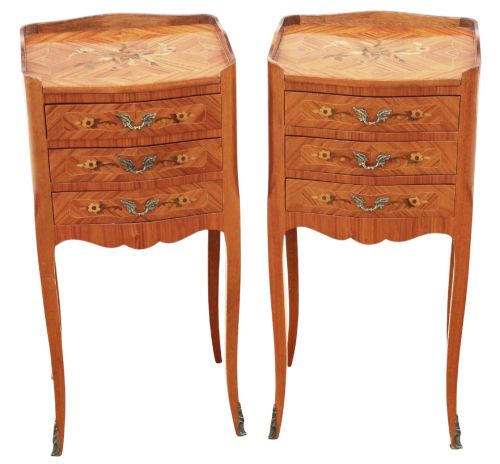
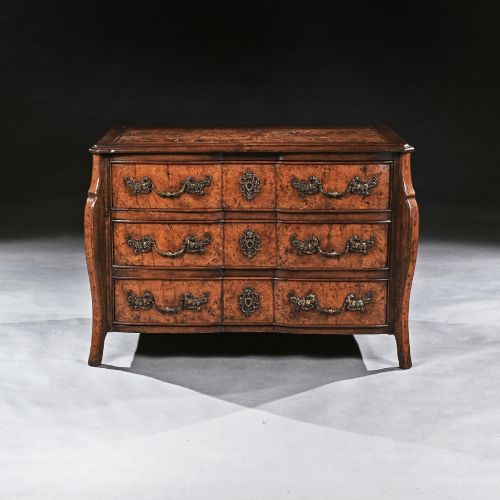
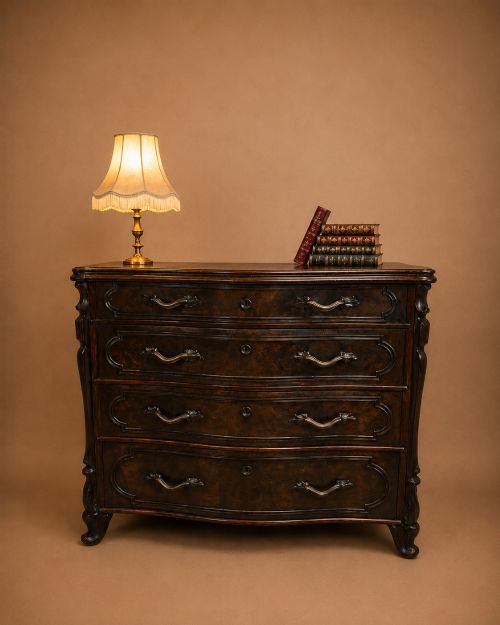
When buyers search for curved french drawers, they encounter a range of commodes, bedside chests, and side cabinets dating from the eighteenth to the twentieth century. These pieces display distinct continental styling, most notably through Louis XV and Rococo influences that shape the timber into flowing, rounded lines.
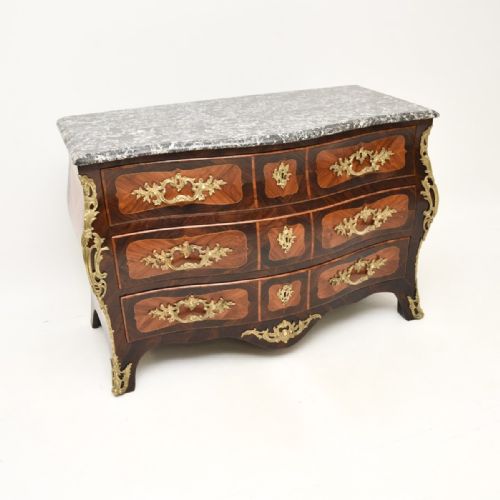
The most common versions met on this page are eighteenth-century commods and nineteenth-century commodes featuring marble tops and rich veneer work. Alongside these larger chests, smaller bedside tables and cabinets appear frequently, bringing the same characteristic silhouette to more intimate spaces.
Origins stretch across French provincial workshops and metropolitan cabinet makers, capturing both rustic painted finishes and sophisticated marquetry. Buyers select these items to introduce architectural grace and practical storage into bedrooms and living spaces alike.
Materials and construction
Cabinet makers utilised a foundation of solid timbers such as walnut, mahogany, and fruitwood, often shaping the carcase to achieve the desired serpentine or bombé contour. Skilled hands then applied decorative veneers including kingwood, burr walnut, and exotic marquetry patterns across the curved drawer fronts and sides.
Many examples incorporate fitted marble slabs across the top surface, precisely cut to follow the undulating perimeter of the chest beneath. Ormolu mounts and cast brass handles were frequently added to accent the corners and key escutcheons, completing the traditional construction.
Pieces range from eighteenth-century provincial commodes to twentieth-century bedside tables.
Assessing quality and craftsmanship
Superior pieces display seamless integration between the wooden carcase and the applied marble top, where the stone follows every contour without awkward overhangs. The precision of the marquetry and the crispness of the bronze or ormolu mounts signal the workshop's standing.
The fluidity of the curve dictates much of the visual success, with finer examples achieving a balanced, organic sweep rather than a stiff or abrupt transition. Interior drawer construction and the matching of grain patterns across multiple drawers further separate standard production from exceptional artistry.
Jacques Bircklé
The Curved French Drawers Glossary
- Bombe
- A bulging, swelling outward curve on the front and sides of a chest of drawers. This silhouette demands advanced joinery to shape the timber successfully.
- Commode
- A low chest of drawers, typically dating from the eighteenth or nineteenth century. The term originates from France where it described decorative storage furniture.
- Marquetry
- Decorative patterns formed by fitting together thin slices of various coloured woods and veneers. Artisans arrange these pieces carefully to create pictorial or geometric designs.
- Ormolu
- Gilded bronze applied as decorative mounts, feet, and handles on fine furniture. The technique involves treating metal with a mercury and gold amalgam.
- Serpentine
- A shaped furniture front featuring a convex centre flanked by two concave curves. This profile creates a gentle wave-like motion across the piece.
Curved French Drawers: Frequently Asked Questions
Are marble tops original?
Many period commodes retain their original heavy marble slabs, which were custom-cut to match the specific serpentine or curved outline of the wooden carcase beneath.
Checking the fit against the edge of the timber helps determine whether the stone has remained with the piece since its creation.
How do I style a commode?
These chests work well as statement pieces in hallways, bedrooms, or living rooms, providing surface area for lamps, mirrors, or decorative objects. Their curved profiles naturally soften angular modern interiors.
Allowing sufficient space around the piece ensures the serpentine or bombé silhouette remains visible and unobstructed.
What timber was used?
Cabinet makers employed a variety of woods including walnut, mahogany, kingwood, and fruitwood as structural bases and decorative surfaces. Marquetry patterns often incorporated multiple contrasting timbers to create detailed floral or geometric motifs.
Painted wood finishes also appear on provincial pieces, offering a different aesthetic from veneered hardwoods.