

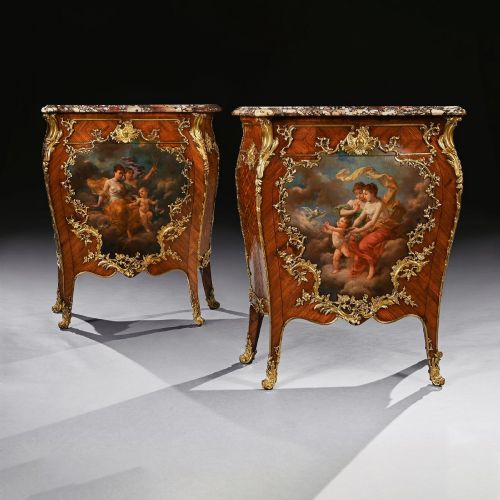


Louis Revival Chest
A louis revival chest brings dramatic French flair to a room, offering grand proportions and ornate metalwork rooted in nineteenth-century craftsmanship.
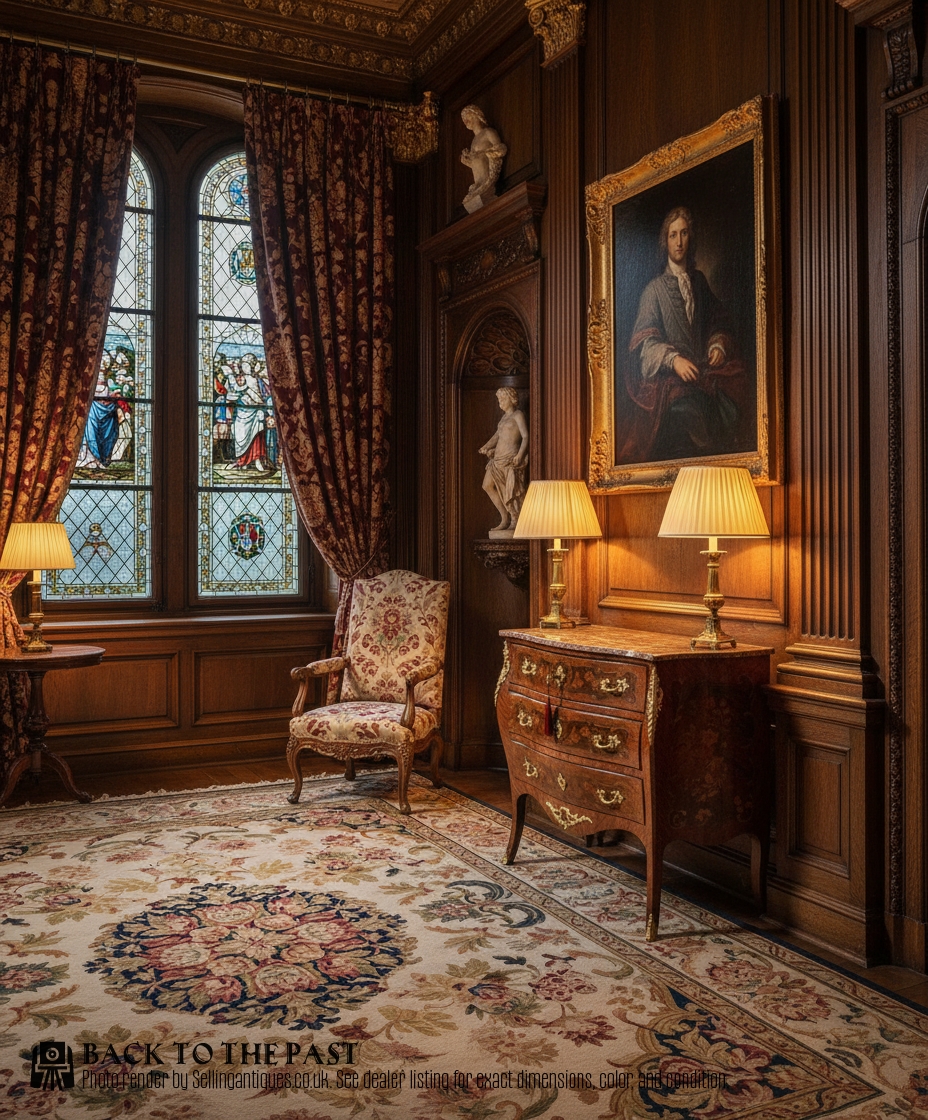
Louis Revival Chest
A louis revival chest draws inspiration from the courtly furniture of seventeenth and eighteenth-century France, translated primarily into nineteenth and early twentieth-century pieces. When searching for a louis revival chest, buyers encounter commodes, bedside chests, and cabinets spanning the Victorian era up to the nineteen-twenties.
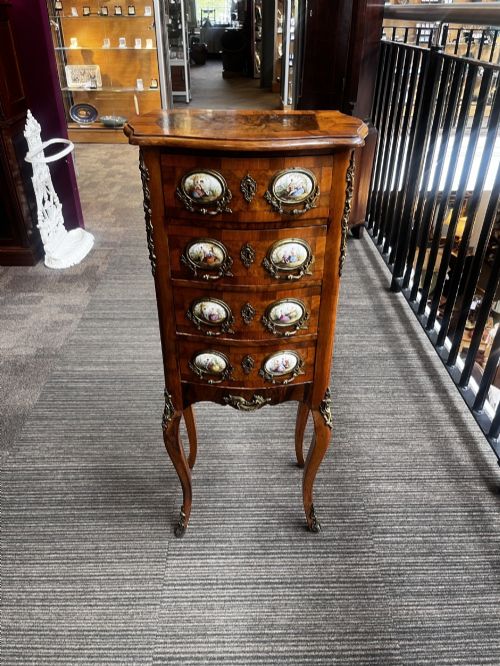
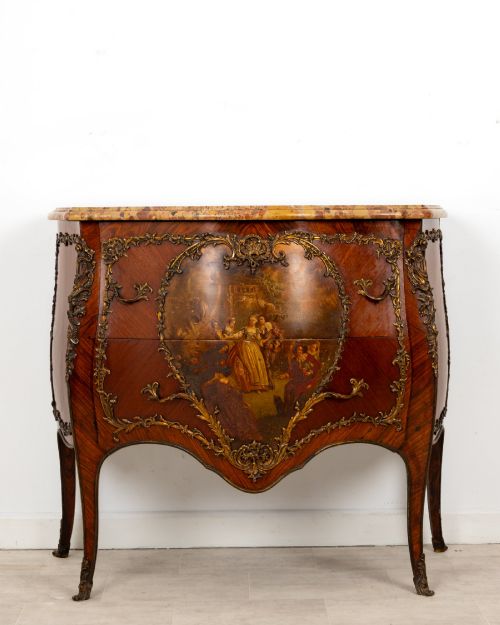
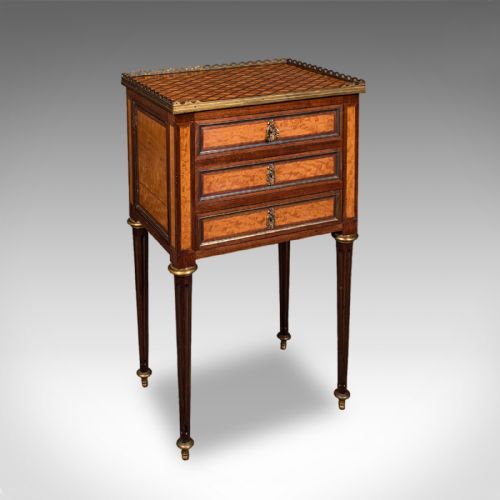
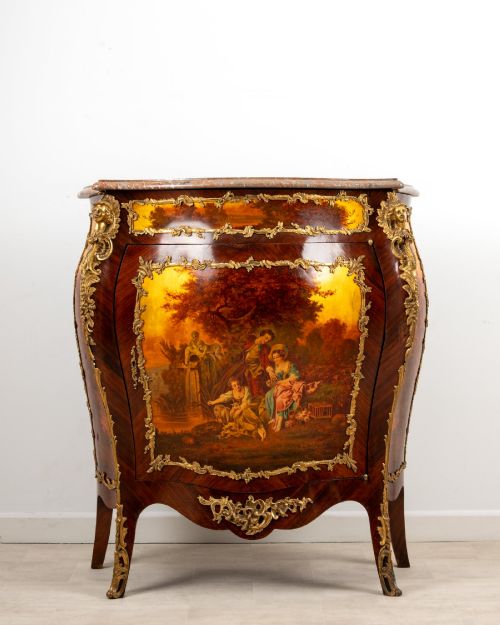
The most common forms on this page include marble-topped commodes and smaller bedside cabinets originating from French workshops. These pieces frequently showcase serpentine fronts and distinct revival styles mirroring the reigns of Louis the fifteenth and Louis the sixteenth.
How they were made
Constructed from foundational timbers such as mahogany, walnut, and chestnut, these chests often receive elaborate decorative veneers of kingwood and burr walnut. Marquetry and parquetry patterns create intricate geometric or floral displays across the drawer fronts and sides.
Gilt bronze and ormolu mounts punctuate the design, framing corners, aprons, and handles with cast metal ornament. Polished marble slabs, fitted precisely to the top surfaces, complete the standard construction methodology for these pieces.
Materials recorded across these listings include marble, brass, kingwood, ormolu, walnut, gilt bronze, lacquer, and mahogany.
What varies in quality
The degree of refinement in the ormolu and gilt-bronze mounts separates standard items from exceptional examples. Finer pieces display crisp, sharply chased metalwork with deep relief, whereas lesser versions show softer, simpler casting.
The complexity of the timber work and the precision of the marquetry also dictate quality. Master makers utilised choice veneers and meticulous hand-cut inlay, whereas simpler examples rely on painted decoration like Vernis Martin or plain polished surfaces.
The Louis Revival Chest Glossary
- Ormolu
- Gilded bronze used for ornamental mounts on furniture. The technique involves applying a gold amalgam to bronze and heating it to drive off the mercury.
- Marquetry
- Decorative veneer work forming pictures or patterns by assembling small pieces of coloured wood, shell, or ivory. It covers the structural carcase of the chest.
- Vernis Martin
- A simulated Japanese lacquer technique developed in eighteenth-century France and revived later. It produces a glossy, painted finish often seen on cabinet doors and panels.
- Serpentine
- A curved shape that is convex in the middle and concave at the ends, creating a gentle undulating line across the front of a chest.
Louis Revival Chest: Frequently Asked Questions
How do I spot a Louis XV revival piece?
Look for asymmetrical curves, cabriole legs, and flowing rococo ornamentation across the mounts and woodwork. These designs emphasise natural, sweeping lines rather than strict symmetry.
Such pieces often feature serpentine fronts and elaborate marquetry patterns depicting floral or pastoral motifs.
What is the difference between Louis XV and Louis XVI styles?
Louis the fifteenth style favours curves, asymmetry, and flamboyant rococo flourishes. It feels organic and dynamic in its overall silhouette.
Louis the sixteenth style introduces straight lines, neoclassical symmetry, fluted columns, and geometric restraint inspired by ancient classical discoveries.
Are these chests practical for everyday storage?
Most commodes and cabinets offer deep drawer space or enclosed shelving suitable for modern domestic use. Their sturdy timber construction holds up well to daily requirements.
Care must be taken with the polished marble tops and delicate veneer surfaces to avoid moisture marks or heavy impact.
How should I care for the marble top?
Clean the marble surface using a soft damp cloth and mild soap, avoiding acidic substances like lemon or vinegar that can etch the stone. Coasters should be used under glasses to prevent staining.
Periodic application of a neutral stone wax helps maintain the protective sheen without harming the historical finish.