


Rococo Pendant Lantern
A rococo pendant lantern brings scrolling asymmetrical curves and warm illumination to a hallway, offering a dramatic focal point derived from eighteenth-century design.
Rococo Pendant Lantern
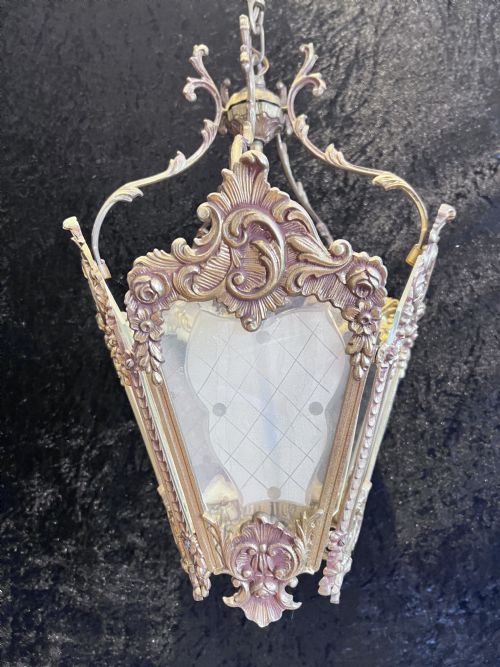
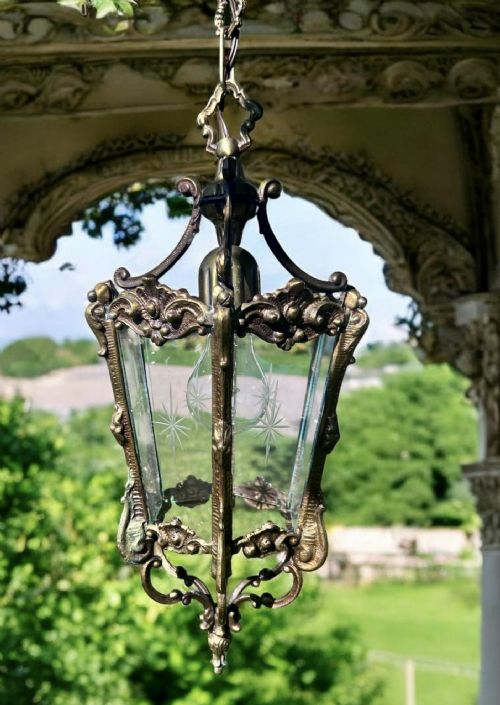
A rococo pendant lantern is typically encountered as a ceiling-hung hall light or hanging lantern originating from the nineteenth and early twentieth centuries, drawing heavily on French and Italian design traditions. These fixtures serve primarily as entrance or hallway illumination, suspended on chains or brackets to cast light through glass panels.
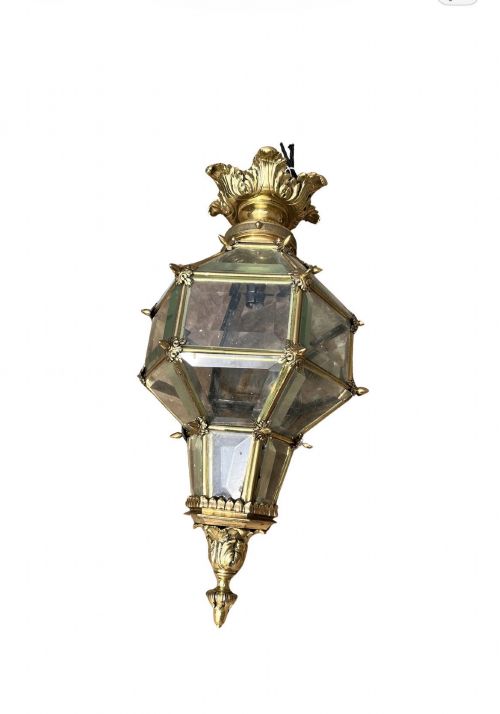
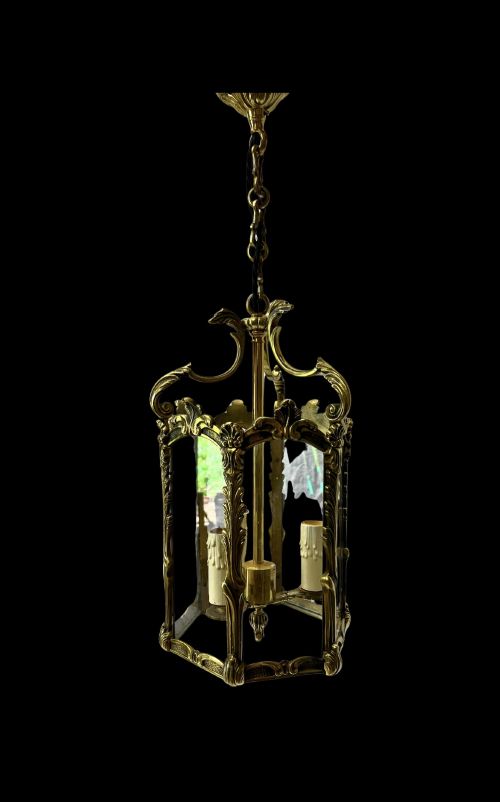
The selection here encompasses various configurations, from single-light brass lanterns to multi-light bronze fixtures and larger giltwood or toleware examples. Most pieces reflect revival styles such as French Rococo Revival or Italian Rococo, echoing earlier Regence aesthetics through elaborate decorative frames.
How they were made
Makers utilised cast and chased brass, bronze, and gilded bronze to form the intricate scrolling frames characteristic of the style. Gilding and silvering were frequently applied to metal surfaces to enhance reflectivity and create opulent decorative finishes.
Glass panels, sometimes bevelled or etched, were fitted into the metal armatures to enclose the internal bulbholders or candle sockets. Alternative materials such as toleware and giltwood also appear, demonstrating diverse workshop practices across the nineteenth and early twentieth centuries.
Materials documented in these listings include glass, brass, gilded bronze, bronze, etched glass, gilt bronze, toleware, and silvered bronze.
What varies in quality
The distinction between standard and superior pieces lies in the crispness of the casting and the depth of the chased detail upon the bronze or brass frame. Finer examples display deeply undercut ornamentation and substantial metal weight rather than shallow, uniform stamping.
Another measure of quality is the treatment of the glass and the integration of secondary materials like toleware or giltwood. Heavier framing, superior fire-gilding, and complex multi-light configurations generally distinguish the more ambitious commissions from simpler domestic lanterns.
The Rococo Pendant Lantern Glossary
- Rococo Revival
- A nineteenth-century artistic movement that revived the ornate, asymmetrical scrollwork of the eighteenth-century French Rococo style. This aesthetic dominates the decorative metalwork of these lanterns.
- Gilded Bronze
- Bronze that has been coated with a thin layer of gold using fire gilding or electroplating methods. It provides a durable, lustrous finish that resists tarnishing.
- Toleware
- Painted or lacquered sheet metal used in decorative objects and light fittings. It allows for vibrant polychrome surface decoration.
- Bevelled Glass
- Glass panes featuring an angled edge cut around the perimeter. This technique refracts light entering and leaving the lantern to create subtle optical effects.
- Hall Lantern
- A ceiling-suspended light fixture specifically designed for narrow entrance spaces and corridors. These fixtures provide both vertical presence and downward illumination.
Rococo Pendant Lantern: Frequently Asked Questions
How do I hang a heavy bronze lantern safely?
Hanging a heavy bronze or brass lantern requires securing the ceiling rose directly into a timber joist or using appropriate structural fixings capable of supporting the dead weight.
Because many nineteenth-century fixtures are substantially heavier than modern domestic lighting, professional installation by an electrician ensures the ceiling structure bears the load securely.
Can these electrified lanterns take modern bulbs?
Most surviving lanterns have been adapted at some point in their history to accept standard modern electrical wiring and internal lamp holders.
An electrician can easily fit contemporary candle tubes and low-energy LED bulbs while retaining the original historical appearance of the internal fittings.
Where should a pendant lantern be placed?
A pendant lantern is traditionally positioned in a high-ceilinged entrance hall, landing, or stairwell where the hanging drop can be appreciated from multiple angles.
Sufficient clearance must be maintained beneath the lowest point of the fixture to allow safe passage for individuals walking underneath.
How do I clean gilded bronze and glass?
Cleaning gilded bronze requires gentle dusting with a soft brush to avoid wearing away delicate metallic surfaces. Water and harsh chemical cleaners should be strictly avoided on antique gilt.
Glass panels can be removed carefully or wiped in situ using a mild glass cleaner applied to a cloth rather than sprayed directly onto the metal frame.