
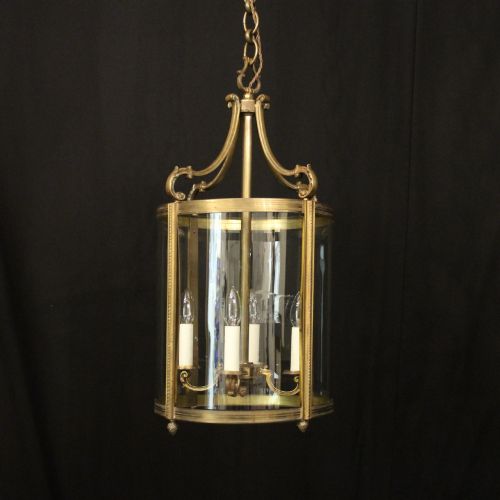
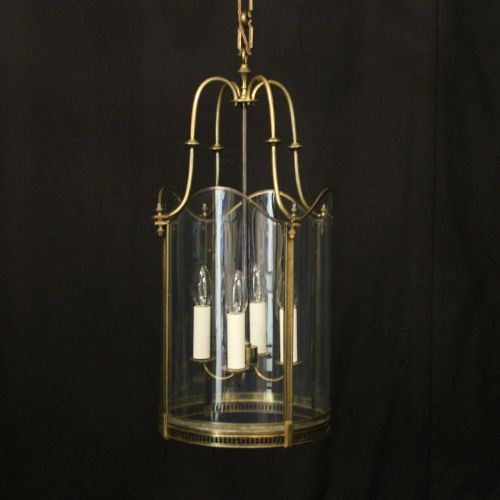
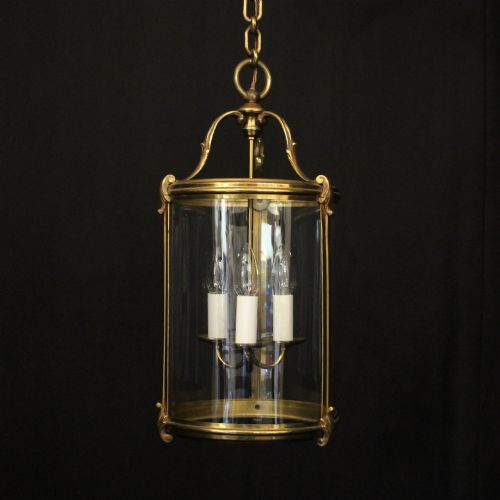
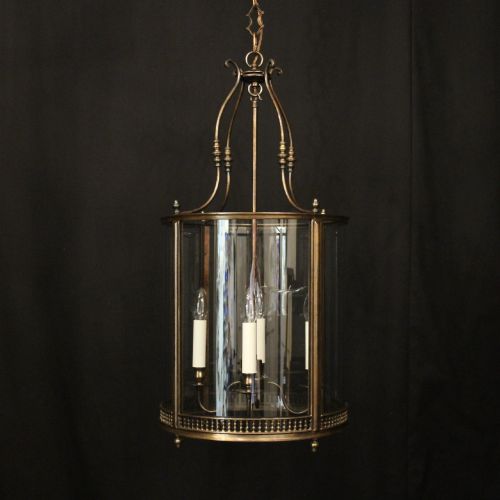
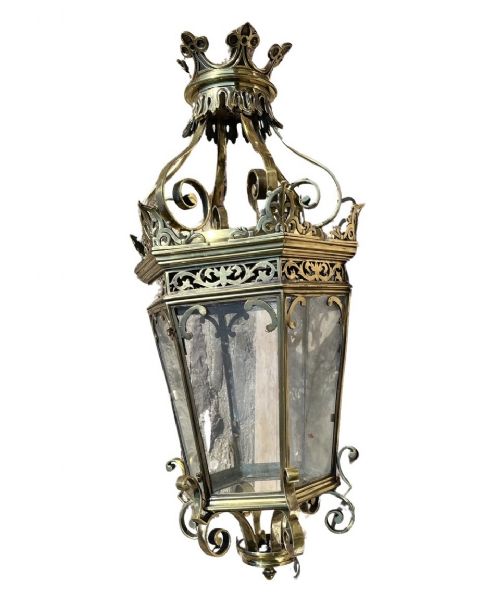
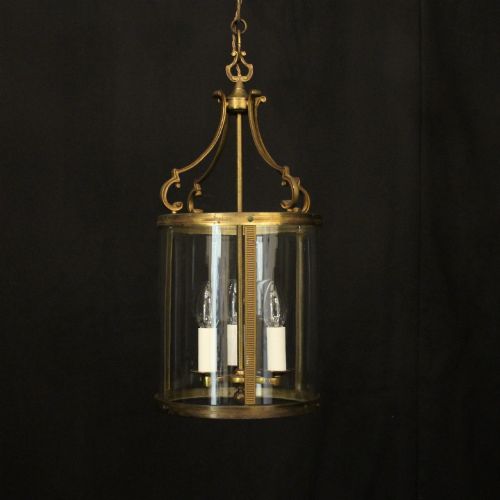
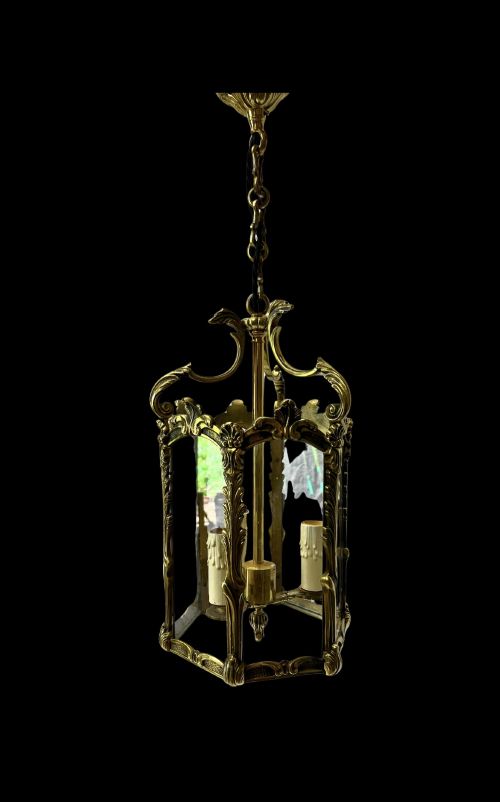


Entryway Hall Lantern
An entryway hall lantern sets the tone for an entire interior, casting light through glass panels held by brass, bronze or iron.
Entryway Hall Lantern
An entryway hall lantern hangs from the ceiling to illuminate passages, corridors and vestibules, combining practical domestic lighting with decorative presence. These overhead fixtures range from single light pendants to multi-bulb ceiling lights suited to generous entrance spaces.
The selections available here lean heavily towards French designs from the early twentieth century, alongside English and Italian examples. You will find forms spanning convex glass shapes, large proportions and sturdy frames originating across the nineteenth and twentieth centuries.
What varies in quality
The distinction between standard and superior pieces rests on the weight and handling of the metalwork, whether cast bronze, heavy brass or hand-forged wrought iron. Finer examples display crisp detail in the surface chasing, careful gilding and substantial glass thickness.
Proportion and scale also dictate distinction, particularly in larger hall lanterns where balanced dimensions and integrated door mechanisms demand skilled metalworking and assembly.
Listings feature materials such as brass, gilt bronze, wrought iron, and silvered bronze across the nineteenth and twentieth centuries.
The Entryway Hall Lantern Glossary
- Convex glass
- Curved glass panels that project outward to diffuse light across a wider angle. This curved form appears frequently in twentieth-century hall designs.
- Gilded bronze
- Bronze metal coated with a thin layer of gold leaf or powder to create a rich surface sheen. This material withstands tarnishing while offering a bright decorative finish.
- Wrought iron
- Iron beaten and shaped by hand into structural and decorative frames. This material provides sturdy support for lanterns designed with Arts and Crafts or revival aesthetics.
- Hall lantern
- A ceiling-suspended light fixture specifically intended for entrance spaces and corridors. These fixtures project illumination downward while enclosing the light source within glazed sides.
Entryway Hall Lantern: Frequently Asked Questions
How do I hang a hall lantern?
These ceiling lights suspend from chains or rods attached directly to the primary structural ceiling joists. Professional electricians should handle the hanging and internal wiring to support the weight safely.
Ensure the drop height allows adequate clearance beneath the fixture for doors to open fully within the entryway.
Are these lanterns electrified?
Most pieces listed arrive wired for modern electricity, utilising single or multiple internal lamp holders. Some retain older electrical setups that may require updating to meet current safety standards.
Inspect the internal wiring upon delivery and consult an electrician if rewiring is necessary for domestic installation.
How do I clean the glass panels?
Remove dust gently using a soft, dry cloth before applying a mild glass cleaner to the interior and exterior panels. Take care not to use abrasive materials that could scratch the surrounding metal finish.
Many designs feature a small hinged door that opens to allow direct access to the interior glass surfaces.
How do I date a brass lantern?
Examine the construction methods, screw types and metal patination to estimate the period of manufacture. Pieces from the nineteenth century often show hand-forging traits, while twentieth-century examples display more uniform casting.
Compare the stylistic motifs, such as French rococo or Arts and Crafts details, against known period characteristics.