
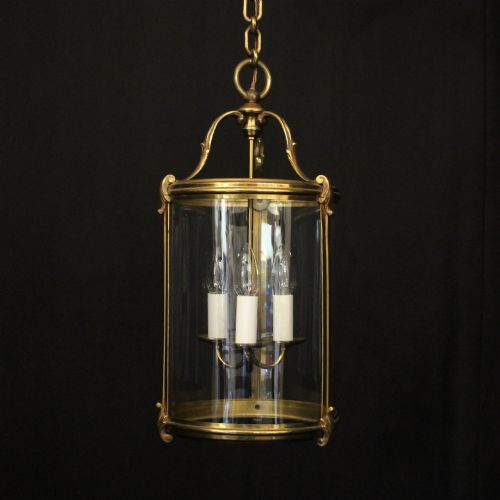
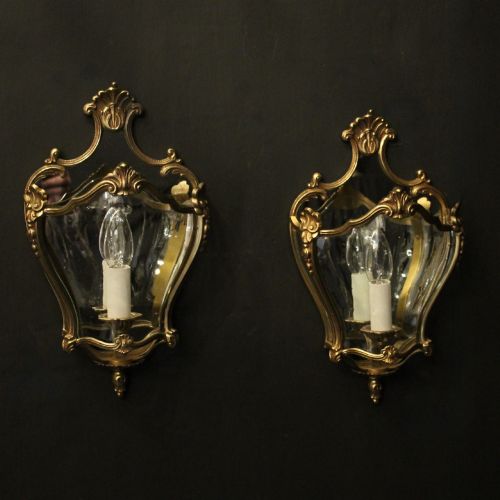
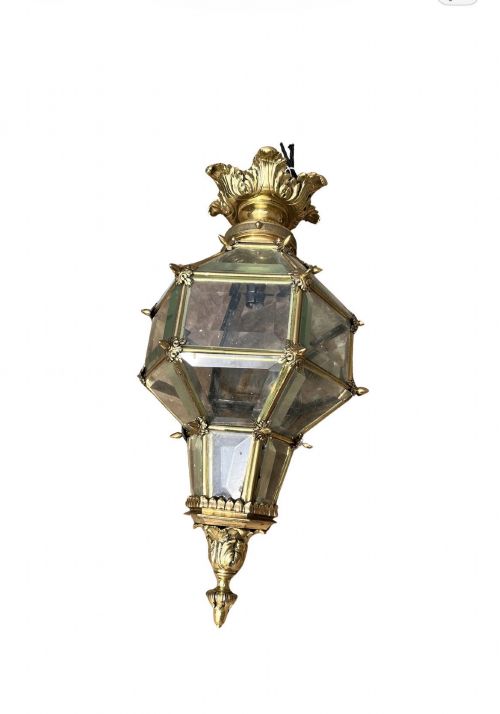
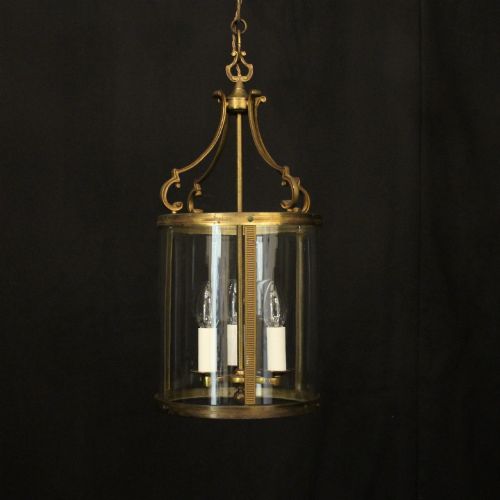
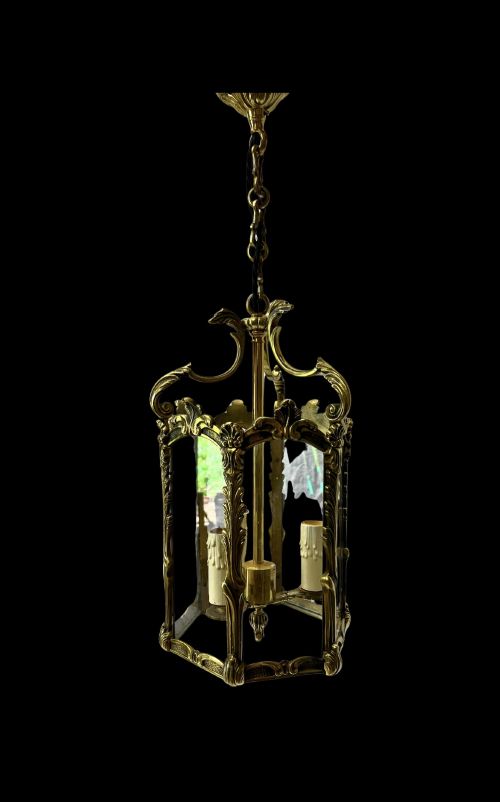


Louis XV Lantern
These louis xv lantern fixtures bring French rococo and chateau style into a hallway.

Louis XV Lantern
When you search for a louis xv lantern, you are looking at French hall lanterns, ceiling lights, and wall sconces designed in the rococo and chateau styles. The pieces on this page span from the nineteenth century through the 1920s and 1930s, with many taking the form of convex hall lanterns and triple light or four light ceiling fixtures.
You are most likely to meet twentieth century interpretations of earlier French designs, particularly pieces produced around 1920 and 1930 that utilise brass, bronze, and gilded bronze. These include single pieces as well as matched pairs, often electrified for modern use while retaining their historic appearance.
The archive shows that earlier examples from the late nineteenth century and occasionally the eighteenth century share the same vocabulary of bow fronted or convex glass panels and gilt metal frames. Hallways and high ceilinged rooms remain the primary setting for these decorative hanging lights.
Materials and Construction
The structural framework of these lanterns relies on cast metals such as bronze, brass, and gilt bronze, shaped into ornate frames that hold curved or flat glass panels. Artisans employed gilding techniques to coat bronze and brass surfaces, creating a bright metallic finish that reflects candle or electric light from within.
Glass panels are frequently convex or bow fronted, requiring specialised shaping to fit snugly into the metal mounts of hall lanterns and ceiling lights. Internal fittings accommodate multiple bulb configurations, ranging from single lights to triple and four light arrangements.
Louis XV Lantern Retail Price Guide 2026
Typical asking prices for louis xv lantern among the pieces listed under this phrase on Sellingantiques today, from the lower quarter to the upper quarter. They describe what is for sale here now, not the wider market.
The listings show materials spanning plain brass, bronze, and gilded bronze, paired with glass in both convex and flat panel formations.
Assessing Quality
Quality in these lighting fixtures rests on the crispness of the metal casting and the depth of the gilding on the bronze or brass framework. Finer pieces display sharply defined rococo scrollwork and substantial metal weight rather than thin stamped components.
The integration of the glass panels within the metal cage further distinguishes finer examples, where curved and cut glass fits securely without excessive movement. The overall harmony of proportion between the glazed body and the suspension mounts determines the visual success of the piece.
The Louis XV Lantern Glossary
- Convex lantern
- A hanging light featuring curved glass panels that bulge outward from the metal frame. This shape softens the profile and disperses light widely across a space.
- Ormolu
- Gilded bronze used extensively in decorative metalwork and lighting fixtures. The technique applies a gold amalgam to a bronze base, producing a rich metallic sheen.
- Rococo style
- An ornate design movement characterised by asymmetric scrolls, shell motifs, and natural curves. It forms the primary aesthetic foundation for these French lanterns.
- Half lantern
- A flat backed wall-mounted light designed to sit flush against a vertical surface. These pieces share the glazed sides and metal frames of hanging hall lanterns.
Louis XV Lantern: Frequently Asked Questions
Where should I hang a hall lantern?
These fixtures work best in entrance halls, corridors, and stairwells where their downward illumination and decorative metal frames can be appreciated from multiple angles. They require adequate ceiling height to hang freely without obstructing movement.
Ensure the scale of the lantern matches the proportions of your room. Larger triple and four light versions suit expansive entrance spaces, while compact wall sconces fit tighter passages.
Are these lanterns electrified?
Many surviving examples have been adapted for modern electricity during their history. Wiring is typically routed through the central suspension rod or chain to power interior bulb fittings.
It is advisable to have any vintage lighting fixture checked by a qualified electrician before installation to ensure the internal wiring meets current safety standards.
How do I clean a gilded bronze lantern?
Dust the metal frame and glass panels gently with a soft dry cloth. Avoid abrasive cleaners and chemical polishes that can strip the gilt finish from the bronze or brass surface.
Glass panels can be removed carefully for washing if necessary, provided the metal tabs holding them in place are handled with caution.
How do I tell nineteenth century pieces from later ones?
Nineteenth century lanterns often exhibit heavier cast bronze construction and hand finished details that reflect earlier neoclassical or rococo revival tastes. Twentieth century reproductions from the 1920s and 1930s frequently utilise similar forms but may show different manufacturing marks or wiring methods.
Examining the construction of the metal joints and the wear on the gilding helps determine the approximate period of manufacture.