



Rococo Glass Cabinet
A rococo glass cabinet brings dramatic, curvilinear French revival flair to interiors while framing prized collections behind glass.
Rococo Glass Cabinet
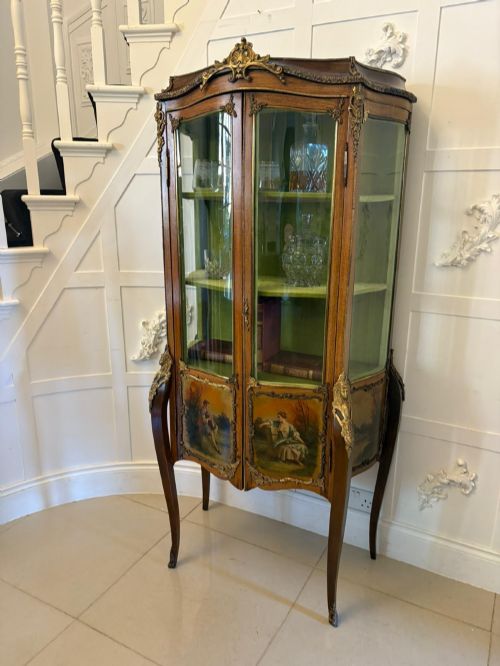
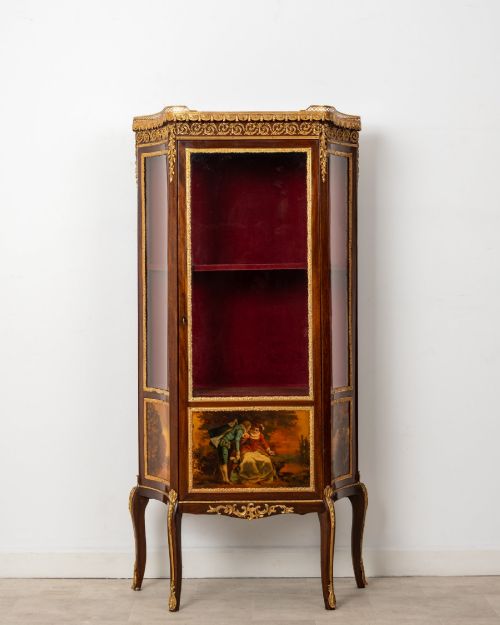
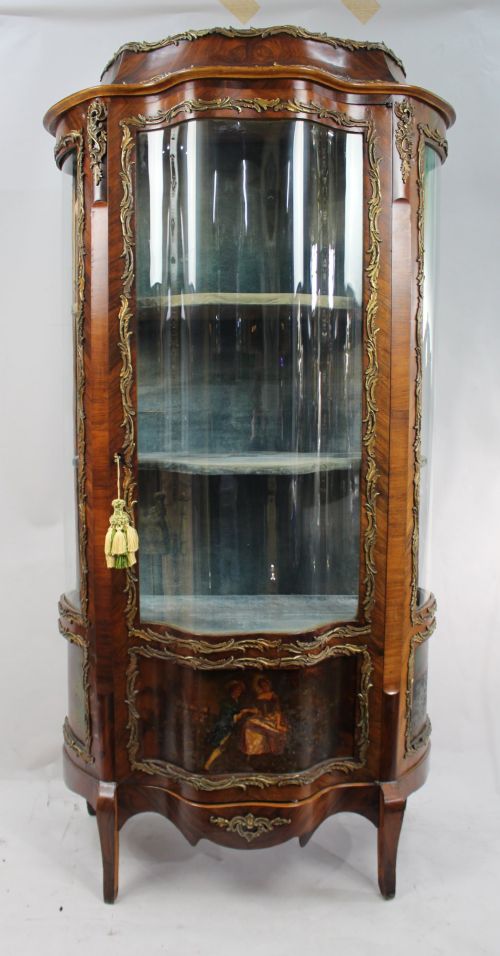
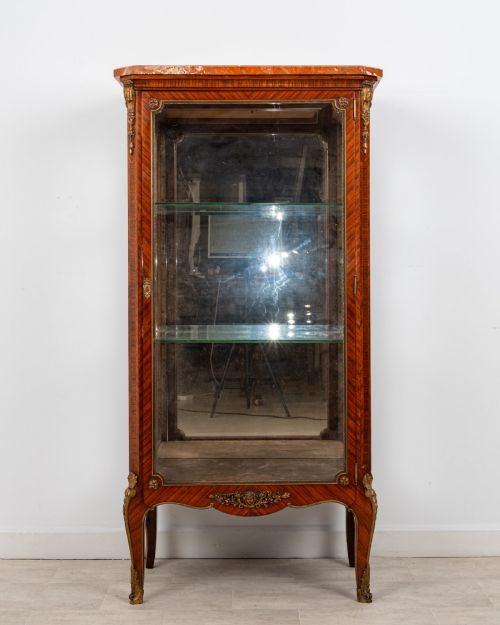
A rococo glass cabinet unites display functionality with elaborate revival aesthetics rooted in eighteenth-century French design. These pieces appear primarily as nineteenth-century vitrines, display cabinets, and serpentine cabinets reflecting Louis XV styles.
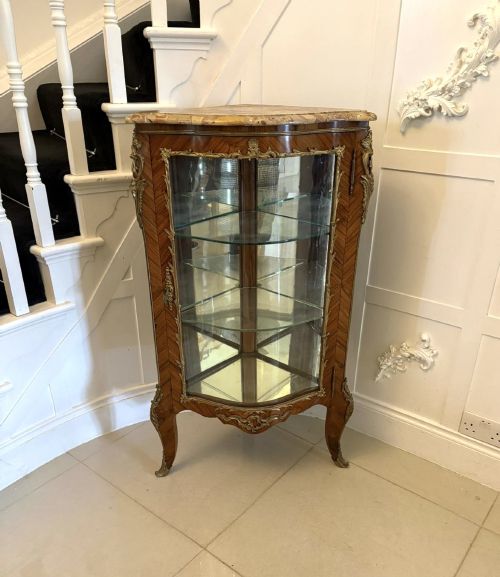
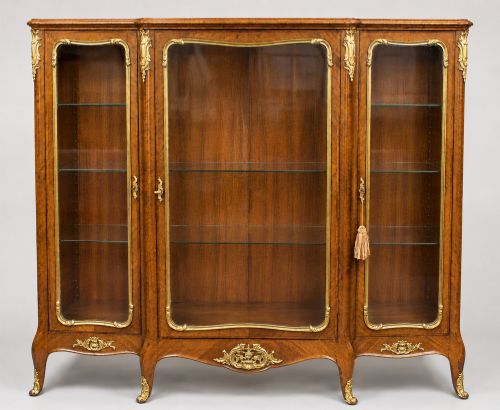
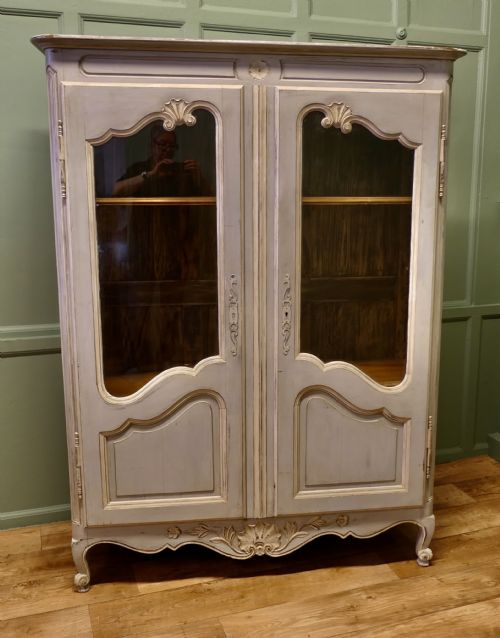
The selection ranges from compact corner units and bijouterie tables to large double-door bookcases and credenzas. Walnut, mahogany, and kingwood form the primary structural timbers supporting extensive glazing for object presentation.
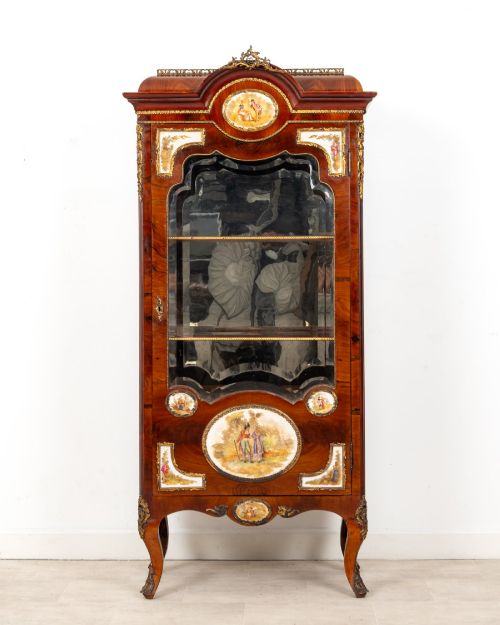
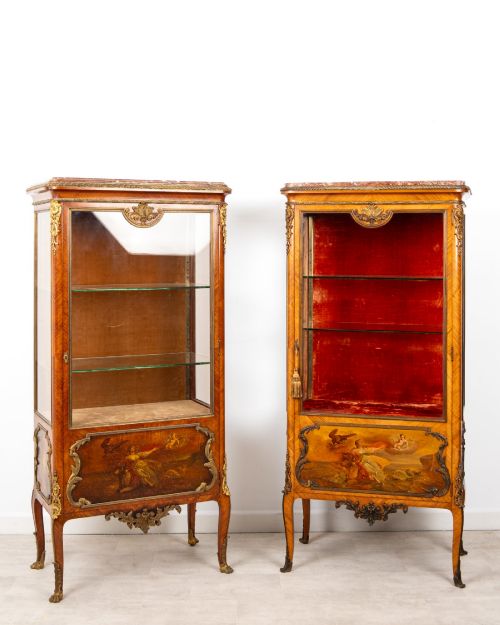
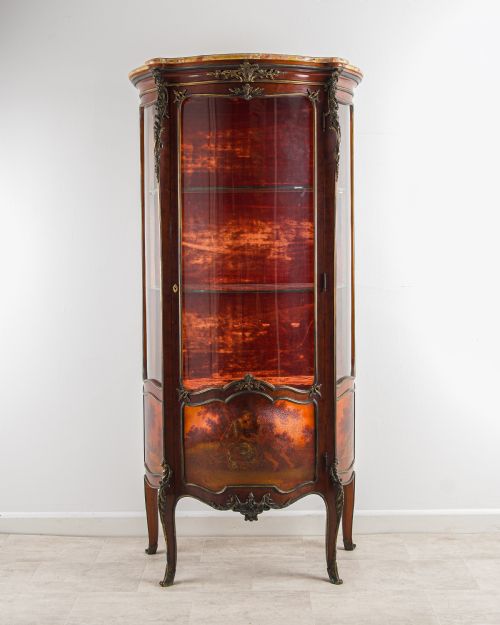
Makers and cabinetmakers of the Victorian and Edwardian eras channels French chateau aesthetics through serpentine fronts, painted panels, and elaborate mounts. The dominant format is the freestanding glazed vitrine designed to showcase porcelain and small antiquities.
Materials and construction methods
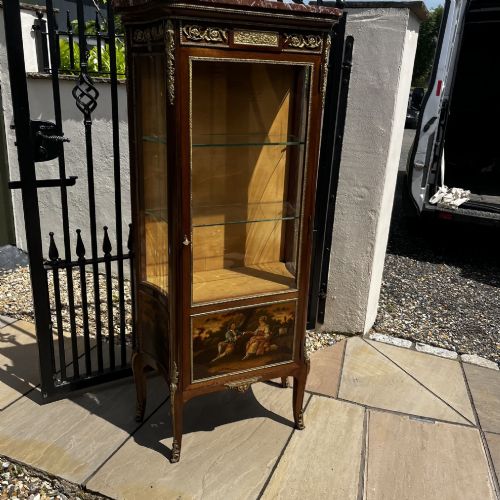
Makers built these cabinets using dense hardwoods such as mahogany, walnut, and kingwood, frequently applying intricate marquetry and parquetry patterns across the surfaces. Vernis Martin painted panels depicting pastoral scenes often decorate the lower sections.
Cast gilt bronze and ormolu mounts accentuate the curved contours, framing glass panels and corners with rocaille scrollwork. Marble tops complete the upper surface on many examples, adding weight and refined texture to the design.
Certain cabinets hide secret compartments behind mirrored backs, offering discreet storage for love letters alongside your porcelain teacups.
Assessing craftsmanship and finish
The distinction between standard production and top-tier pieces rests on the crispness of the ormolu casting and the depth of the wood veneers. Superior examples exhibit hand-chased bronze mounts and meticulously matched kingwood or walnut grain.
Painted panels signed in the manner of Vernis Martin show considerable variation in artistic execution and brushwork detail. Structural integrity in the serpentine curves and the precision of the door alignment indicate the standard of workshop output.
François Linke·Gillows
The Rococo Glass Cabinet Glossary
- Ormolu
- Gilt bronze mounts applied to furniture. This decorative technique involves mercury gilding cast bronze ornaments to create a bright golden finish.
- Vernis Martin
- Simulated Japanese lacquerwork developed in France. The technique uses multiple layers of varnish to protect delicate painted pastoral scenes.
- Vitrine
- A glass-fronted display cabinet. These pieces allow light to reach objects from multiple angles while protecting them from dust.
- Serpentine
- A curved furniture front curving inward centrally and outward at the sides. This contour defines much of the rococo revival output.
- Marquetry
- Inlaid wood veneers forming decorative patterns. Craftsmen piece together contrasting timber grains to create pictorial or geometric designs.
- Bijouterie table
- A glass-topped display table designed for small valuables. These tables incorporate glazed compartments for inspecting jewellery and trinkets.
Rococo Glass Cabinet: Frequently Asked Questions
How do I clean a rococo glass cabinet?
Dust wood surfaces regularly with a dry cloth and avoid commercial polishes containing silicone. Clean glass panels using a mild solution and a microfiber cloth to protect adjacent gilt mounts.
Keep ormolu mounts free from moisture and abrasive cleaners to preserve the original metallic finish. Position the cabinet away from direct sunlight to prevent fading on painted panels and interior fabrics.
Where should I place a vitrine?
Position the cabinet in a principal room away from direct heat sources and drastic temperature shifts. Stable environmental conditions prevent timber movement and protect fragile veneer work.
Ensure adequate floor support because marble tops and dense hardwoods add substantial weight to these cabinets. Allow sufficient clearance around doors to operate hinges and locks safely.
How do I date a glass cabinet?
Examine construction methods, wood types, and fastener styles visible inside the cabinet frame. Machine-cut screws and modern adhesives point toward later reproduction pieces.
Compare stylistic details such as ormolu casting quality and veneer selection against documented nineteenth-century revival periods. Maker stamps or signatures on mounts often provide definitive production dates.
Can I adjust the glass shelves?
Most antique cabinets feature fixed wooden supports or early adjustable brackets rather than modern metal tracks. Altering shelf heights requires careful handling of old timber housings.
Consult a professional restorer before attempting modifications to internal supports. Original glass shelves are often fragile and prone to breaking under sudden pressure.