


Rococo Floral Centrepiece
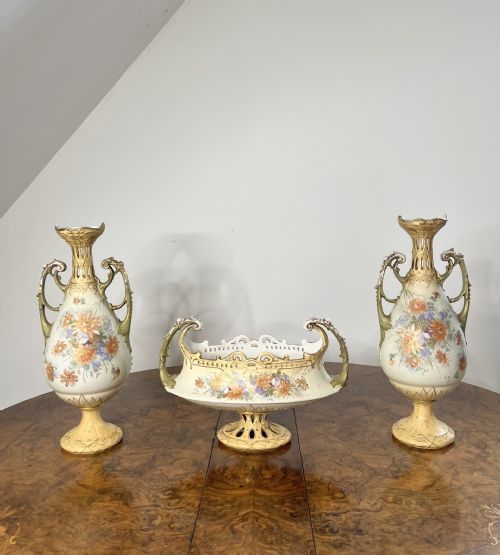
A rococo floral centrepiece brings sculptural movement and naturalistic detail to a table, uniting asymmetrical scrolls with applied porcelain blooms.

Rococo Floral Centrepiece
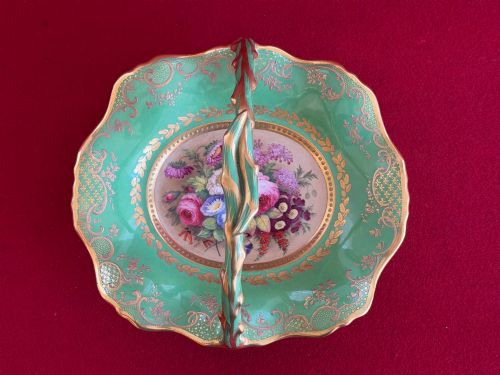
A rococo floral centrepiece combines functional vessels with exuberant natural forms, appearing primarily as porcelain baskets, comports, and figural table garnitures. These items emerge frequently from nineteenth-century continental kilns and British manufactories, manifesting in revival styles that echo eighteenth-century tastes.
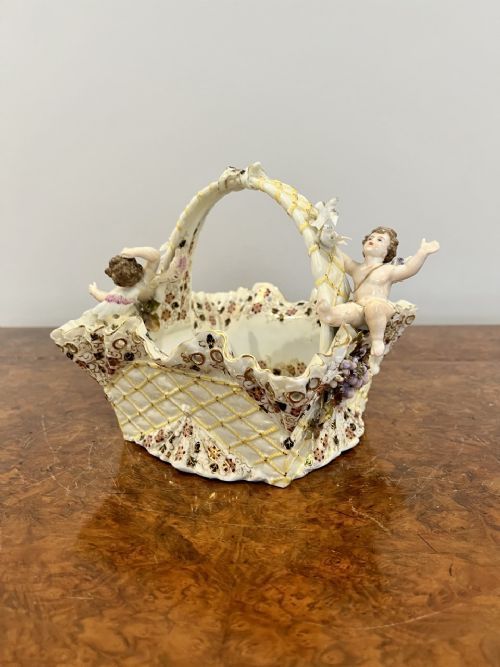
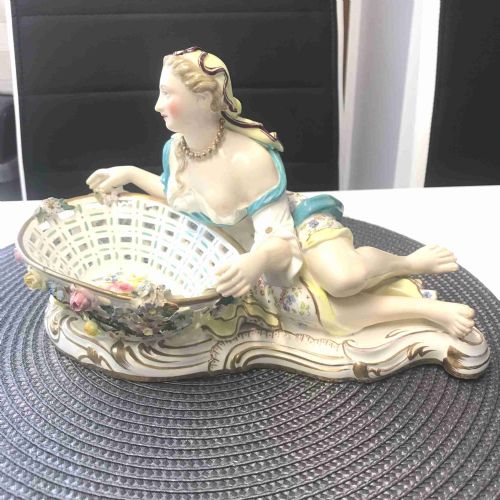
Makers shaped these pieces into openwork baskets, decorative bowls, and elaborate sweetmeat dishes supported by cherubs, putti, and figurative maidens. The forms rely on curved lines, swirling foliage, and dense arrangements of moulded petals rather than strict symmetry.
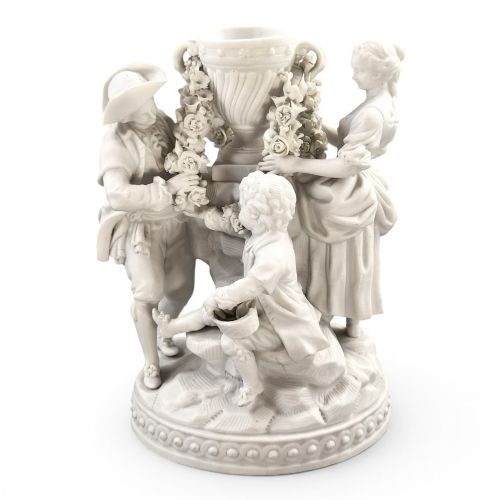
Examples span the Georgian era through the Edwardian period, with nineteenth-century revivals dominating the selection. Buyers encounter German porcelain works, French biscuit porcelain, and English soft-paste ceramic creations carrying abundant floral ornamentation.
What varies in quality
The distinction between tiers rests upon the crispness of the moulding and the delicacy of the hand-applied flora. Superior items display finely modeled petals and intricate openwork basketry with minimal distortion from the kiln.
Finishing work on the gilding, bronze mounts, and painted enamel details dictates the level of refinement. Denser figural integration, such as fully rendered cherubs supporting the basin, elevates the ambition of the piece.
Numerous cherubs and putti maintain a constant, cheerful presence guarding the fruit bowls.
Derby Porcelain·Meissen·Royal Vienna·C.G. Schierholz and Sohn·Sitzendorf·Royal Crown Derby·Dresden
The Rococo Floral Centrepiece Glossary
- Biscuit porcelain
- Unglazed ceramic fired once to leave a matte, smooth surface resembling marble. It appears frequently in sculptural groupings and figure-supported dishes.
- Repoussé
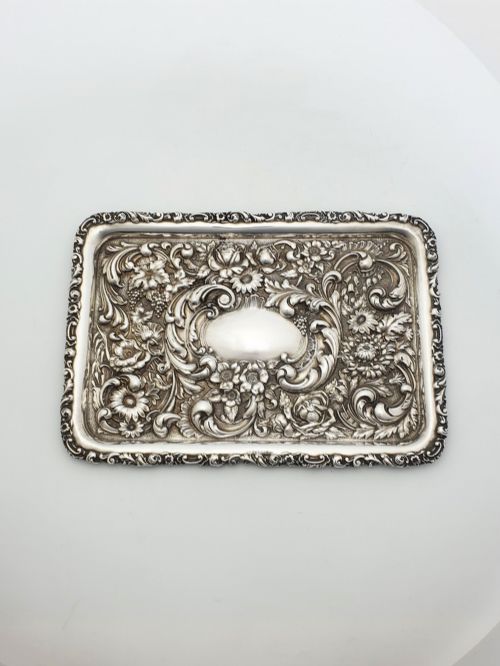
- Metalworking technique where a design is hammered into relief from the reverse side. This method defines the floral decoration on silver trays within the style.
- Ormolu
- Gilded bronze mounts applied to ceramic bodies or formed into candelabra arms. The technique provides metallic contrast to the painted porcelain forms.
- Comport
- A raised decorative dish or bowl used for serving fruit or sweets on a dining table. They form a central category of large ceramic tableaus.
- Sweetmeat dish
- A small vessel designed for holding delicate confections, nuts, or preserves. These often take the form of naturalistic baskets or floral bowls.
Rococo Floral Centrepiece: Frequently Asked Questions
What is a rococo floral centrepiece?
A rococo floral centrepiece is an ornamental table vessel featuring asymmetrical scrolls, moulded flowers, and often figural supports like cherubs or putti.
These pieces were produced extensively during the nineteenth-century revival periods by European porcelain factories and British makers.
How were centrepieces used originally?
Table centrepieces served as decorative focal points for dining tables during formal meals, often holding fruit, sweets, or floral displays.
Larger examples were paired with matching side vases or integrated with candelabra arms to illuminate the dining room.
How do I date a porcelain centrepiece?
Dating relies on identifying factory marks, ceramic body types, and stylistic indicators such as the shift from eighteenth-century Georgian forms to Victorian revivals.
German and French workshops utilised specific underglaze stamps and impressed numbers that correspond to active production periods.
How should I clean porcelain flowers?
Cleaning requires extreme caution because the applied ceramic petals are delicate and prone to chipping.
Use a soft, dry artist brush to remove dust from the intricate crevices rather than liquid immersion.