

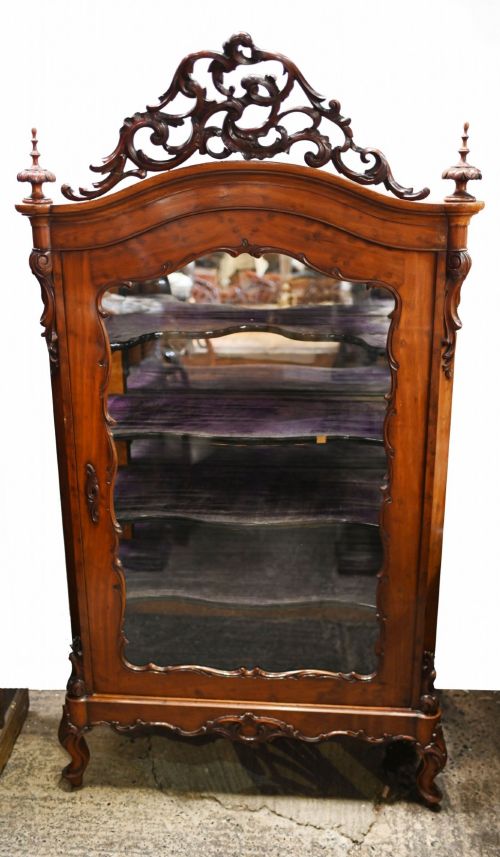
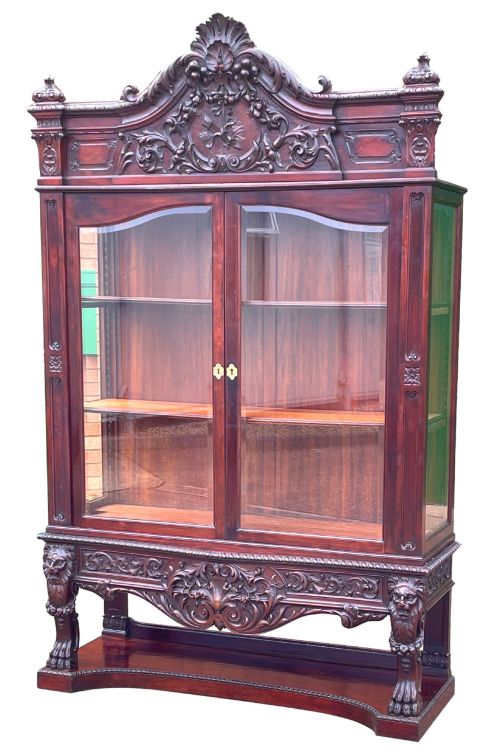
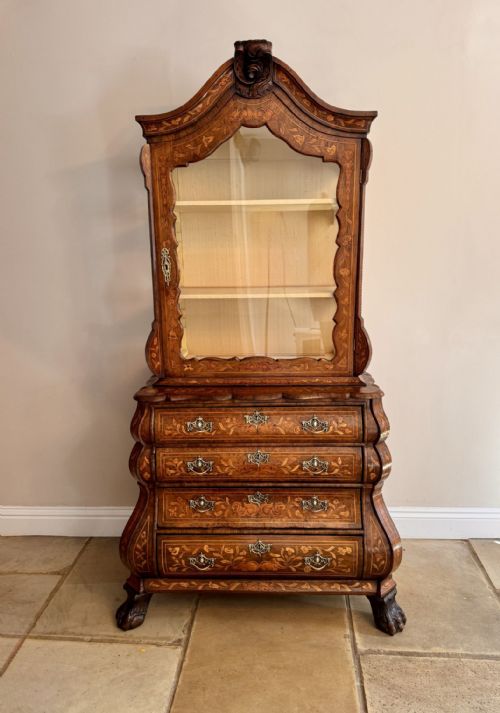
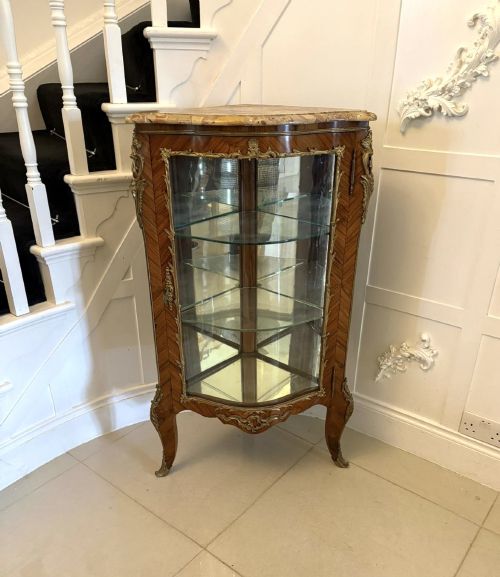
Rococo Display Vitrine
A rococo display vitrine brings curved glass, gilt mounts and painted panels together to showcase cherished porcelain and small objects.
Rococo Display Vitrine
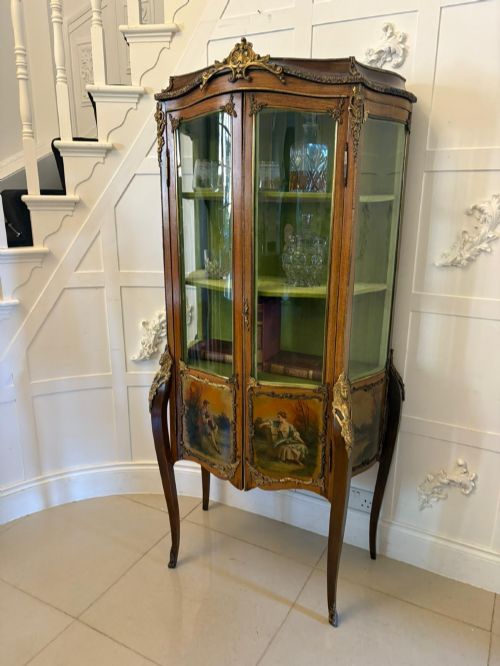
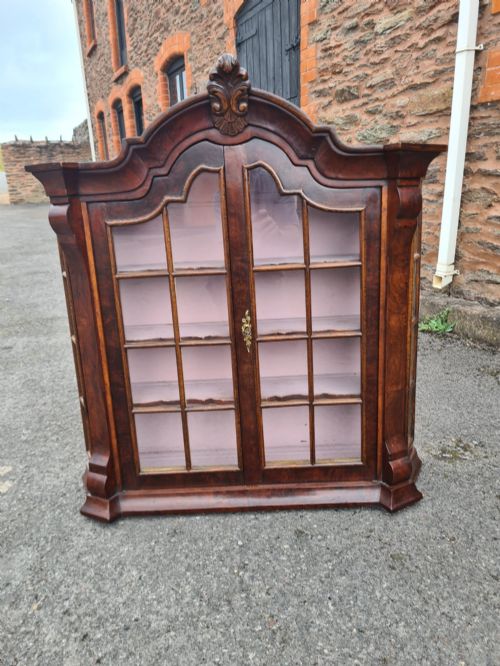
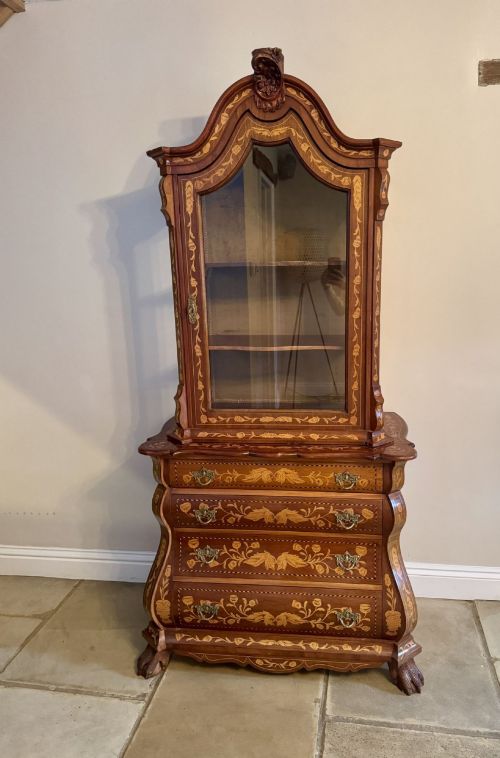
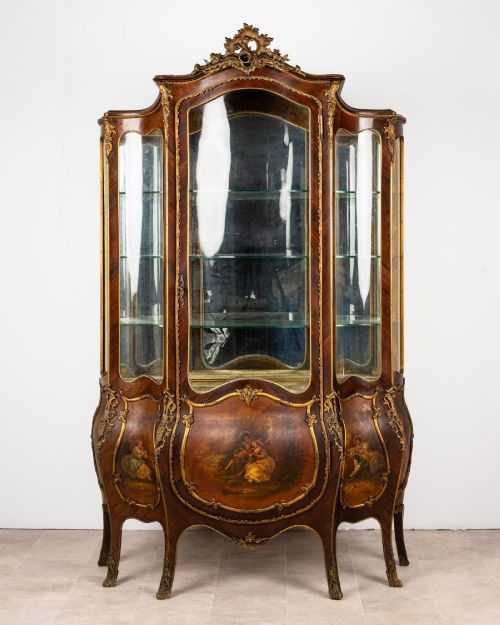
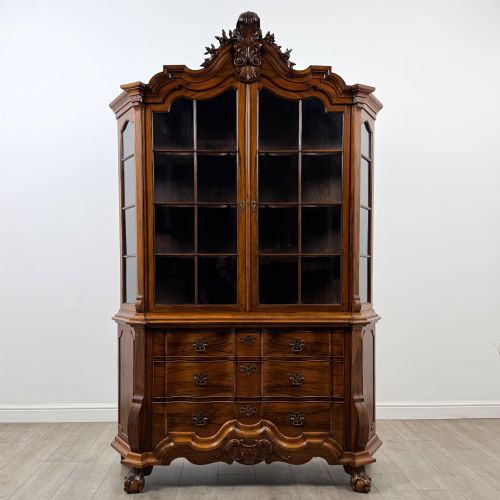
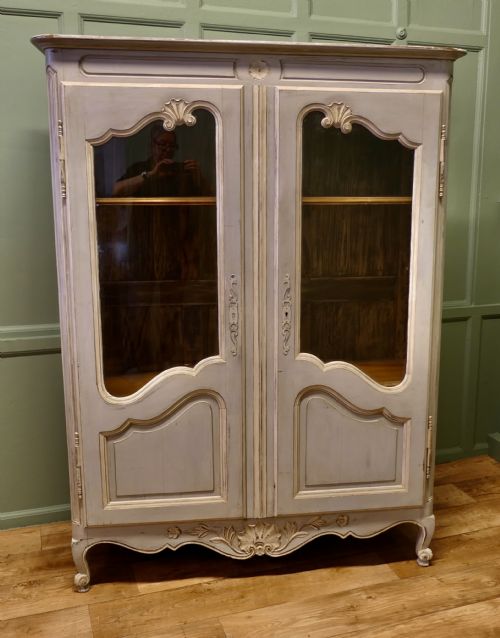
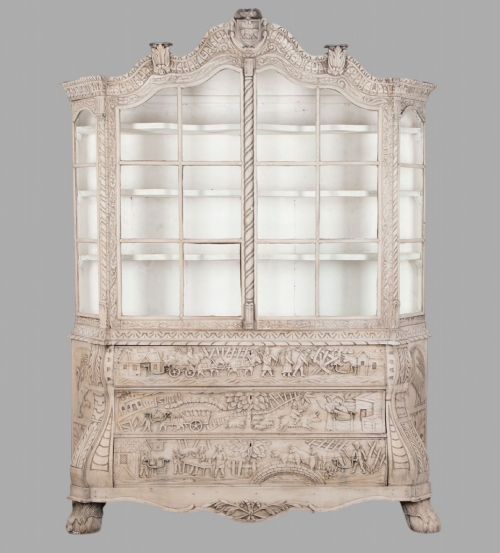
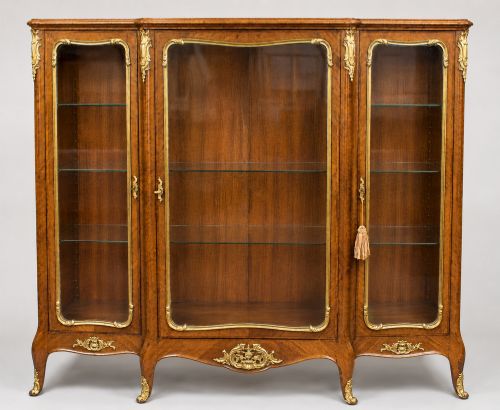
A rococo display vitrine takes many architectural forms, ranging from towering freestanding cabinets with serpentine fronts to corner cabinets, wall-mounted units and low bijouterie tables. The pieces span the nineteenth century and the Edwardian era, alongside occasional eighteenth-century examples rooted in Dutch and French traditions.
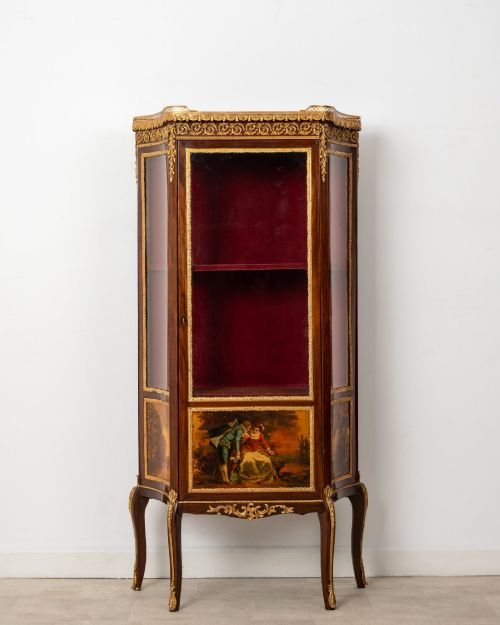
The aesthetic relies heavily on Louis XV revival designs, French rococo revival work and Dutch baroque influences. Cabinets frequently feature bombe bases, glass panels for viewing contents, and internal shelving tailored for display.
How they were made
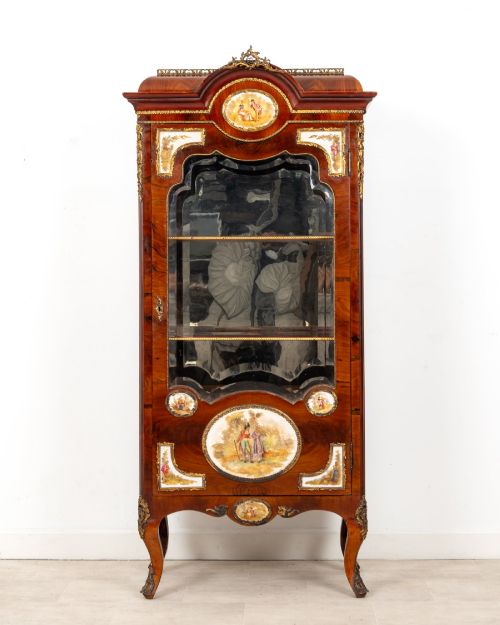
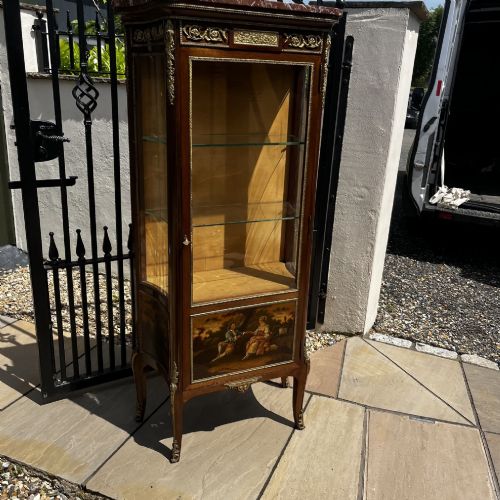
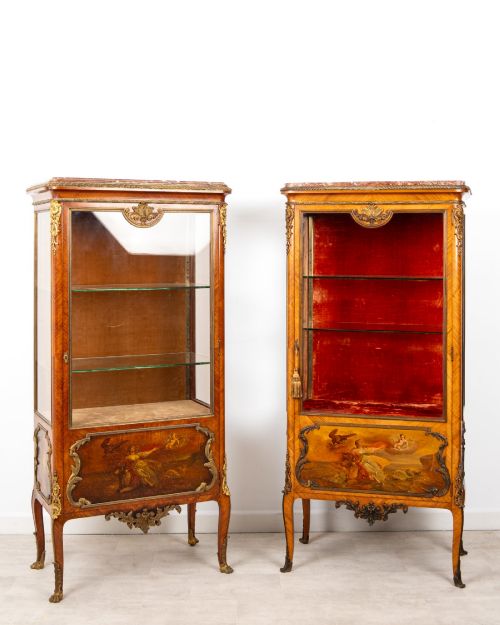
Cabinetmakers utilised dense timbers including mahogany, walnut, rosewood and kingwood, often embellished with intricate marquetry inlay or painted Vernis Martin panels. Structural carcasses received decorative veneers and shaped glass windows.
Gilt bronze and ormolu mounts punctuate the exterior angles and borders, paired occasionally with marble tops. Metal hardware and giltwood carving complete the complex, curved silhouettes.
Rococo Display Vitrine Retail Price Guide 2026
Typical asking prices for rococo display vitrine among the pieces listed under this phrase on Sellingantiques today, from the lower quarter to the upper quarter. They describe what is for sale here now, not the wider market.
Listings feature glass, ormolu, kingwood, mahogany, walnut, marble and fabric across Victorian, Edwardian and nineteenth-century periods.
What varies in quality
Construction standards depend on the fluidity of the serpentine shaping and the precision of the timber matching in the marquetry. Superior cabinets display crisply cast ormolu mounts and finely detailed hand-painted panels rather than mass-produced decoration.
The integration of glass panels, the weight of the marble tops, and the execution of bombe curves distinguish standard production pieces from workshop creations linked to makers such as François Linke.
François Linke·Gouffel
The Rococo Display Vitrine Glossary
- Vitrine
- A glass-fronted cabinet designed specifically for displaying porcelain, curiosities and decorative objects. These pieces often feature glazed sides to maximise light penetration.
- Ormolu
- Gilded bronze mounts applied to furniture edges, corners and feet for decorative accent. The term derives from the French for milled gold.
- Bombe
- A swelling, outwardly curving shape characteristic of rococo case furniture. This undulating profile requires skilled timber bending and veneer work.
- Vernis Martin
- A simulated Japanese lacquer technique developed in France, featuring painted scenes under a clear varnish. It frequently appears on lower panels of display cabinets.
- Marquetry
- The art of applying small pieces of veneer to a structure to form decorative patterns or pictorial scenes. Walnut and exotic woods are typical mediums for this craft.
Rococo Display Vitrine: Frequently Asked Questions
What is a rococo display vitrine?
A rococo display vitrine is a glazed cabinet built with curved lines, naturalistic motifs and gilt mounts, designed to house small collectibles.
These pieces draw on eighteenth-century French and Dutch design vocabulary, reinterpreted during the nineteenth century and the Edwardian period.
How were these cabinets used?
Owners placed them in reception rooms and drawing rooms to exhibit porcelain figures, miniatures and curios to visiting guests.
The glass panels protected delicate items from dust while permitting all-around viewing of the contents.
Where do marble tops appear?
Marble tops sit on the upper surface of certain freestanding cabinets and commode-base vitrines to provide a durable, decorative finish.
They pair with ormolu mounts and matched timber veneers to elevate the visual weight of the piece.
How do you distinguish styles?
French revivals emphasise asymmetrical curves, gilt-bronze mounts and Vernis Martin panels, while Dutch examples frequently utilise bold walnut marquetry and bombe chests.
Victorian and Edwardian interpretations adapt these continental idioms using mahogany, kingwood and rosewood.