




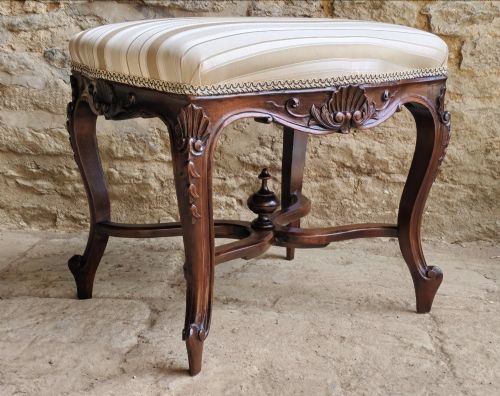
Rococo Carved Stool
These rococo carved stool examples bring exuberant 19th-century revival forms and rich upholstery into contemporary spaces.
Rococo Carved Stool
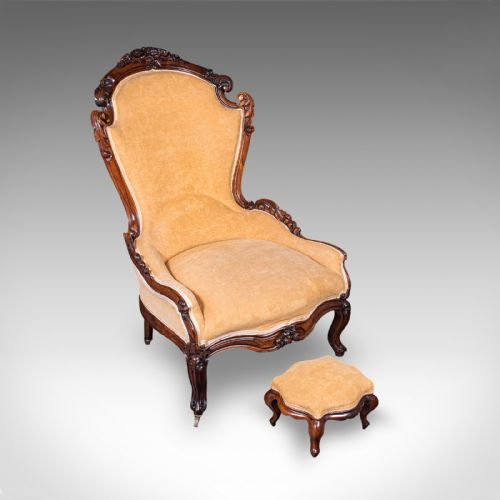
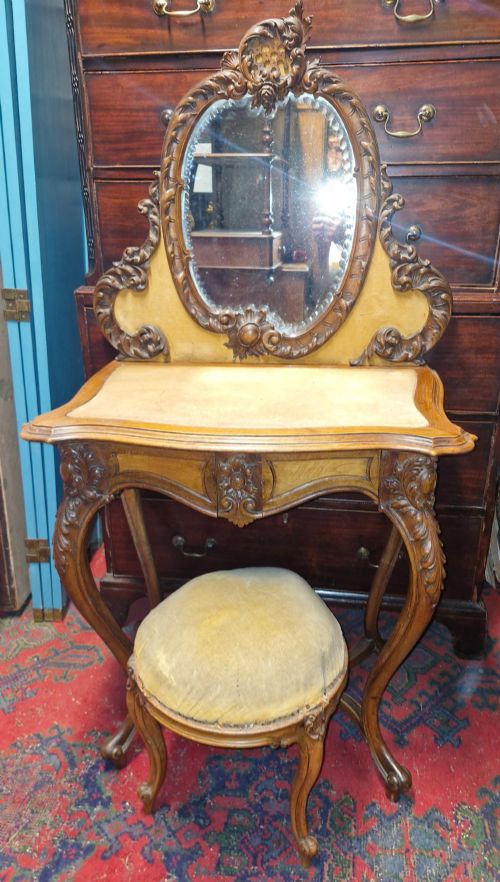
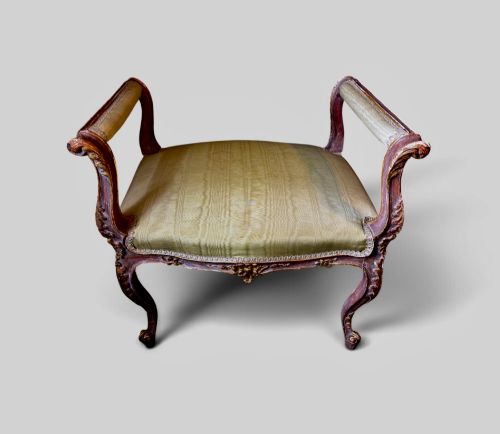
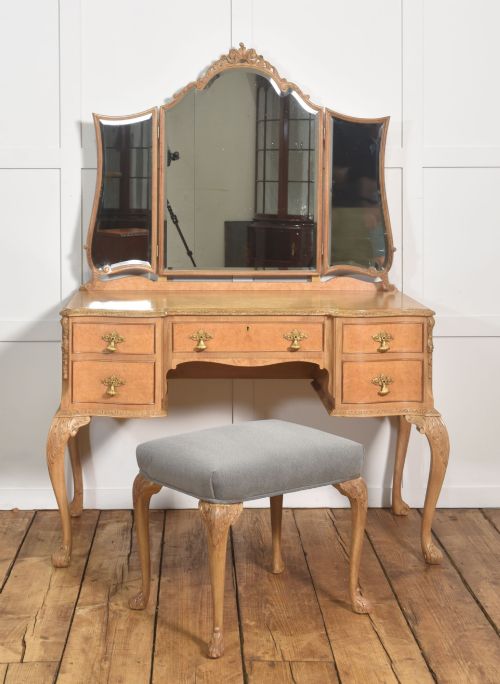
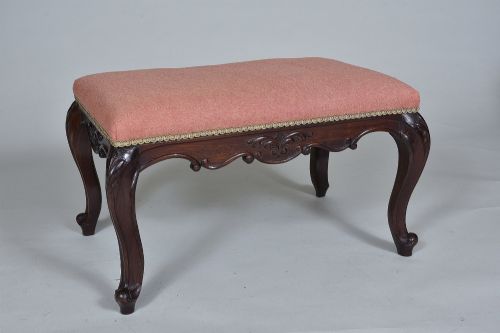
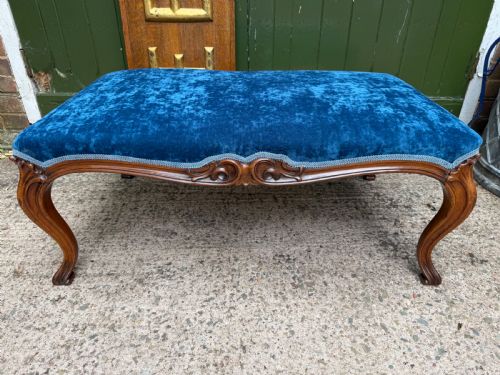
A rococo carved stool combines theatrical 19th-century revival styling with practical seating, appearing primarily across Victorian and early 20th-century inventories. These pieces manifest as low fireside footstools, dressing table seats, and larger freestanding centre stools.
Most examples on this page date from the Victorian era up to 1930, capturing the enduring appeal of French Louis XV taste. You will encounter walnut, mahogany, and rosewood frames alongside giltwood finishes designed for formal reception rooms.
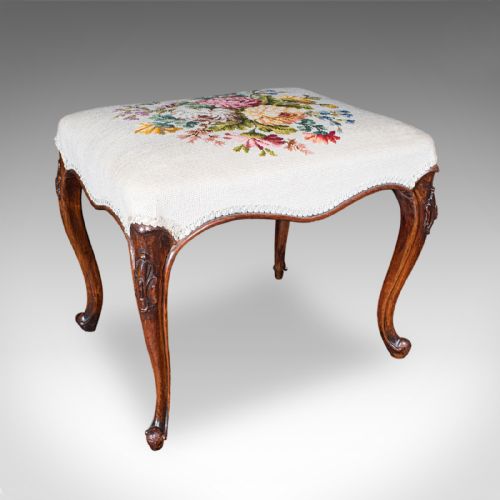
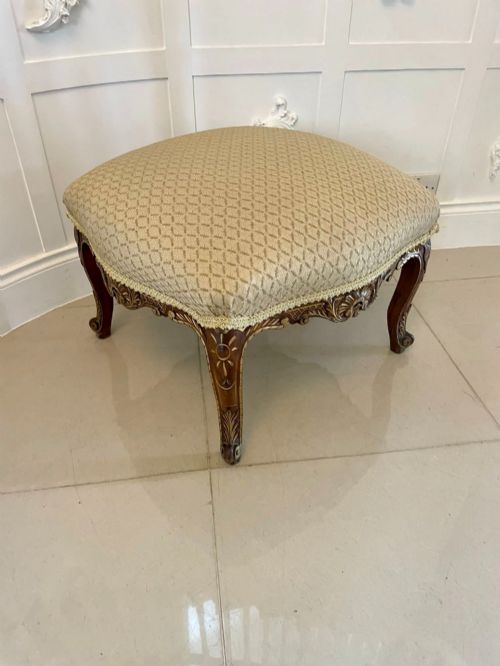
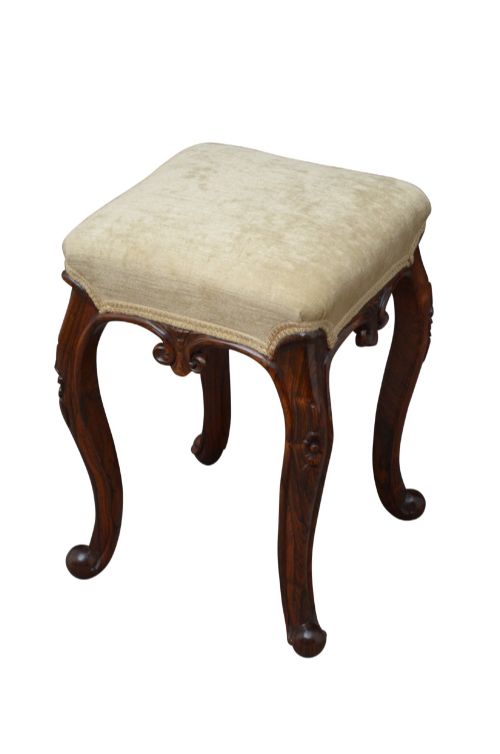
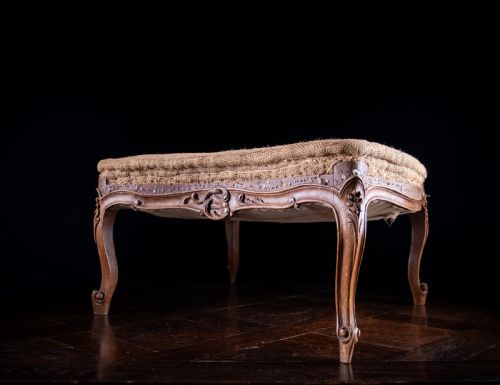
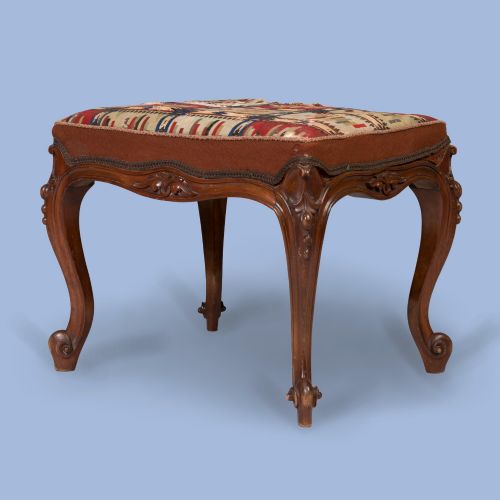
The form relies heavily on serpentine rails and distinct cabriole legs that lift the upholstered top off the floor. Whether styled as a simple footstool or a substantial salon seat, each piece demonstrates the period dedication to ornate woodwork.
Materials and construction
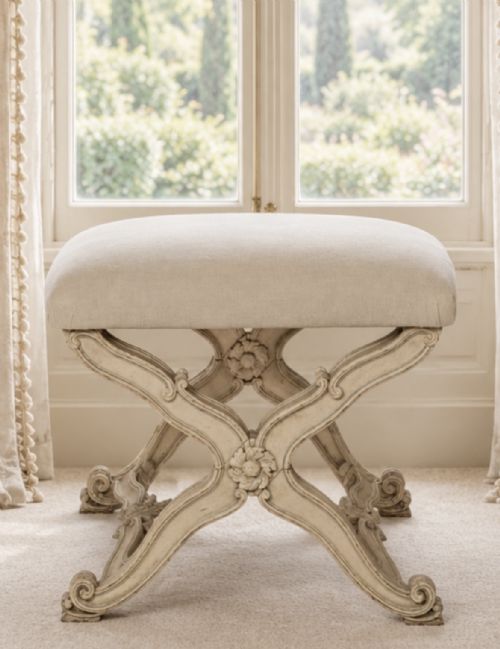
Cabinetmakers shaped these frames from dense hardwoods including walnut, mahogany, and rosewood, which accepted deep, flowing relief carving without splitting. Giltwood and painted finishes appear frequently, often layered over gesso to highlight ornamental scrolls and foliage.
Upholstery techniques combined traditional webbing and stuffing with hard-wearing textiles such as needlepoint, velvet, and patterned fabrics. Frame joints relied on sturdy mortise and tenon construction hidden beneath decorative aprons and padded tops.
Rococo Carved Stool Retail Price Guide 2026
Typical asking prices for rococo carved stool among the pieces listed under this phrase on Sellingantiques today, from the lower quarter to the upper quarter. They describe what is for sale here now, not the wider market.
One late Victorian maker thoughtfully engineered a rocking gout stool, ensuring even sore ankles could experience extreme comfort in style.
Assessing quality in carved seating
The distinction between standard commercial production and finer work rests on the crispness of the hand-carved ornament. Superior walnut and mahogany frames exhibit deep, undercut foliage and smooth, confident curves along the cabriole legs.
Proportion and wood selection drive the hierarchy of these pieces, where dense grain and heavy gilding indicate higher workshop standards. Better examples retain harmonious lines from the scroll feet up to the padded seat rail.
The Rococo Carved Stool Glossary
- Cabriole leg
- A furniture leg that curves outward at the knee and tapers inward to an ankle, mimicking an animal limb. This shape defines the silhouette of many 19th-century salon and dressing table stools.
- Giltwood
- Timber coated with a thin layer of gold leaf or metallic powder over a prepared gesso base. It provides a bright, reflective surface popular on formal Continental and Victorian seating.
- Needlepoint
- Hand-stitched canvas embroidery utilising yarn in various wool or silk threads. It frequently survives as the original upholstery on mid-Victorian footstools.
- Rococo Revival
- A 19th-century design movement inspired by the asymmetrical curves, C-scrolls, and naturalistic motifs of the 18th-century French Louis XV style. It dominates the ornamentation found on these wooden frames.
- Centre stool
- A freestanding seat finished on all sides so it could sit in the middle of a room rather than against a wall. These larger platforms often served formal Victorian drawing rooms.
Rococo Carved Stool: Frequently Asked Questions
What is a rococo carved stool used for today?
These versatile seats function easily as footstools before armchairs, low dressing table seats, or occasional perches in a hallway. Their compact footprints allow them to slide beneath tables or sit neatly beside larger upholstery.
Larger salon versions also double as low coffee tables when topped with a sturdy tray, introducing period woodwork directly into modern living spaces.
How do I date a Victorian footstool?
Dating relies on examining the underlying secondary timbers, upholstery construction methods, and the specific crispness of the carved walnut or rosewood. Mid-century examples often feature heavier mahogany or rosewood frames with traditional needlepoint.
Later pieces extending into 1900 and 1930 frequently display lighter beech or painted finishes influenced by ongoing French revival tastes.
Are these stools comfortable for daily seating?
Most antique examples provide firm support due to traditional stuffing materials like horsehair and coiled springs beneath the upholstery. They suit short periods of sitting at a dressing table or resting feet.
Many surviving pieces retain their original padding, while others have received sympathetic reupholstery to ensure daily usability.
What is the difference between a footstool and a centre stool?
Footstools are smaller, lower platforms designed explicitly to support feet while seated, whereas centre stools are substantial, freestanding seats finished on all four sides. Centre stools were built to occupy open floor space in Victorian reception rooms.
Consequently, centre stools feature decorative carving across every rail, while smaller footstools often prioritize simple cabriole legs and needlepoint tops.