
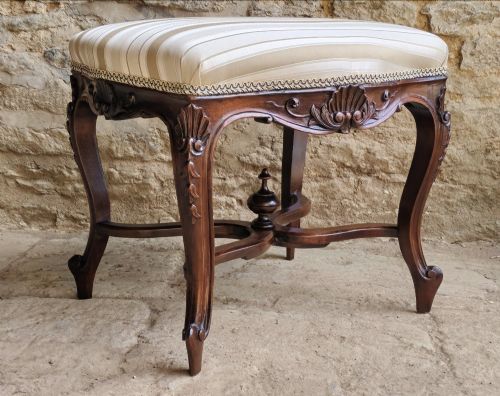


Rococo Carved Dressing Table
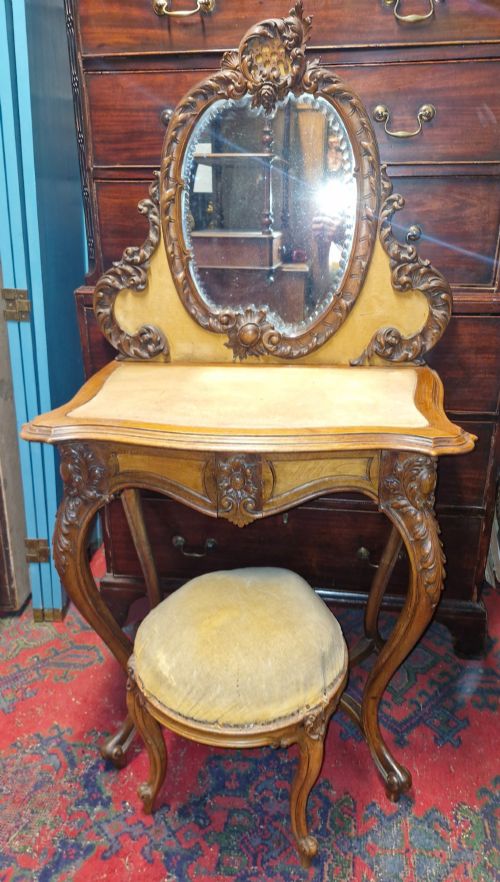
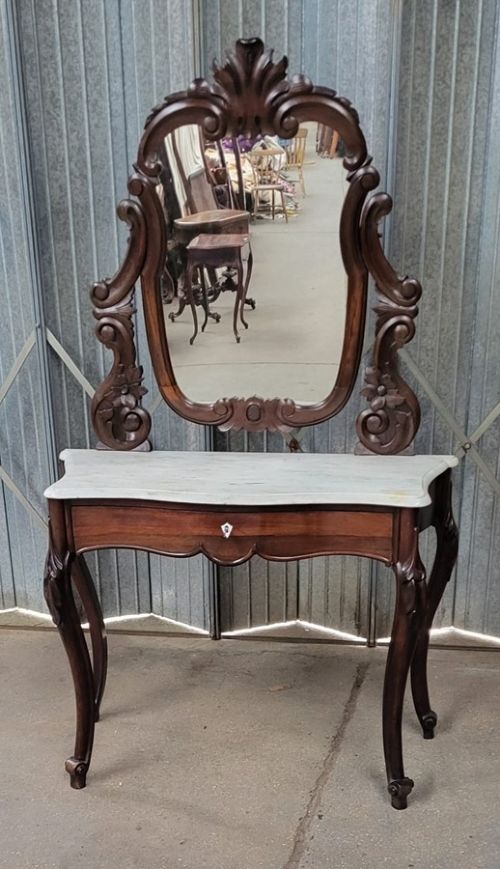
A rococo carved dressing table brings elaborate curves, asymmetric scrolling and graceful cabriole legs directly into a bedroom.
Rococo Carved Dressing Table
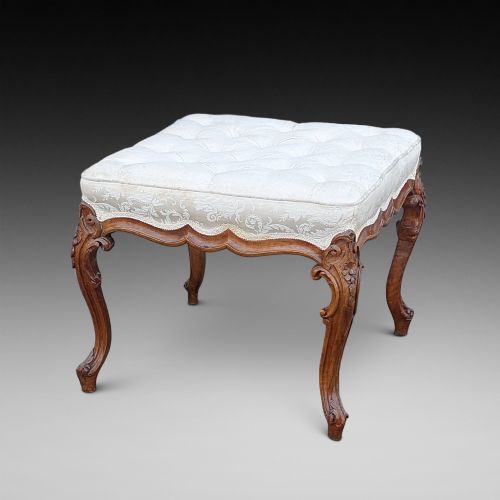
When you search for a rococo carved dressing table, you encounter vanity furniture shaped by the elaborate curves and decorative asymmetry of revival styles. The pieces span the nineteenth century and the early twentieth century, drawing heavily on French aesthetics.
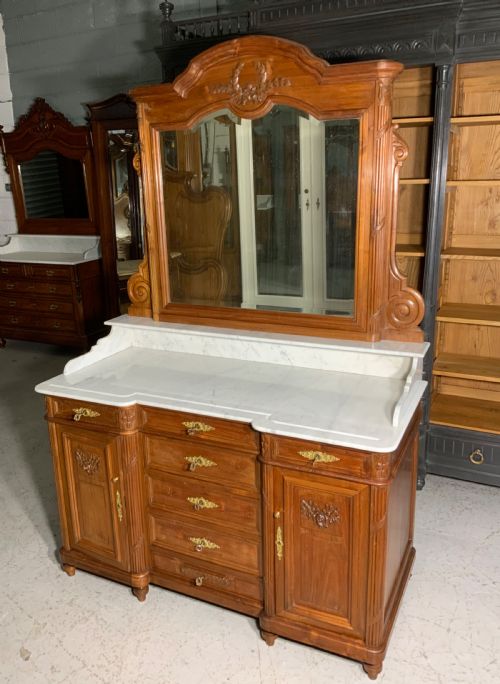
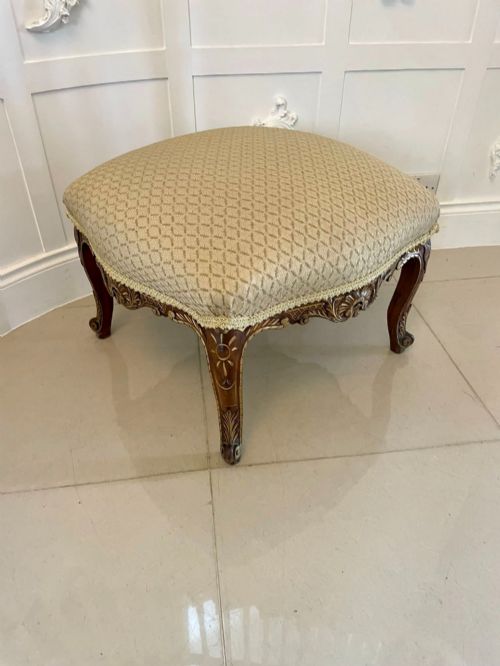
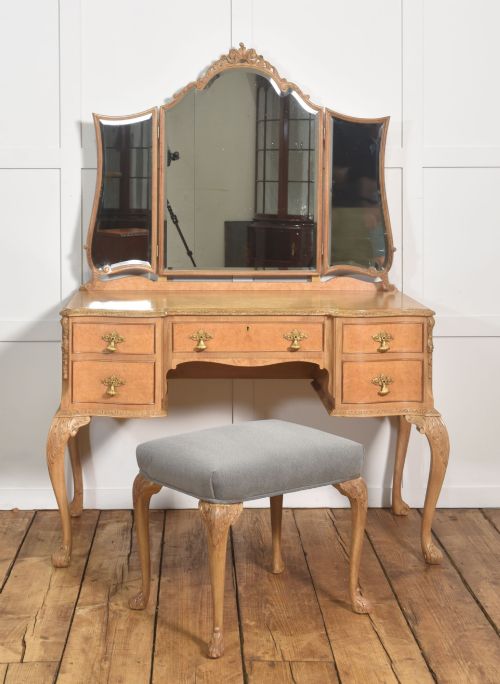
You meet variations incorporating triple mirrors, marble tops and matching upholstered stools in walnut, mahogany, oak and giltwood. Alongside complete dressing tables, related forms like vanity mirrors and lowboys appear frequently.
The surviving selection includes items ranging from compact French provincial dressing desks to larger Victorian walnut iterations featuring cabriole legs and swing mirrors.
How they were made
Cabinet makers utilised dense timbers like walnut, mahogany and oak, shaping them into sweeping curves and intricate scrollwork. Selected pieces feature burr veneers and applied gesso to build up high-relief ornament.
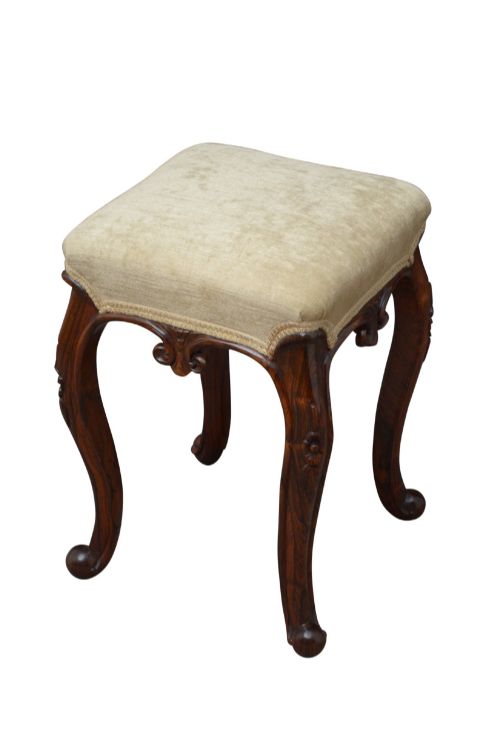
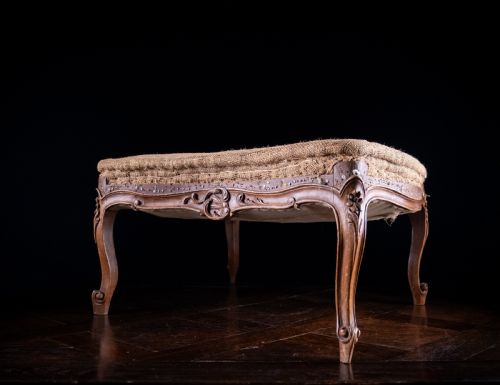
Surface treatments vary from polished wood finishes to painted and gilt surfaces, often paired with inset marble slabs or glass mirrors. Upholstered seats employ traditional fabric coverings supported by carved wooden frames.
Several pieces arrive with button balloon back chairs ready for immediate deployment.
What varies in quality
The definition of the carving separates standard production from finer examples, where crisp floral motifs and deep undercutting show the hand of a skilled artisan. Heavier timber selection and stable joinery underpin the structural integrity of the best pieces.
Proportion and the integration of auxiliary elements, such as matching triple mirrors or correctly scaled cabriole legs, dictate the visual harmony of an item.
E & R
The Rococo Carved Dressing Table Glossary
- Cabriole leg
- A furniture leg that bends outward in a convex curve and tapers inward in a concave curve, ending in a pad or foot. This form derives from animal limbs and defines much of the revival seating and table design.
- Giltwood
- Timber coated with thin gold leaf or gilt powder over a prepared ground. It provides a bright decorative surface seen on mirrors and specific ornate frames.
- Gesso
- A plaster-like mixture applied to wood surfaces as a base for intricate moulding and gilding. It allows artisans to carve fine ornamental details before applying metallic leaf.
- Lowboy
- A small dressing or side table featuring drawers, raised on relatively tall legs. This form offers a compact alternative to full-sized dressing furniture.
- Triple mirror
- An arrangement of three hinged looking glasses that allows the user to view angles from the side. These mirrors often sit atop dressing tables or function independently.
Rococo Carved Dressing Table: Frequently Asked Questions
What is a rococo carved dressing table?
It is a vanity table characterised by curved cabriole legs, asymmetric scrolling and floral motifs typical of revival periods.
Such pieces often include attached or matching swing mirrors and sometimes incorporate marble tops.
How were these dressing tables used?
They served as personal grooming stations in bedrooms and dressing rooms during the nineteenth and early twentieth centuries.
Users sat on matching low stools while utilising the surface for cosmetics and the mirror for arranging hair and attire.
How do I care for a marble top?
Wipe the stone surface gently with a damp cloth and mild soap, avoiding acidic cleaners that can etch the polish.
Use coasters or mats underneath bottles to prevent staining and protect the natural finish.
How do I distinguish periods?
Mid-nineteenth century pieces often display heavy Victorian walnut construction with robust carving, whereas later twentieth-century examples lean toward lighter painted finishes or French provincial styling.
Examine the secondary woods and mirror backing for clues regarding manufacturing techniques and age.