
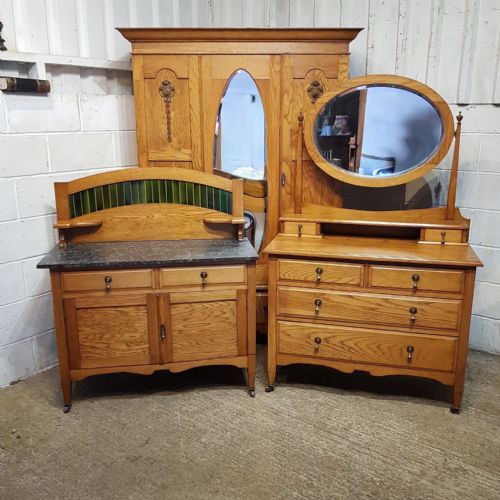
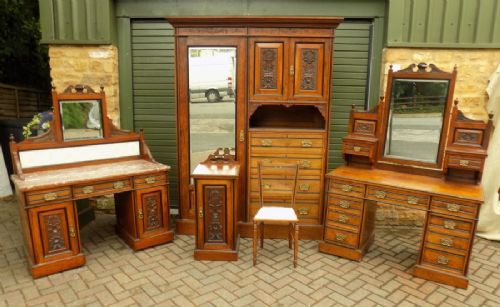

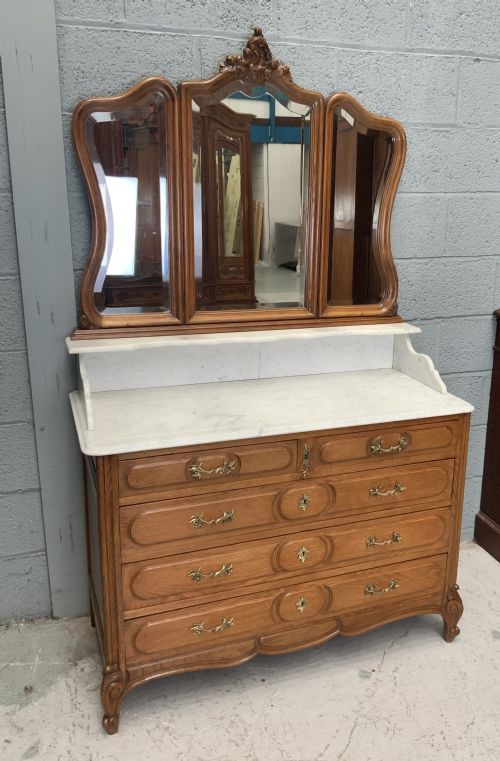


Marble Top Dressing Chest
These marble top dressing chest pieces combine durable stone surfaces with functional storage, offering a practical yet decorative addition to period bedrooms.

Marble Top Dressing Chest
A marble top dressing chest serves as a robust surface for grooming and washing, combining the utility of a chest of drawers or washstand with a cool stone top. Buyers searching this phrase will find a variety of forms ranging from French washstands to Victorian and Edwardian dressing tables.
The pieces appearing on this page span the nineteenth and early twentieth centuries, covering periods from 1830 through to 1920. Styles include Arts and Crafts, Victorian, French Provincial, and Louis XVI, reflecting diverse European craftsmanship from these eras.
How they were made
Carpenters utilised solid and veneered timbers such as oak, mahogany, burr walnut, and birds Eye maple to construct the carcasses and drawers of these bedroom pieces. Joints were typically hand-carved and assembled to support the substantial weight of fitted stone slabs.
Slabs of marble were selected and polished to form impervious, easy-to-clean tops resistant to water and cosmetics. Secondary materials like brass, glass, and ceramic added functional handles, pulls, and backing details.
Some chests hide their morning utility behind clever folding mirrors and secret compartments designed for Victorian grooming.
What varies in quality
The distinction between standard examples and the finest pieces lies in the choice of timber figurations, such as burr walnut or birds eye maple, and the depth of hand-carved detail on the woodwork. Superior items often feature more complex architectural styling, such as French Rococo Revival or Louis XVI motifs.
The quality of the marble slab itself, including its thickness, veining pattern, and integration with the wooden base, dictates the overall grade of the chest. Finer hardware, original glass mirrors, and intact ceramic components further elevate the stature of a piece.
The Marble Top Dressing Chest Glossary
- Burr walnut
- A wood harvested from the wart-like growths on walnut trees, yielding highly figured, swirling grain patterns. It was frequently used for veneering high-end Victorian bedroom furniture.
- Washstand
- A piece of furniture designed to hold a basin and jug for washing, often featuring a marble top to protect the wood from water splashes. Many share forms similar to dressing chests.
- Commode
- A low chest of drawers, often of French origin, featuring a flat top that in these examples is executed in marble. They provide decorative storage for the bedroom.
- Faux bamboo
- A decorative finish where wood is carved and painted to resemble natural bamboo stalks. This style gained popularity during the Victorian era, particularly in lighter bedroom settings.
- Arts and Crafts
- A design movement prioritising traditional craftsmanship, simple forms, and visible construction methods over mass-produced ornamentation. Pieces from this period utilise honest woods like oak and ash.
Marble Top Dressing Chest: Frequently Asked Questions
What is a marble top dressing chest used for?
These pieces function primarily as bedroom storage units and grooming stands. The stone surface provides a durable, water-resistant area for washing and placing toiletries.
Over time, their role shifted toward general bedroom storage and display while retaining their distinctive stone tops.
How do I identify a Victorian piece?
Victorian examples often feature heavier carved details, darker timbers like mahogany and burr walnut, and robust proportions. They may also display stylistic influences such as French Rococo Revival.
Examining the construction methods and hardware underneath helps confirm the nineteenth-century origins of the woodwork.
Are these pieces suitable for modern bedrooms?
Their combination of drawers and wipe-clean stone surfaces makes them practical for contemporary living spaces. They provide genuine period character alongside everyday storage utility.
Care should be taken to place them on level flooring to protect the heavy marble inserts.
How do I care for the marble top?
Marble requires gentle cleaning with warm water and pH-neutral soap to prevent surface dulling. Avoid acidic liquids and harsh abrasives that can etch the polished stone.
Applying a specialist stone sealer periodically helps protect the surface from staining.