

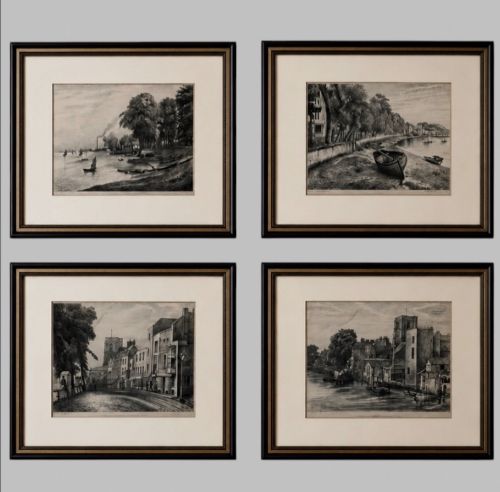
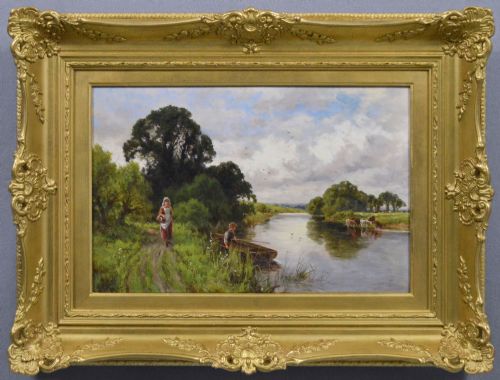


River Thames Landscape Artwork
River thames landscape artwork captures the shifting light and bustling commerce of Britain's most famous waterway across centuries of changing cityscapes.
River Thames Landscape Artwork
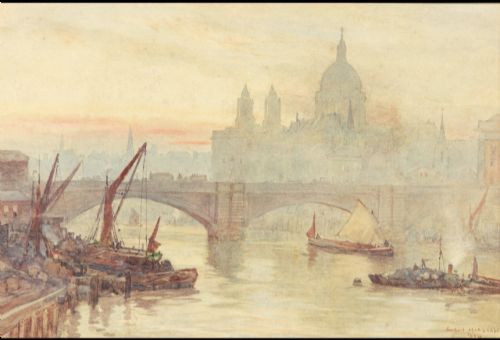
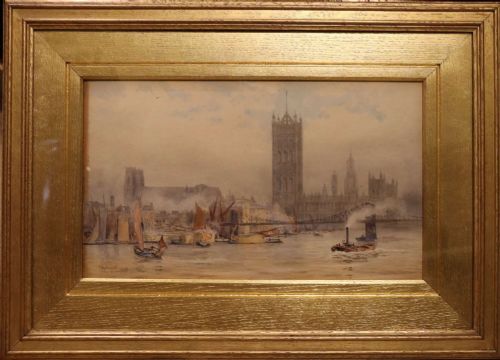
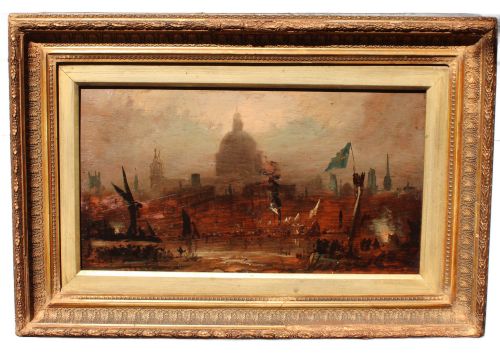
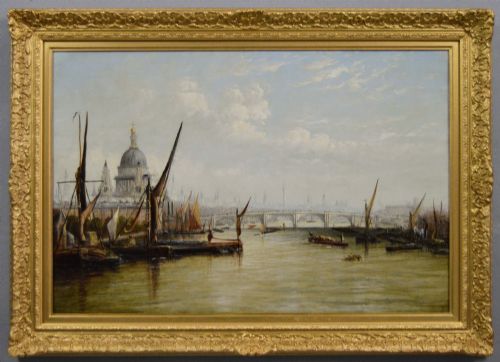
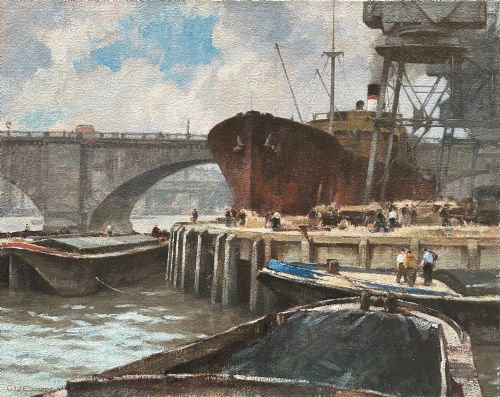
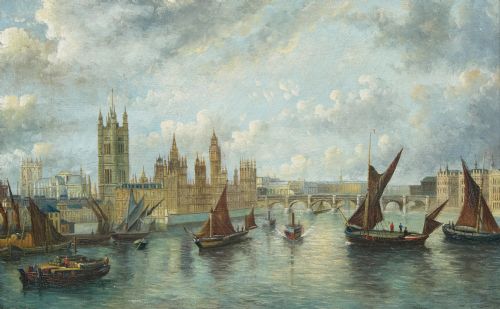
When you examine river thames landscape artwork, you encounter visual records of London and the surrounding Berkshire valleys from the Georgian period through to the mid twentieth century. These pieces capture iconic landmarks such as St Paul's Cathedral, Windsor Castle, and the Houses of Parliament alongside everyday river traffic like working barges and tugboats.
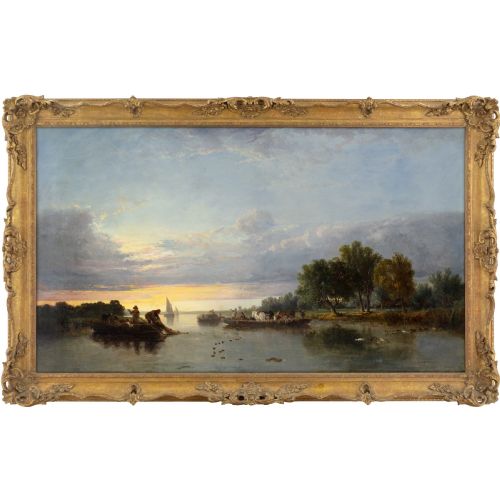
The most common examples on this page span the Victorian and Edwardian eras, rendered primarily as detailed watercolours or rich oil paintings. Artists focused equally on rural stretches near Wargrave and Mapledurham and heavily industrialized urban pools around London Bridge.
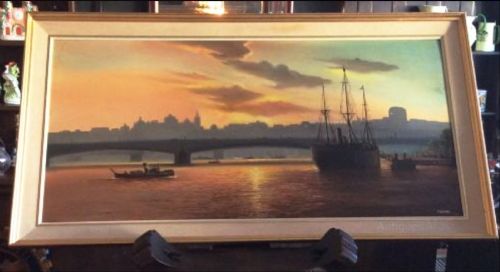
The selection ranges from intimate watercolor sketches created on location to large framed oil canvases intended for formal display. Each piece documents the shifting topography, architecture, and atmosphere of the tidal river and its upper reaches.
Materials and methods
Artists relied primarily on oil paint applied to canvas or wood panels, and transparent watercolour pigments worked onto heavy paper. These traditional mediums allowed painters to capture both the dense atmospheric smogs of industrial London and the crisp, clear light of Berkshire lock gates.
Support materials varied from fine linen canvases stretched over wooden frames to delicate sheets of paper requiring protective glass and framing. Supplementary techniques such as lithography and hand-coloured aquatint engraving also reproduced these topographical views for wider distribution.
Pigments were often applied en plein air to catch transient weather effects before being finished in the studio. Framing typically utilised moulded wood with occasional gold leaf accents to complement the tonal palette of the paintings.
The listings span from Georgian aquatints to mid-twentieth-century oils, covering both rural Berkshire waterways and industrial London docks.
Distinctions in quality
Quality in these works rests upon the artist's command of atmospheric perspective and tonal balance, particularly in rendering the reflective surface of water and the dense atmosphere of the capital. Superior examples demonstrate confident brushwork and accurate topographical detail rather than rigid, mechanical copying.
The handling of light defines the success of a composition, distinguishing flat, formulaic depictions from pieces that evoke the genuine humidity and movement of the tidal river. Condition also plays a role, with well-preserved watercolours retaining their original pigment vibrancy without excessive fading or foxing on the paper.
Francis Moltino·Henry H Parker·Charles William Wyllie·Edward Henry Eugene Fletcher·Frank W Scarborough
The River Thames Landscape Artwork Glossary
- Aquatint
- A printmaking technique that produces tonal effects by using acid to etch resin-covered copper plates. This method creates subtle gradations resembling watercolours or wash drawings.
- Topographical
- Representing exact places and local scenery with geographical fidelity. Such works serve as historical documents of buildings and riverbanks that have since been altered or demolished.
- Plein air
- Painting outdoors to directly capture the transient effects of light and weather. This approach became central to British impressionist and late nineteenth-century landscape traditions.
- Lithography
- A planographic printing process based on the repulsion of oil and water. It allowed artists and printers to produce multiple accurate colour images of London scenes.
- Seascape
- An artwork depicting the sea, ships, or marine views. In the context of the tidal Thames, these pieces focus heavily on shipping, barges, and maritime commerce.
River Thames Landscape Artwork: Frequently Asked Questions
How do I date a Thames painting?
Dating relies primarily on visible architectural landmarks, artist signatures, and framing materials. Structures like bridges and industrial buildings changed rapidly along the river during the nineteenth century.
Comparison with known exhibition dates or period styles helps narrow the decade of creation. Written inscriptions on the reverse of the canvas or paper often provide additional confirmation.
What is the difference between an oil and a watercolour?
Oil paintings utilise pigment suspended in drying oils applied to canvas or board, offering rich textures and deep colour saturation. They are generally more robust and traditionally hung in formal reception rooms.
Watercolours employ water-soluble pigments on paper, creating luminous, translucent effects. Because paper is sensitive to light, watercolours require protective glass and careful placement away from direct sunlight.
Where were these river scenes usually painted?
Artists worked both in the heart of London around the Pool and Westminster, and further upstream in rural Berkshire and Surrey. Urban views captured bridges, cathedrals, and commercial shipping activity.
Rural compositions focused on locks, villages, and castles such as Windsor. Painters often positioned themselves on riverbanks, towpaths, or from boats to capture specific angles.
How should I care for antique paper art?
Watercolours and prints on paper require conservation-grade framing with acid-free mounts to prevent chemical degradation over time. Keeping them away from direct sunlight prevents the fugitive pigments from fading.
Stable indoor humidity prevents mould growth and cockling of the paper sheet. Professional framing ensures the paper does not touch the glass directly.