



Victorian Castle Landscape Painting
When you search for a victorian castle landscape painting, you encounter romantic historical scenes rendered in oil and watercolour.
Victorian Castle Landscape Painting
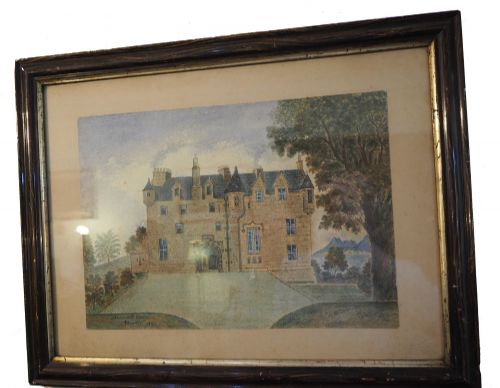
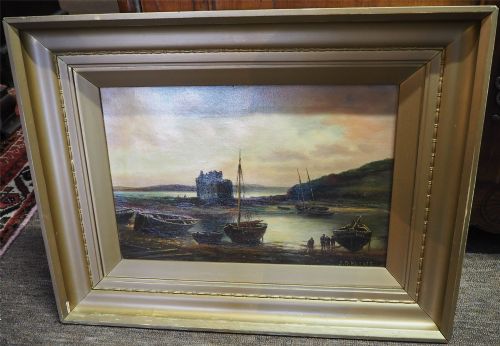
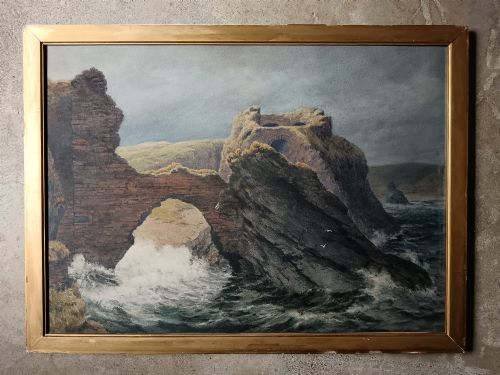
A victorian castle landscape painting captures historic fortresses and ruined strongholds set amidst rivers, coasts and hills across Britain and Europe. You will frequently find works executed in watercolour on paper or oil on canvas, dating from the mid-nineteenth century through to the early twentieth century.
The subjects range from notable royal residences such as Windsor Castle and Edinburgh fortifications to coastal ruins and remote Welsh strongholds. These pieces reflect a nineteenth-century fascination with national history, romanticism and picturesque topography.
Materials and technique
Painters utilised traditional oil paint on stretched canvas or applied watercolour pigment onto paper, often finishing pieces with gilt and gesso frames. Support materials also extend to unconventional surfaces such as hand-painted leaded glass windows and Welsh slate hearth pieces.
Artists built depth through layered washes in watercolours or thick impasto in oils, capturing light on stonework and surrounding waters. Pigments were applied to render atmospheric effects, from coastal mists to bright river valleys.
Listings feature works spanning the Victorian, Edwardian, and nineteenth-century periods, executed in oil on canvas, watercolour, glass, and slate.
Assessing quality
Quality rests upon the artist's ability to handle perspective, architectural detail and natural light within the landscape. Works by established Victorian and Edwardian painters display sharper draughtsmanship and more convincing atmospheric depth than anonymous student pieces.
Condition also influences the piece, noting the preservation of the pigment against fading, stability of the canvas or paper, and the integrity of the original framing.
Thomas Cooper Moore·James Orrock·David Cox Jnr·William Mellor·George Gregory·Karl Herrle·William Wyld·Samuel Sidley·Thomas Whittle·Frederick Tully Lott·William Edward Webb·Frank Wasley·Carleton Grant·George Willis Pryce·Joseph William Carey·F.E. Jamieson
The Victorian Castle Landscape Painting Glossary
- Watercolour pigment
- Finely ground colour mixed with a water-soluble binder, applied in transparent washes on paper. This medium allows for luminous skies and delicate atmospheric effects.
- Oil on canvas
- Pigment suspended in drying oil, applied to a woven fabric stretched across a wooden frame. This method permits rich texture and deep colour saturation.
- Gilt and gesso
- A plaster-like material applied to wooden frames and covered with thin gold leaf. It provides ornate decoration surrounding the painted canvas or paper.
- Folk art
- Artistic work produced from an untrained cultural tradition or craft perspective. In this context, it includes decorative regional items like painted slate.
Victorian Castle Landscape Painting: Frequently Asked Questions
What subjects appear in these paintings?
The compositions feature British and European fortresses, coastal ruins, and royal residences placed within river valleys, coastal scenes, and highland lochs.
Artists frequently recorded specific historic sites, including Windsor Castle, Bamburgh Castle, and Dunluce Castle, often accompanied by figures, boats, or livestock.
How do I date a Victorian landscape?
Dates can be determined through artist signatures, exhibition records, costume details of any figures present, and framing styles typical of the nineteenth century.
Many works include inscribed titles or dates on the reverse of the canvas or beneath the mount on watercolour paper.
Where were these pieces displayed?
These paintings were produced for domestic interior decoration, hung in nineteenth-century drawing rooms, parlours, and libraries.
Substantial oil paintings and framed watercolours served as focal points above mantelpieces or within formal reception rooms.
How do I care for antique watercolours?
Watercolour paintings on paper require protection from direct sunlight to prevent the fading of delicate pigments.
Keep them in stable environmental conditions away from excessive moisture to preserve both the paper support and the surrounding mount.