



River Thames Art
River thames art captures centuries of maritime commerce, historic bridges, and misty reaches through the eyes of period painters and printmakers.
River Thames Art
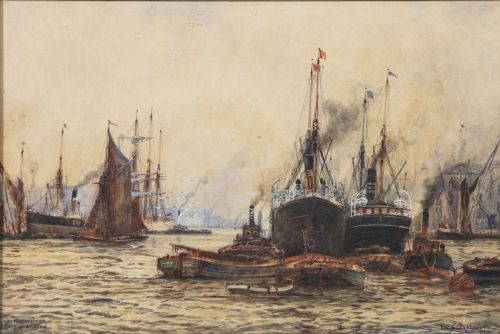
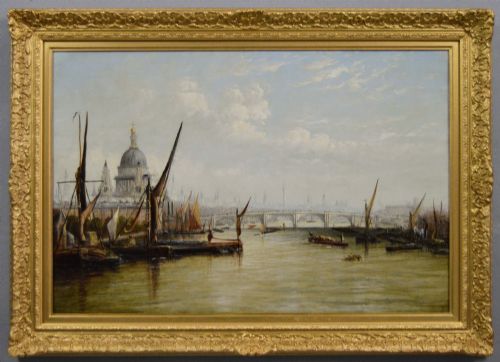
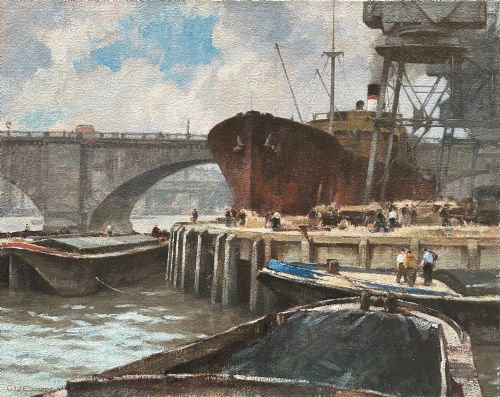
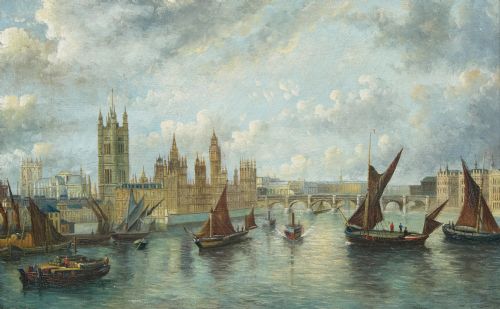
River thames art encompasses depictions of London's bustling waterways, historic bridges, and tranquil rural stretches further up-river. Collectors encounter everything from detailed maritime watercolours to sweeping oil paintings of the Pool of London.
Most examples lean towards traditional watercolours and oil paintings on canvas or board, alongside period prints and etchings. These mediums document the specific atmospheric conditions and shipping traffic of the tidal river.
Materials and technique
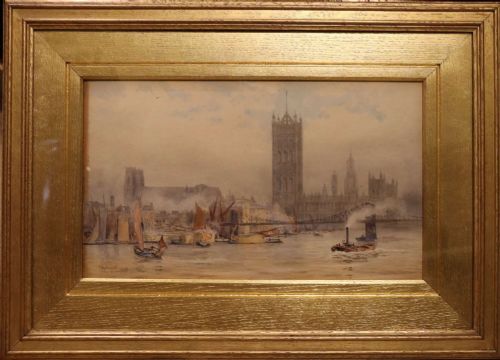
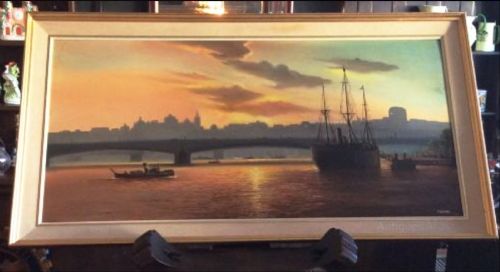
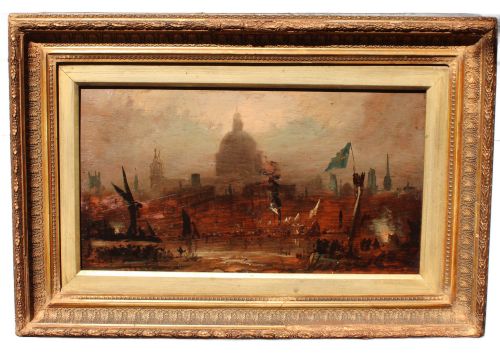
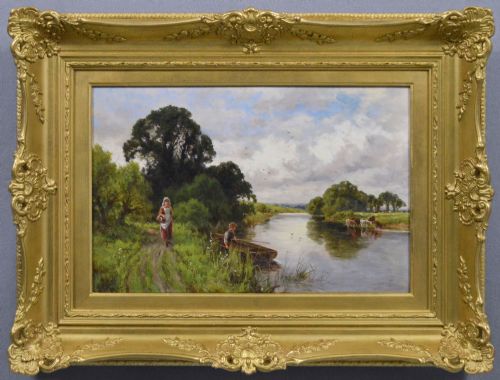
Artists captured the shifting light of the waterway primarily through traditional watercolour washes on paper and rich oil paint applied to canvas or wood panels. These materials allowed creators to render both the translucent haze of London fogs and the reflected glare on the water.
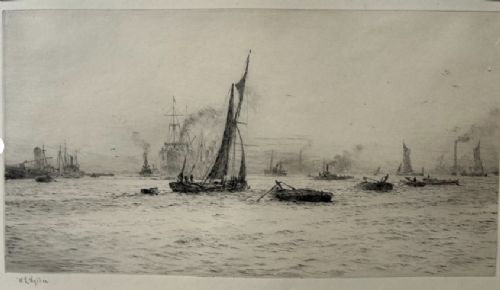
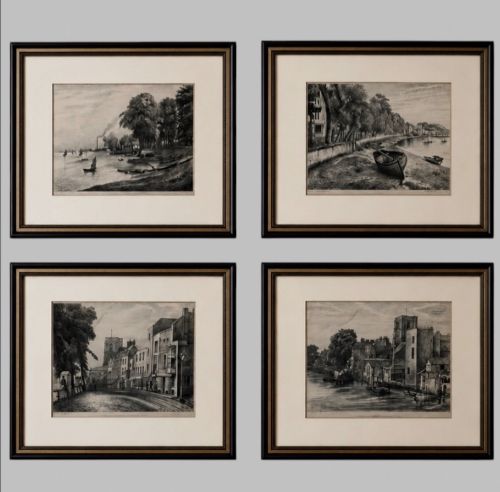
Printmakers utilised etching, drypoint, and aquatint techniques on paper, often adding hand-colouring to delineate the architectural landmarks along the banks. Publishers also produced lithographs and coloured prints to meet the Victorian demand for topographical views.
Several Victorian artists evidently braved the damp London mists with watercolours in hand to catch seagulls wheeling past Parliament.
Factors of quality
The calibre of a piece rests heavily on the artist's ability to handle atmospheric perspective and render the complex rigging and architecture native to the Thames. Skilled practitioners capture the specific movement of water and light with assured brushwork or precise line work.
Provenance and condition also dictate the standing of a work, particularly regarding the preservation of paper supports and the vibrancy of original pigments. Stronger examples maintain their original framing and retain clear signatures or documentation linking them to established painters.
William Lionel Wyllie·Frank William Scarbrough·Henry John Kinnaird·Charles William Wyllie·George Hilditch
The River Thames Art Glossary
- Etchings
- Prints produced by scratching a design through a protective ground on a metal plate, which is then acid-bit and inked. This method allows for fine, expressive lines well suited to architectural and marine subjects.
- Aquatint
- A printmaking technique that produces tonal areas resembling watercolour washes through the use of resin acid-biting. It gained popularity for creating atmospheric, shaded landscape prints.
- Watercolour
- A paint consisting of pigment suspended in a water-soluble vehicle, traditionally applied to heavy paper stock. It is exceptionally well suited for capturing the ephemeral light and weather effects of river scenes.
- Oil on Canvas
- A painting medium using pigments bound with a drying oil stretched over a fabric support. This technique provides deep colour saturation and textural richness favoured by marine and landscape artists.
- Lithography
- A planographic printing process based on the repulsion of oil and water, enabling the reproduction of detailed topographical drawings. Printers utilised this method extensively for nineteenth-century view books.
River Thames Art: Frequently Asked Questions
What periods do these river views span?
The available artworks stretch from the Georgian era through the Victorian and Edwardian periods up to the mid-twentieth century. This timeline documents centuries of urban and rural transformation along the water.
Earlier pieces often focus on historical pageants and classical architecture, while later works record the expansion of shipping docks and iron bridges.
How should I frame historic watercolours?
Historic watercolours require conservation-grade mounting materials and UV-protective glazing to prevent fading of sensitive pigments on paper. Keeping the paper away from direct contact with the glass is essential for longevity.
Working with a professional framer ensures that reversible mounting techniques preserve the integrity of the original sheet.
Where were these scenes typically painted?
Scenes range from rural Berkshire reaches near Windsor and Marlow down to the industrial heart of the capital around London Bridge and Blackfriars. Artists often set up their easels on bridges, wharves, or towpaths.
Common focal points include St Paul's Cathedral, the Houses of Parliament, and the various commercial shipping pools.
Are these works original or printed?
The collection includes both unique hand-painted works in oil and watercolour and original printed graphics such as etchings and aquatints. Each listing specifies whether the item is a one-of-a-kind painting or a period print.
Signed etchings indicate works pulled from a plate directly supervised or executed by the artist themselves.