



Antique Thames Artwork
Antique thames artwork captures the industrial bustle and quiet pastoral reaches of Britain's most famous waterway across centuries.
Antique Thames Artwork
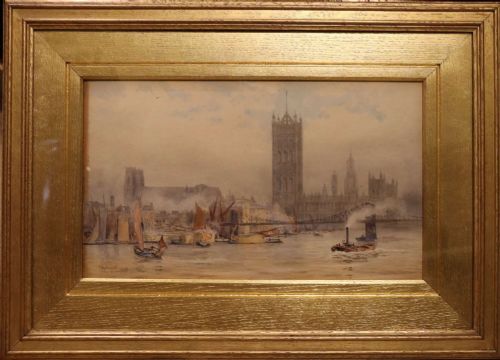
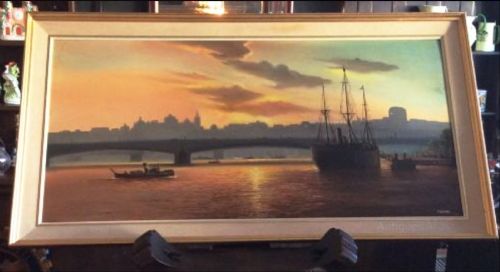
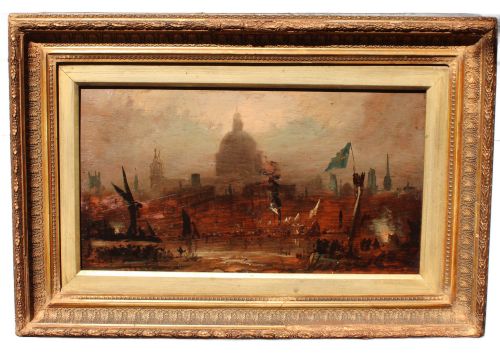
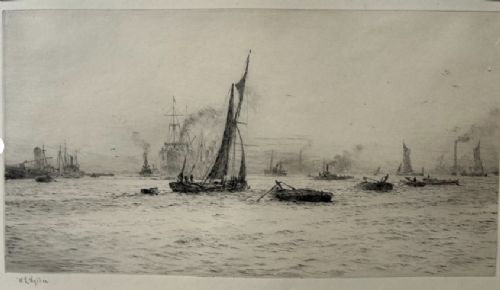
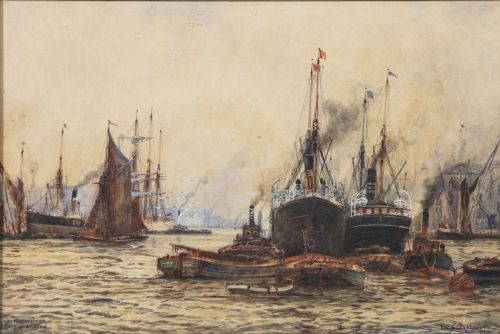
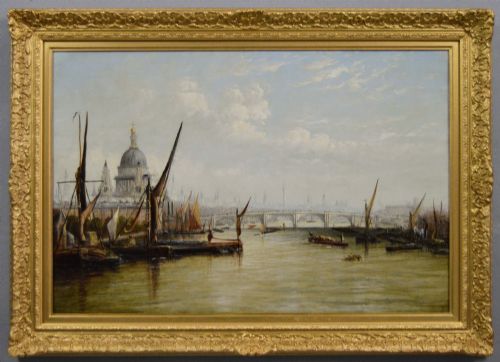
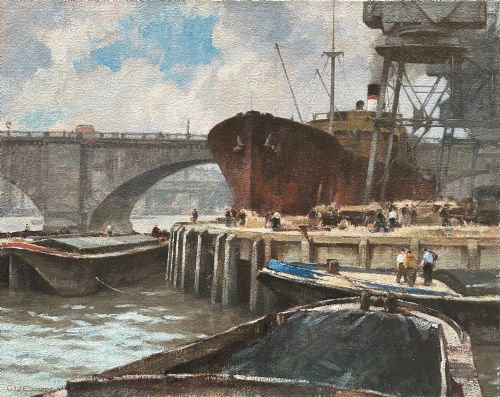
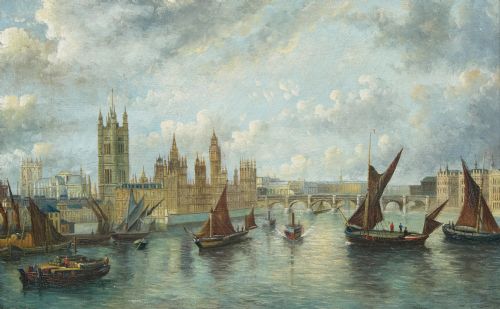
Antique thames artwork spans oil paintings, delicate watercolours, and fine etchings that record the changing face of the river from Georgian times through to the Edwardian era. Buyers encounter panoramic cityscapes featuring landmarks like St Pauls and Waterloo Bridge alongside serene countryside views of Windsor and Wargrave.
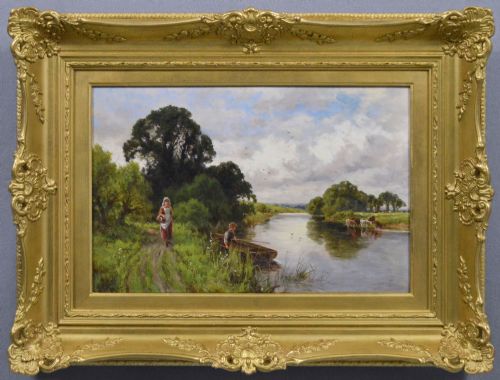
The watercolours and oils on this page concentrate heavily on late nineteenth and early twentieth-century depictions of maritime trade, bustling pools of London, and quiet Thameside villages. These pieces range from rapid topographical studies to finished exhibition works by established British painters.
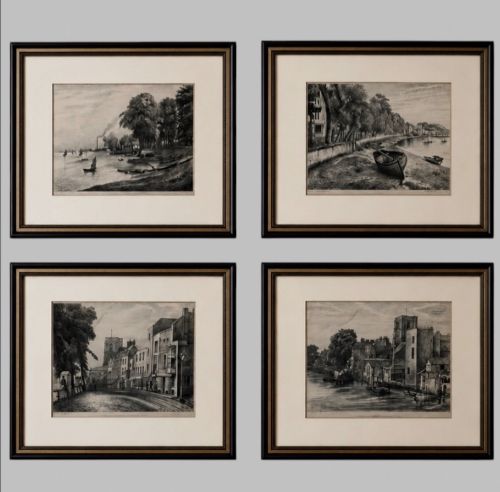
Framed prints and lithographs also appear among the originals, offering historical records of London locations such as Chelsea and Westminster Bridge. Each format provides a direct visual window into the river's commercial and domestic life before modern development altered the banks.
Materials and Technique
Artists captured the shifting light of the river using traditional watercolour pigments on paper or rich oil paints applied to canvas and board. Gold leaf occasionally frames these works, enhancing the period aesthetic of the presentation.
Graphic works rely on meticulous ink application for copperplate etchings and drypoints, often pencil-signed by the printmaker. Aquatints and lithographs utilise layered plates to achieve tonal depth in topographical scenes.
Several Victorian artists braved the notoriously smelly London mudbanks with their easels just to get the perspective on shipping quite right.
Evaluating the Pieces
Quality rests in the artist's command of atmospheric perspective, particularly how effectively they render the signature haze, smoke, and moisture rising off the tidal water. Stronger works demonstrate confident brushwork or precise line control that brings movement to shipping vessels and architectural landmarks.
The integrity of the original framing, the preservation of the paper or canvas against damp, and the clarity of the signature or archival attribution distinguish the finest examples from standard decorative pieces.
Charles Edward Dixon·William Lionel Wyllie·Francis Moltino·Henry H Parker·Edward Henry Eugene Fletcher
The Antique Thames Artwork Glossary
- Watercolour
- A painting method using water-soluble pigments that produces translucent washes of colour. It was a favoured medium for capturing the atmospheric skies above the river.
- Etching
- A printmaking technique where lines are bitten into a metal plate with acid before being inked and pressed onto paper. This process allows for fine, intricate detail in architectural scenes.
- Topographical
- Representing specific real-world places with factual accuracy rather than inventing a landscape. Many Thames views served as precise records of bridges and buildings.
- Aquatint
- A printmaking variation that produces tonal areas resembling watercolour washes. It was frequently used in Georgian printing to create shaded atmospheric effects.
- Lithography
- A planographic printing process based on the repulsion of oil and water. It enabled the mass production of clear architectural and landscape images.
Antique Thames Artwork: Frequently Asked Questions
Where were these river scenes painted?
Artists worked from various vantage points along the tidal and non-tidal stretches of the river, from rural Berkshire down to the bustling Port of London. Common focal points include the Pool of London, Westminster, and Windsor Castle.
Many painters set up their easels on bridges, wharves, or from boats to capture accurate perspectives of shipping and architecture.
How can I tell the period of a piece?
Examine the clothing of figures in the foreground, the types of river craft depicted, and the presence or absence of specific bridges like Tower Bridge. These details provide immediate chronological markers.
Paper quality, framing style, and artist signatures also offer reliable clues to date the creation of the artwork accurately.
Are etchings considered original art?
Original etchings are hand-pulled by the artist or a specialist printer from a metal plate that the artist worked on directly. They differ fundamentally from later mechanical reproductions or photolithographs.
Pencil signatures below the image margin usually indicate a limited, artist-approved pull.