
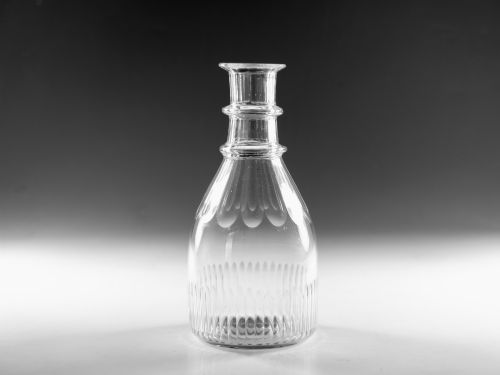
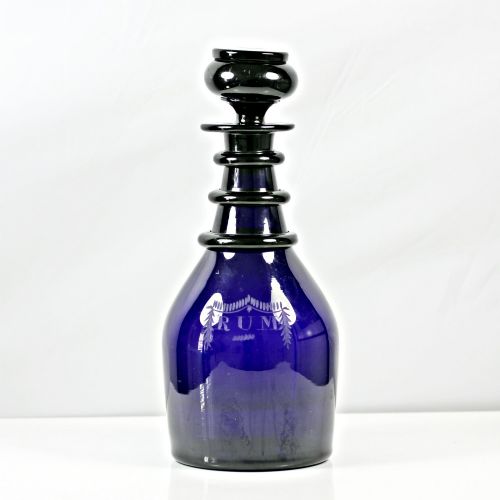
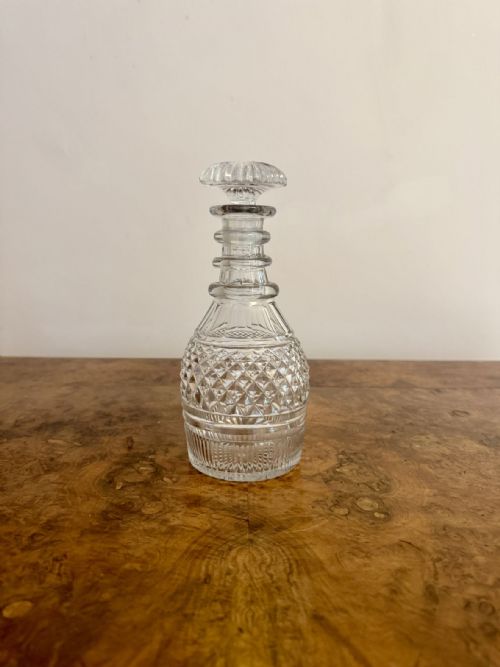
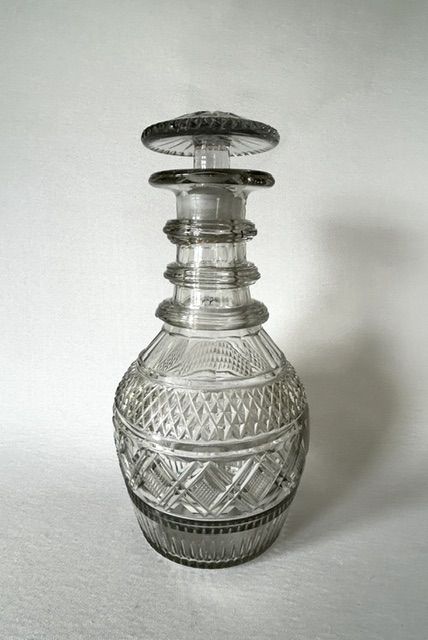
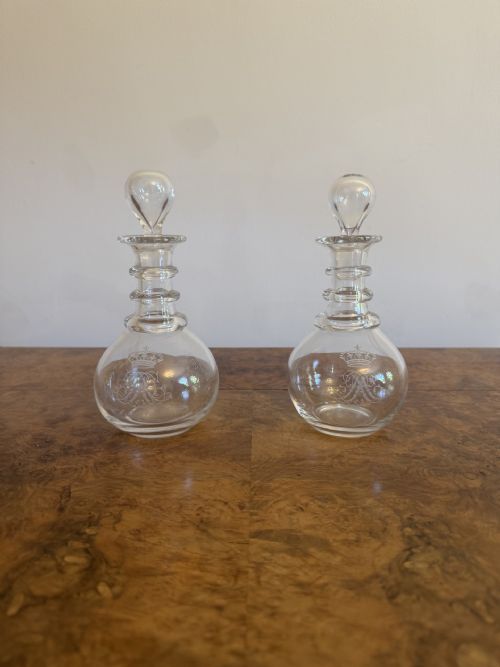


Ring Neck Glass Decanter
A ring neck glass decanter is a practical antique vessel designed to hold and pour spirits, prized for its distinctive concentric collars and heavy brilliance.
Ring Neck Glass Decanter
The forms span from traditional tall carafes and spirit decanters to broad-based ship's decanters built for stability at sea. English and Irish makers produced these pieces across the eighteenth and nineteenth centuries, utilising robust lead metal to achieve deep luminosity. Most examples integrate three distinct neck rings, though specific variations present single or double rings below the pourer.
How they were made
Makers fashioned ring neck glass decanters using heavy lead crystal or lead glass blown into iron or wooden moulds. Craftsmen formed the characteristic neck rings either by applying hot trails of glass while the vessel spun on the pontil iron or by tooling the molten metal directly on the lathe. The base typically retains a rough pontil mark where the holding rod was snapped off and ground flat.
Decoration relied heavily on cold-working techniques, particularly wheel-cutting and pillar-cutting to create facets that catch candlelight. Some specialised pieces incorporated applied gold leaf ornamentation or coloured metals such as cobalt glass and Bristol blue. The stoppers were ground by hand to fit individual bottlenecks, ensuring an airtight seal for stored spirits.
Ring Neck Glass Decanter Retail Price Guide 2026
Typical asking prices for ring neck glass decanter among the pieces listed under this phrase on Sellingantiques today, from the lower quarter to the upper quarter. They describe what is for sale here now, not the wider market.
Some ship's decanters were built with excessively wide bottoms so enthusiastic sailors could enjoy their rum during a tempest without losing a drop.
What varies in quality
Quality in a ring neck glass decanter rests upon the clarity of the metal and the precision of the glassblower's hand. Superior pieces utilise heavy lead glass with high refractive index, producing a deep ringing tone when struck and an unclouded transparency. The sharpness and regularity of the cut facets further distinguish finer workshop output from simpler utilitarian vessels.
Proportion and balance dictate the aesthetic success of the piece, from the steep taper of the body to the symmetry of the applied neck rings. Original matching stoppers that share identical cutting patterns and carry matching batch numbers elevate the desirability of the item. Furthermore, depth of colour in cobalt or Bristol blue examples separates standard productions from exceptional coloured lead glass items.
The Ring Neck Glass Decanter Glossary
- Pontil mark
- The rough scar left on the base of blown glassware where the pontil rod was attached during manufacture. This feature helps confirm the antique status of hand-blown vessels.
- Lead glass
- Glass containing a significant proportion of lead oxide, increasing weight, brilliance, and softness for cutting. This material forms the primary substance of heavy Georgian and Regency decanters.
- Pillar cut
- A decorative technique featuring wide, vertical flutes ground into the body of the decanter. This style creates broad reflective surfaces popular during the Regency period.
- Ship's decanter
- A form featuring a wide, low-slung base that prevents tipping aboard moving vessels at sea. The shape incorporates a broad body tapering up to the characteristic ringed neck.
- Bristol blue
- A deep cobalt-blue lead glass produced in English workshops during the late eighteenth and nineteenth centuries. It provided a striking contrast to clear cut glass.
Ring Neck Glass Decanter: Frequently Asked Questions
How do I date a ring neck glass decanter?
Dating relies on examining the profile of the body, the weight of the lead glass, and the style of the neck rings. Georgian and Regency pieces typically show deeper metal and hand-polished pontil marks.
Later Victorian and Edwardian examples often display machine-molded bases and sharper, shallower cutting patterns. Comparing the stopper fit and overall proportions against documented design periods clarifies the era of manufacture.
Were these decanters meant for wine or spirits?
Ring neck decanters served various functions depending on their size, form, and specific historical labeling. Tapered spirit decanters and rum decanters held potent potable liquors.
Larger carafes and ship's decanters accommodated table wines for dining service. The heavy lead construction protected the contents while the fitted stopper preserved the aromatics.
How should I clean an antique decanter?
Cleaning requires warm water and mild detergent without harsh abrasives to protect the historic glass surface. Stubborn interior residue responds best to traditional methods using non-scratching materials.
Avoid sudden temperature changes that can crack heavy lead crystal. Thorough air drying prevents moisture retention inside the narrow neck.
What is the purpose of the neck rings?
The prominent horizontal collars provided a secure grip for wet hands when pouring liquids from heavy crystal vessels. This functional design prevented the bottle from slipping during use at the dining table.
Over time, these rings evolved into a distinct stylistic marker of nineteenth-century glassware craftsmanship. The number of rings often reflects regional preferences or chronological changes in production.