



19th Century Decanter Pair
A 19th century decanter pair brings symmetry and brilliant light to a dining table, offering matching vessels for service.
19th Century Decanter Pair
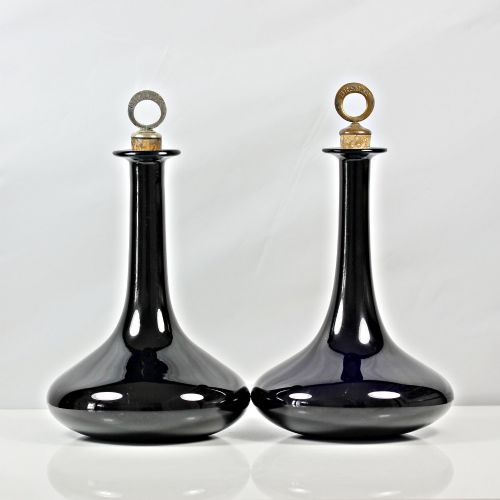
A 19th century decanter pair consists of matching matching drinking vessels produced across the Georgian, Regency, William IV and Victorian eras. These sets typically include cut crystal or coloured glass bodies accompanied by stoppers, designed to hold port, sherry, whisky or spirits.
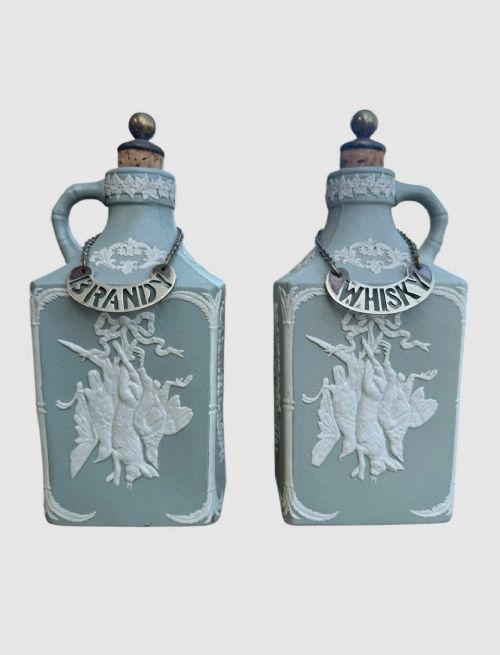
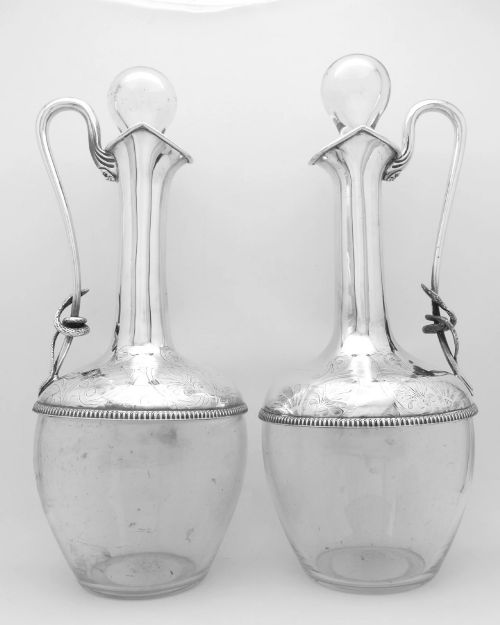
Beyond standard decanters, related serving pieces appear within the category, including wine coasters, spirit flagons, tincture bottles and claret jugs. These companion items share the dual materials of glass and metal mounts.
Origin points span English, French and Dutch workshops, with Georgian and Victorian examples dominating the selection. Buyers meet everything from Bristol blue and deep amber glass to clear pillar cut crystal.
How they were made
Makers utilised lead crystal and standard glass formed through blowing and moulding, often finishing the body with deep pillar cutting or surface etching. Coloured glass varieties - such as amber, green and Bristol blue - achieved their tones through mineral additions during the molten stage.
Metal components involved solid silver, silver plating, or ormolu mounts fitted securely around the necks or bases. Papier-mâché and toleware coasters incorporated cork, gold leaf, and lacquer decoration with painted or gilded motifs.
Stoppers were individually ground to fit each specific neck, ensuring a tight seal for spirit preservation.
Listings span the Georgian, Regency, William IV and Victorian periods, incorporating glass, lead crystal, papier-mâché, ormolu and silver.
What varies in quality
Quality rests upon the clarity of the glass, the crispness of the wheel-cut facets, and the matching nature of the pair. Superior pieces display deep, sharp cutting that refracts light cleanly without internal cloudiness or heavy scratching.
The integration of precious materials elevates a pair, such as hallmarked solid silver mounts, heavy ormolu frames, or intricate gilded decoration on black papier-mâché. Associated stoppers that match the original form and fit snugly add considerably to the integrity of the set.
John and Thomas Settle
The 19th Century Decanter Pair Glossary
- Decanter
- A vessel with a stopper used for holding and serving wine or spirits. These objects form the central focus of the category.
- Lead crystal
- Glass containing lead oxide, known for high refractive index and heavy weight. This material allows for deep, sharp cutting.
- Pillar cut
- A decorative surface pattern featuring broad, vertical flat-cut flutes. It creates strong linear reflections along the body of the glass.
- Tincture bottle
- A small medicinal or apothecary storage jar fitted with a stopper. These appear alongside spirit flagons in period listings.
- Wine coaster
- A small tray or stand with a raised rim, often lined with cork or felt, designed to hold a bottle on the dining table.
19th Century Decanter Pair: Frequently Asked Questions
How do I clean an old decanter pair?
Wash the glass gently by hand using warm water and mild detergent, avoiding harsh abrasives that scratch the surface. Metal mounts and gilded decoration require careful preservation away from prolonged moisture.
Allow the decanters to dry completely upside down before replacing the original stoppers.
Are the stoppers original?
Stoppers were individually ground to fit each specific neck during manufacture, meaning replacements often sit unevenly. Look for matching number markings or consistent wear patterns between the stopper base and the interior neck.
Clear glass colouration and matching tint provide further confirmation of originality.
What is the difference between a claret jug and a decanter?
Claret jugs feature an integrated handle and a hinged metal pouring spout fixed to the neck. Decanters rely on a simple pour-rim and lack attached handles.
Jug forms frequently incorporate silver or ormolu mounts to secure the handle mechanism.
How were wine coasters used?
Coasters protected wooden dining tables from rings and spills during service. Guests slid the laden stands across the polished mahogany surface between diners.
Many examples feature felt or cork bases to assist smooth movement.