


Regency Crystal Decanters
Regency crystal decanters are heavy, brilliant vessels of lead glass designed to serve wine and spirits with Georgian elegance.
Regency Crystal Decanters
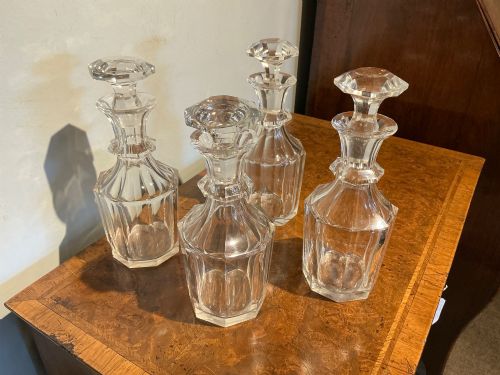
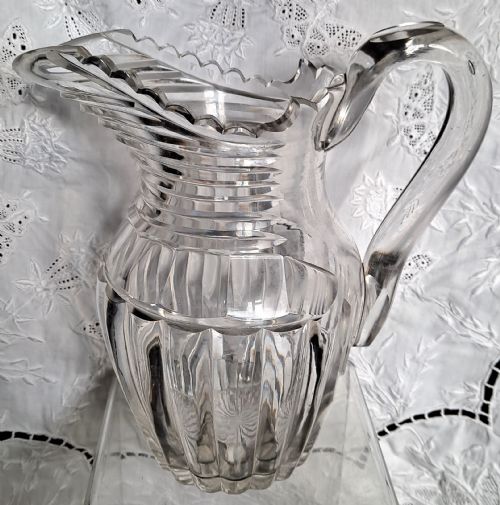
The objects appearing on this page originate from English and Irish workshops of the nineteenth century, including examples dated around eighteen hundred to eighteen thirty. Alongside standard decanters, the selection includes related glassware such as carafes, pitchers, jugs, and liqueur sets. Each piece reflects the formal dining habits of the Georgian and Victorian eras.
Standards of Manufacture
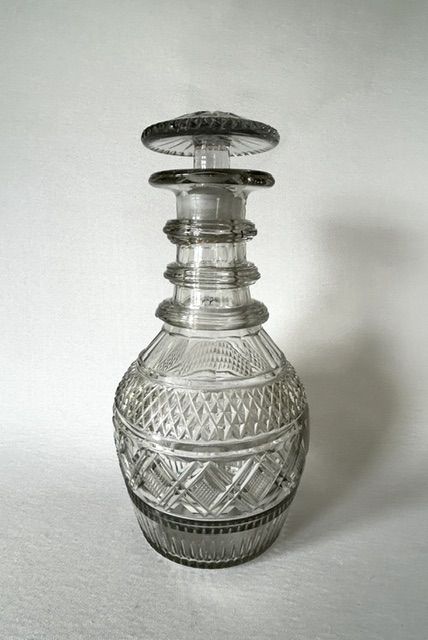
The distinction between ordinary and superior pieces rests upon the crispness of the glass-cutting and the clarity of the metal. Finer examples display deep, sharp facets that refract light cleanly, whereas lower tiers show softer, more rounded edges from hasty wheel work.
Weight and balance also define the grade of a vessel, with better-made specimens utilising heavy lead crystal that feels substantial in the hand. Matched pairs and complete sets demonstrate superior original commissioning compared to mismatched or single survivors.
Nineteenth-century sailors relied on wide-bottomed ship's decanters to keep their rum secure while pitching across the waves.
The Regency Crystal Decanters Glossary
- Ship's decanter
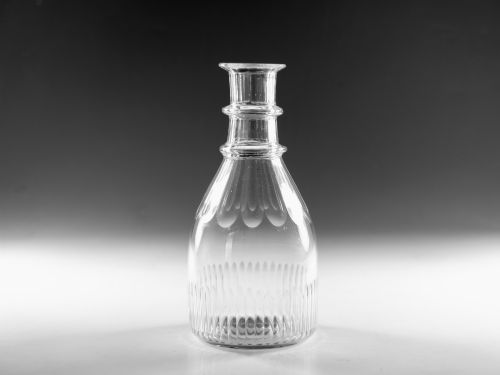
- A decanter with a broad, stable base and a conical body designed to prevent tipping on the rolling floor of a ship. This profile allows the vessel to remain secure during maritime service.
- Three-ring carafe
- A decanter featuring three applied horizontal glass rings around the neck. These raised bands serve both a decorative purpose and a practical function for gripping.
- Lead crystal
- Glass containing a significant proportion of lead oxide, which increases density, weight, and light refraction. This material forms the primary medium for high-quality Regency tablewares.
- Pillar cut
- A decorative glass-cutting technique that creates wide, flat vertical channels along the body of the vessel. The style produces strong columnar reflections in clear lead crystal.
- Rum decanter
- A specific spirit vessel of the period, often shorter and broader than wine decanters. These pieces accommodated heavier spirits served in nineteenth-century households.
Regency Crystal Decanters: Frequently Asked Questions
How do I date a Regency decanter?
Dating relies on stylistic markers such as neck rings, cutting depth, and pontil mark formation at the base. Pieces from this era typically exhibit characteristic nineteenth-century proportions and lead crystal weights.
Comparison with documented examples from eighteen hundred to eighteen thirty helps narrow the decade of manufacture. Unpolished pontils generally point toward earlier Georgian and Regency production.
Are these decanters safe for modern use?
These vessels were built to hold wine and spirits and remain entirely functional for serving drinks today. Modern users simply need to wash them by hand to protect the antique lead glass.
Harsh dishwashers and sudden temperature changes should be avoided to prevent thermal shock and clouding. Gentle cleaning preserves the clarity of the cut crystal.
What is a ship's decanter used for?
A ship's decanter was originally created for use at sea, where its wide base prevented it from sliding or overturning. The triangular profile kept the contents stable during rough voyages.
Landowners also adopted these sturdy vessels for dining rooms because the low centre of gravity reduced accidental spills. Today, they remain prized for their distinctive silhouette.
Why do some decanters have three rings?
The three horizontal rings around the neck provided a secure grip when pouring wine from a heavy crystal vessel. Servants and hosts relied on these ridges to hold slippery decanters safely.
Over time, these neck rings evolved from functional additions into a standard decorative feature of Regency glassware. Their presence helps identify pieces from the early nineteenth century.