
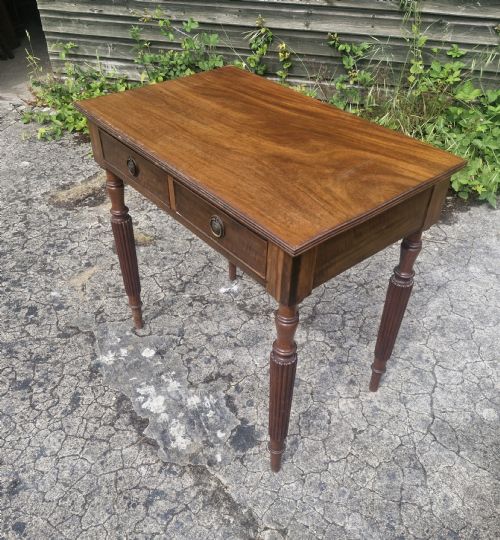

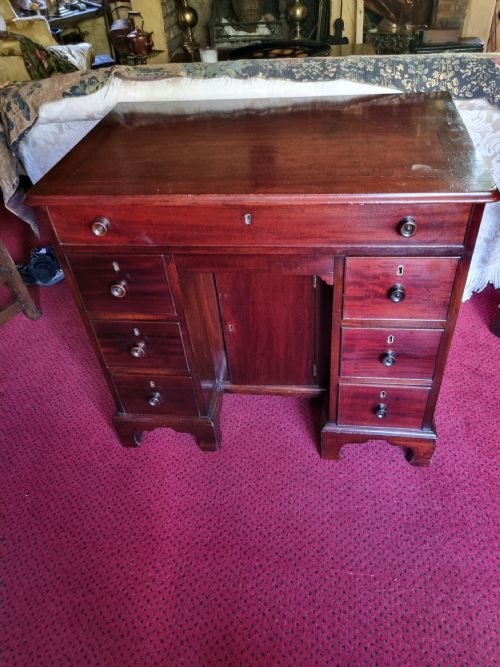


Rich Mahogany Desk
A rich mahogany desk brings deep timber figure and enduring utility to a room, ranging from compact Georgian kneehole forms to grand Victorian cylinder pieces.
Rich Mahogany Desk
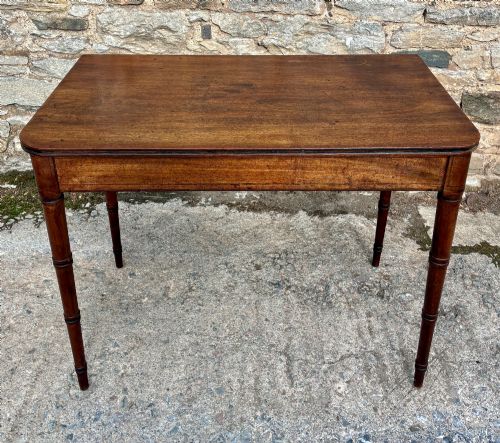
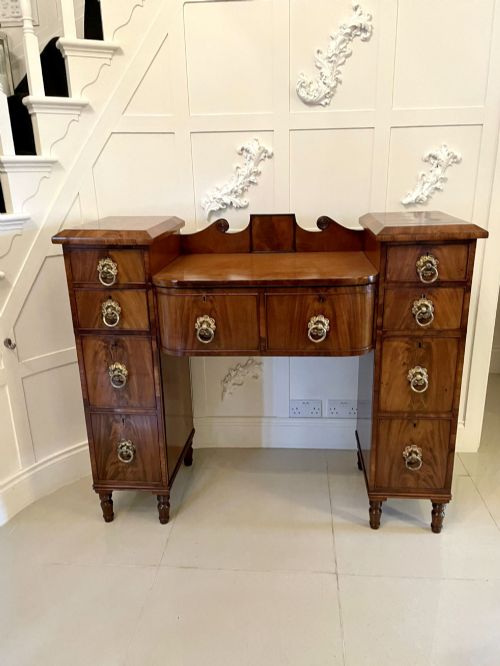
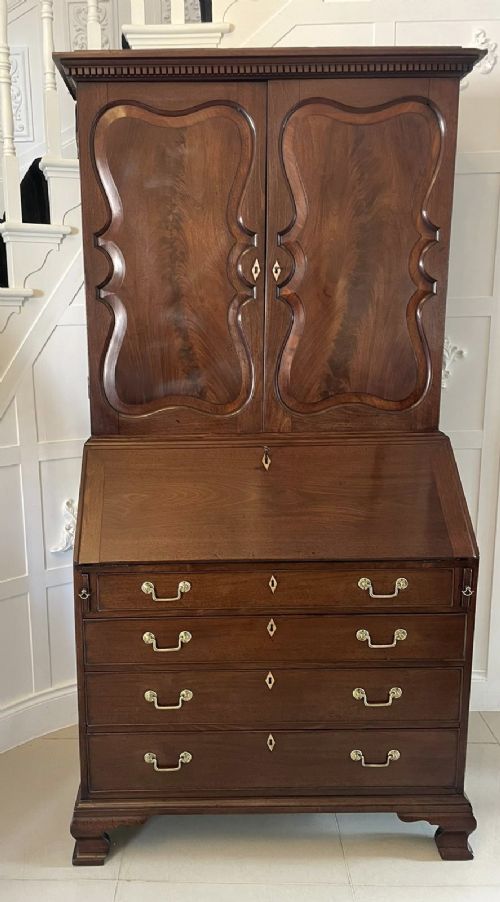
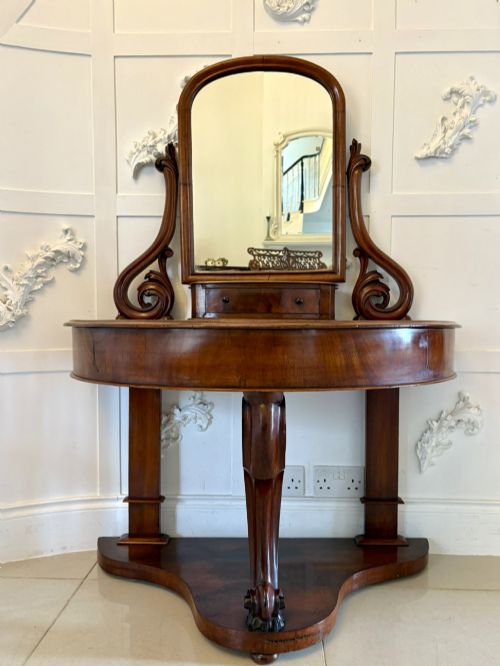
A rich mahogany desk encompasses forms built primarily for writing and administration across the eighteenth, nineteenth and early twentieth centuries. Pieces found here span straightforward writing tables, bureau bookcases, secretaire cabinets and pedestal formats.
The Georgian and Regency eras contribute refined proportions and figured timbers, while Victorian examples often provide heavier pedestal formats or fitted writing compartments. Edwardian variations offer lighter proportions suitable for smaller domestic spaces.
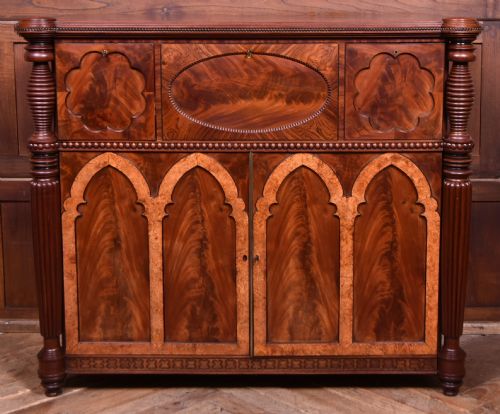
Buyers encounter solid mahogany alongside flame mahogany veneers, frequently paired with brass hardware and occasionally marquetry or satinwood details. These pieces originate from British workshops as well as continental makers and colonial trade centres.
How they were made
Cabinetmakers constructed these pieces using solid mahogany and applied mahogany veneers, frequently selecting figured timber or flame mahogany for primary display surfaces. Secondary timbers provided internal framing for drawers and letter compartments.
Metal components relied on cast brass for handles, escutcheons and casters, while specialised desks integrated leather writing surfaces. Marquetry inlay and satinwood banding added decorative contrast on select continental and British pieces.
One exceptional Edwardian desk arrives in the distinctive Carlton House style, offering a curved tiered superstructure of tiny drawers designed for polite correspondence.
What varies in quality
The selection of timber grain largely distinguishes simpler utility desks from exhibition pieces, with highly figured flame mahogany or burr walnut veneers commanding greater attention. Cabinetmaking precision in drawer linings, dovetailed joints and internal pigeonhole arrangement also marks the upper tier.
Attribution to documented makers or workshops elevates a piece, as seen in labeled or attributed examples by Gillows or Maple of London. Original brass hardware, fitted secretaire drawers and intact structural integrity separate preserved examples from heavily altered items.
Gillows·George Faulkner Armitage·Maple of London·Currie and Co·Richardson of Leeds
The Rich Mahogany Desk Glossary
- Secretaire
- A desk or cabinet featuring a drop-down writing flap that conceals small drawers and pigeonholes. This form allows a tall bookcase or chest to function as a writing place.
- Kneehole desk
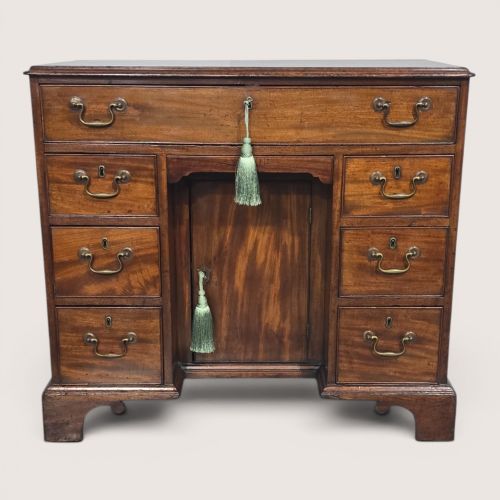
- A compact desk featuring a central recess for the user's legs, flanked by pedestals of small drawers. Eighteenth-century examples often include a concealed cupboard door behind the kneehole.
- Flame mahogany
- A veneer figure created by slicing timber from the fork of a mahogany tree where the branch meets the trunk. This produces a distinctive flickering wave pattern across drawer fronts.
- Bureau bookcase
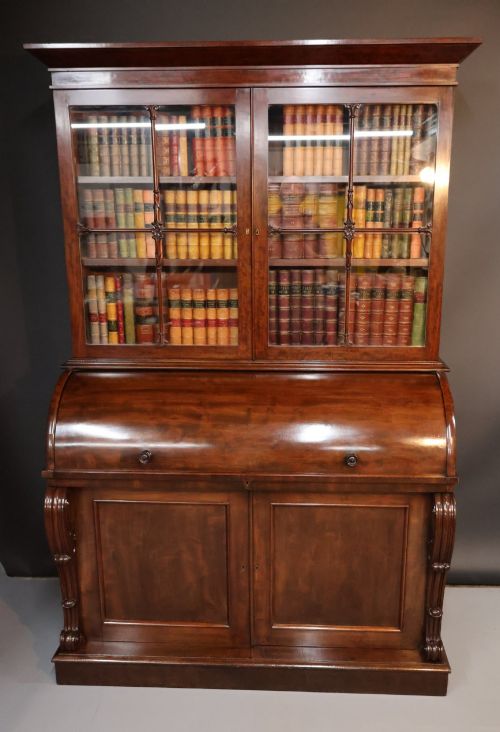
- A piece combining a slant-front writing desk at the base with an enclosed shelving unit above. Glass doors frequently protect the upper bookcase section.
- Partners desk
- A large double-sided pedestal desk designed for two people to work opposite one another. These pieces feature drawers and cupboards accessible from both sides.
Rich Mahogany Desk: Frequently Asked Questions
How do I tell a Georgian desk from a Victorian one?
Georgian desks generally exhibit lighter proportions, restrained classical stringing, and bracket feet or slender legs. Timbers tend to have a rich natural warmth developed over centuries of polish.
Victorian desks often present heavier proportions, robust pedestal bases, and more elaborate carved mouldings. Mechanical writing slides and complex internal drawer arrangements appear frequently in this later period.
What does a secretaire abattant mean?
A secretaire abattant is a tall upright cabinet with a drop-front writing surface that folds down vertically. Below the writing flap, panelled doors typically conceal additional shelving.
This vertical format maximises workspace while occupying minimal floor area in a room. Continental European workshops favoured this style during the nineteenth century.
How do I care for a mahogany writing surface?
Maintain mahogany surfaces by dusting with a soft, dry cloth and applying appropriate beeswax periodically to nourish the timber. Avoid placing desks near direct heat sources or strong sunlight to prevent veneer splitting.
Protect inset leather surfaces with specialised balms rather than harsh chemical cleaners. Gentle handling preserves both the original polish and the integrity of antique brass hardware.