
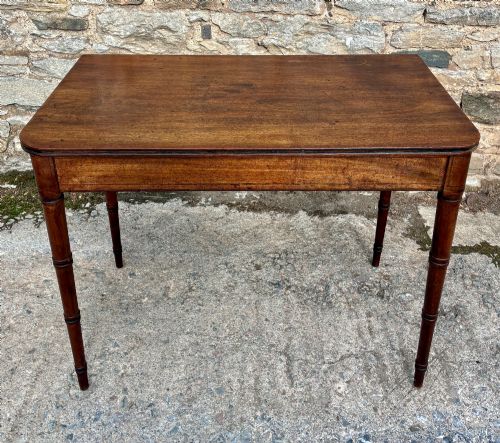
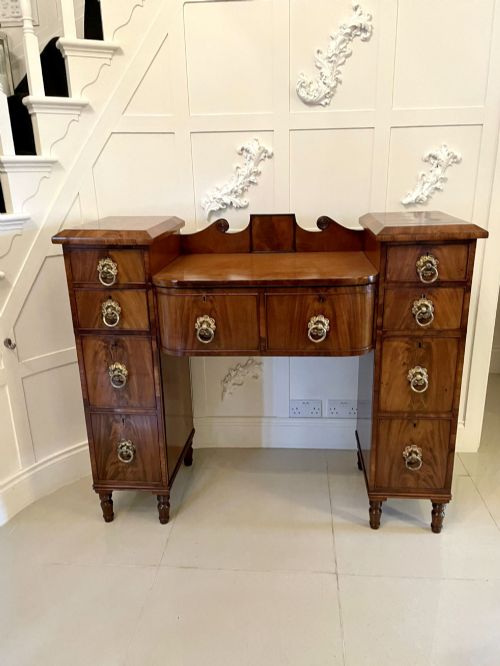
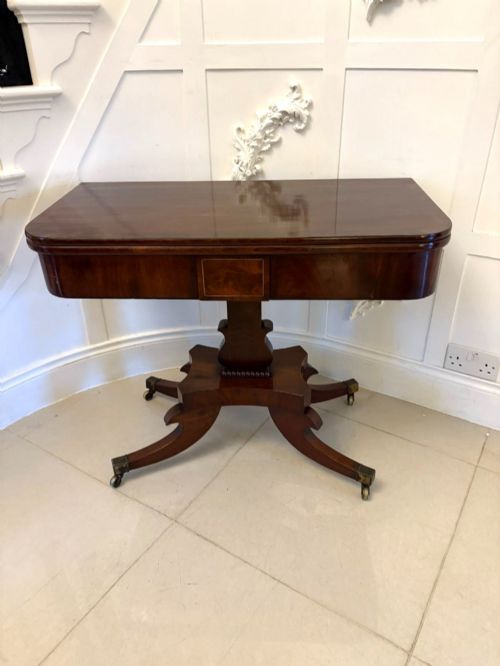
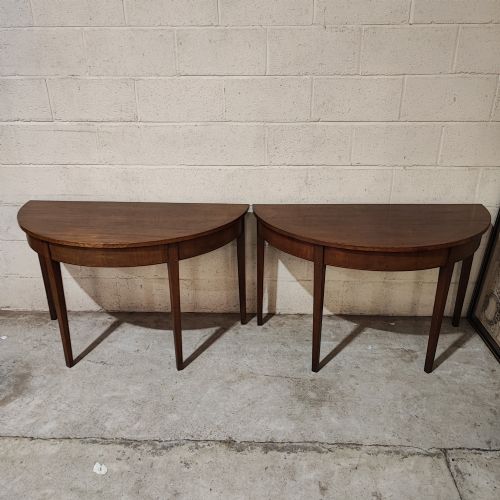
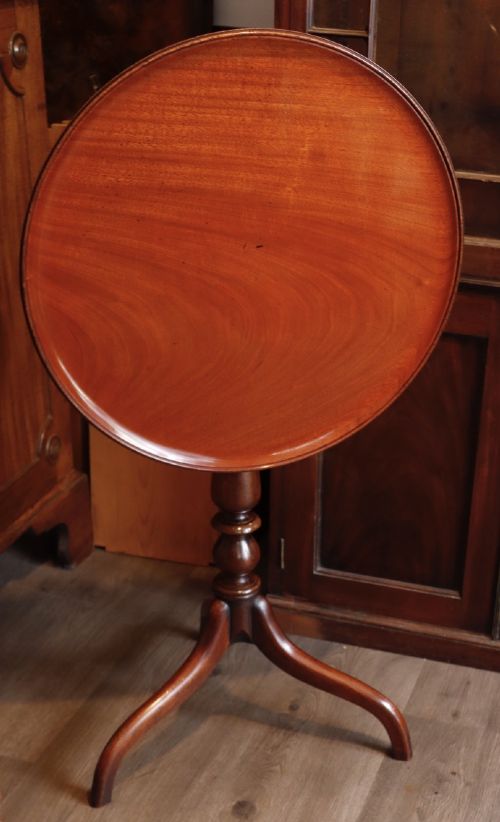
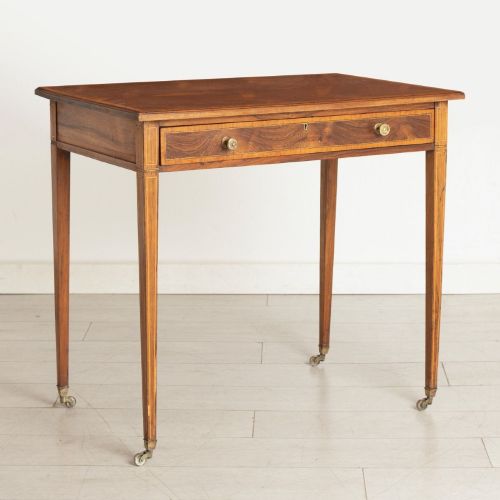
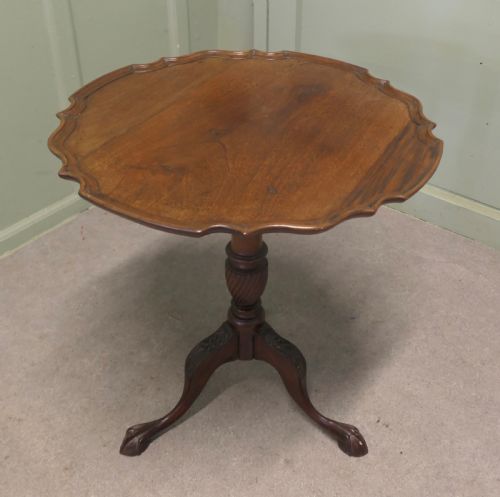
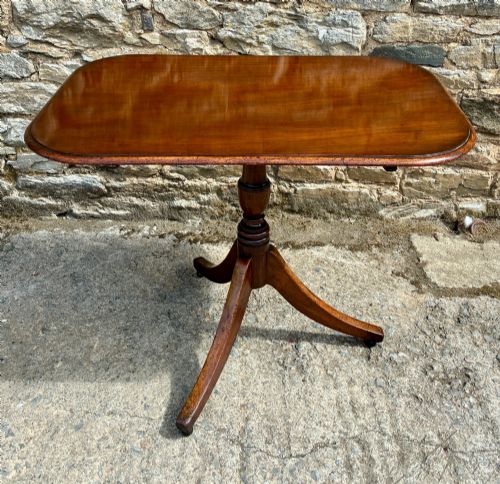
Rich Brown Table
A rich brown table brings deep timber tones to a room, offering both practical surface space and centuries of cabinet-making heritage.
Rich Brown Table
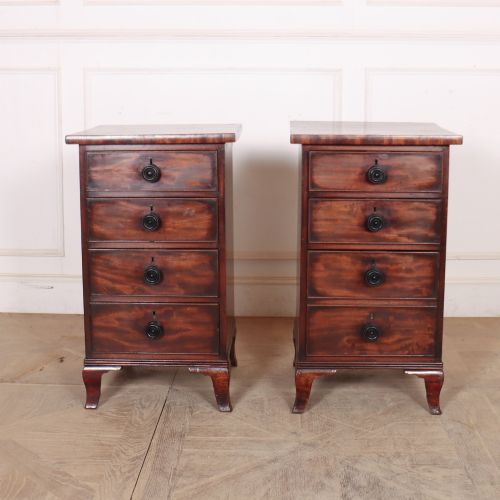
A rich brown table encompasses a wide variety of timber furniture designed for dining, writing, and occasional use across several centuries. When searching for a rich brown table, buyers encounter formats ranging from grand George III dining tables to compact Victorian bedside cabinets and Georgian tea tables.
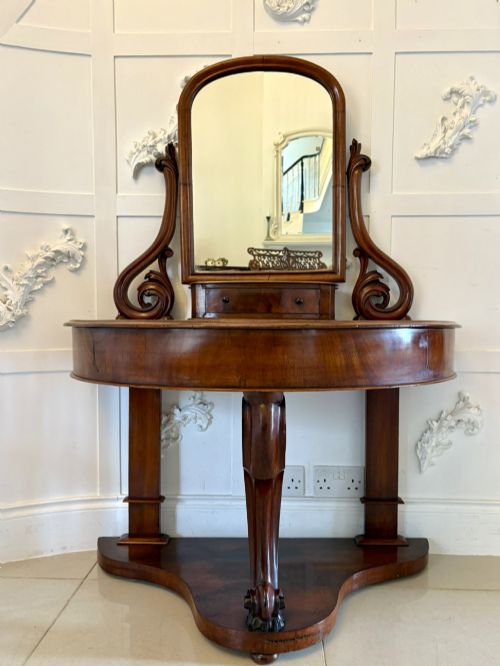
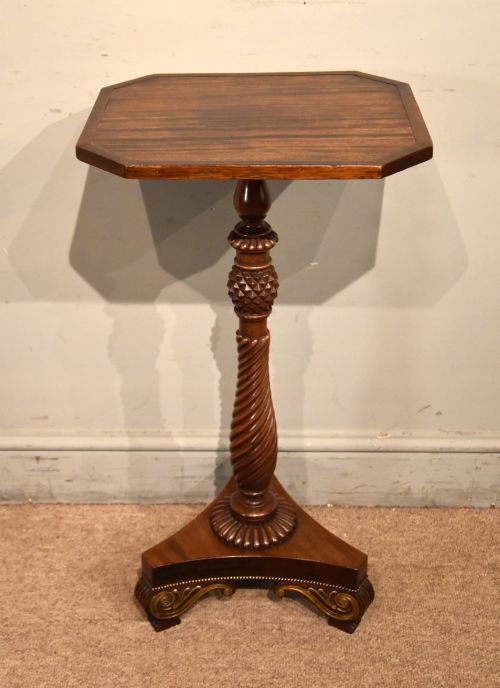
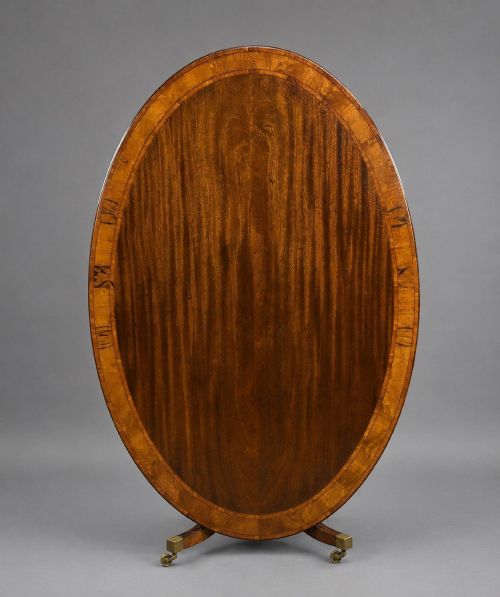
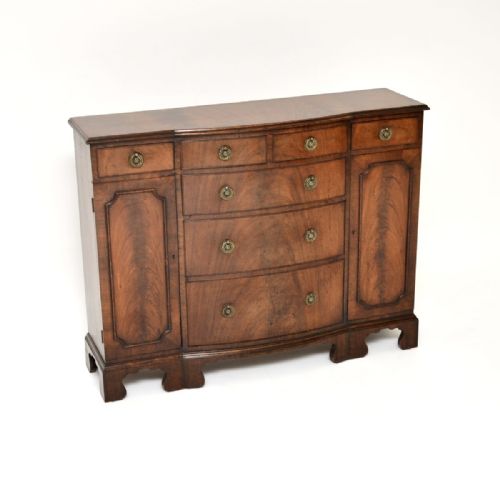
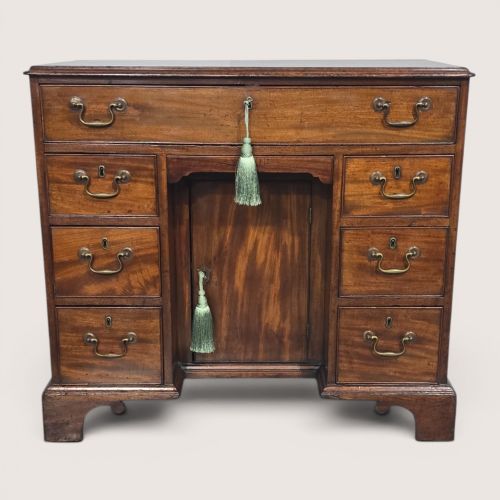
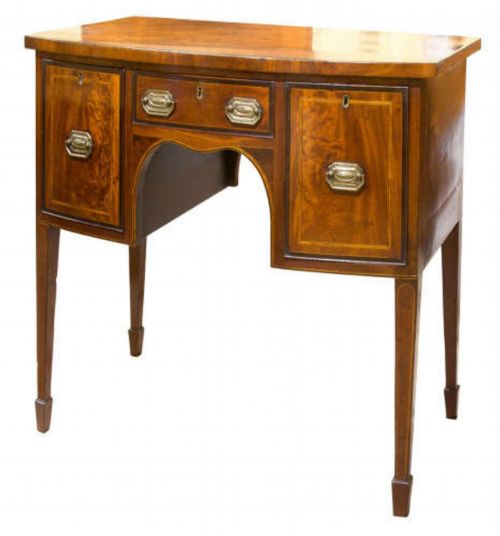
The pieces appearing on this page span the 18th century, the Regency and Victorian eras, and the Edwardian period. Formats include sideboards, console tables, breakfast tables, and writing desks, united by their warm wood tones and historical craftsmanship.
Materials and construction
Mahogany dominates the selection, frequently paired with secondary woods like oak or pine, alongside walnut, rosewood, and fruitwood. Cabinet-makers utilised solid timber and veneers, often incorporating wood inlay, satinwood banding, and brass hardware to define the edges and drawers.
Construction techniques evolved from 18th-century provincial jointing and hand-cut dovetails to 19th-century mechanical wind-out mechanisms for large dining tables. Surfaces received hand-applied finishes that deepened the natural grain and colour of the timber over decades of use.
Listings feature pieces spanning from the early 18th century through the Edwardian period, constructed in mahogany, walnut, oak, and rosewood.
Assessing quality and finish
Quality rests in the selection of the timber grain, the crispness of any inlaid work, and the integrity of the structural joinery. Pieces featuring figured mahogany, burr walnut, or purpleheart banding demonstrate a higher grade of material selection by the original maker.
Proportion and untouched patination separate standard items from superior examples. A rich brown table retains depth of colour and honest wear on the timber surfaces, reflecting its age without masking the original construction.
The Rich Brown Table Glossary
- Console table
- A table designed to stand against a wall, frequently featuring shaped legs or a demi-lune top.
- Tilt top table
- A table with a hinged top that pivots to a vertical position when not in use.
- Inlay
- A decorative technique where contrasting pieces of wood or other materials are set into the surface.
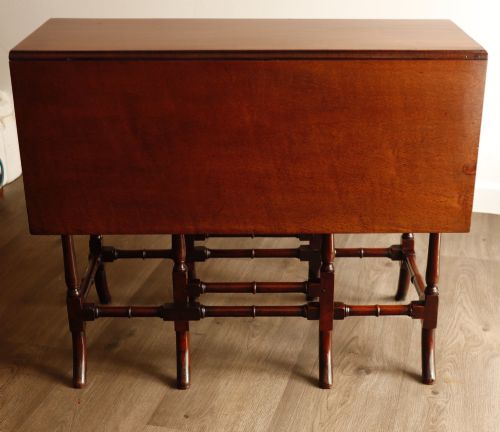
- Drop leaf table
- A table with hinged flaps on the sides that fold down to reduce the surface area.
- Pollard oak
- Oak timber taken from trees that have been pollarded, producing a knotted and highly figured grain.
Rich Brown Table: Frequently Asked Questions
How do I clean a mahogany table?
Dust regularly with a soft, dry cloth to prevent particulate build-up on the polished surface.
Apply a traditional beeswax polish sparingly when the wood appears dry, buffing gently to maintain the natural sheen.
What is a pembroke table?
A pembroke table is a small occasional table featuring hinged drop leaves on two opposing sides.
These pieces typically include a single drawer and slender legs, designed for versatile placement in sitting rooms.
How do I date an antique table?
Examine the construction methods, tool marks on the underside, and the type of wood used for secondary framing elements.
Hardware styles, timber availability, and overall proportions also provide strong indicators of the period of manufacture.
Can I use a antique table daily?
Solid wood furniture from earlier centuries was built for active domestic service and handles everyday use well.
Protect the surface from excessive moisture and heat by using coasters and mats during meals or writing.