
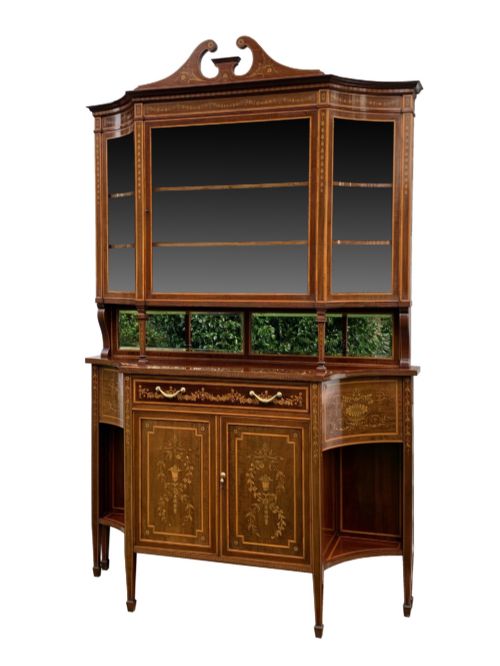
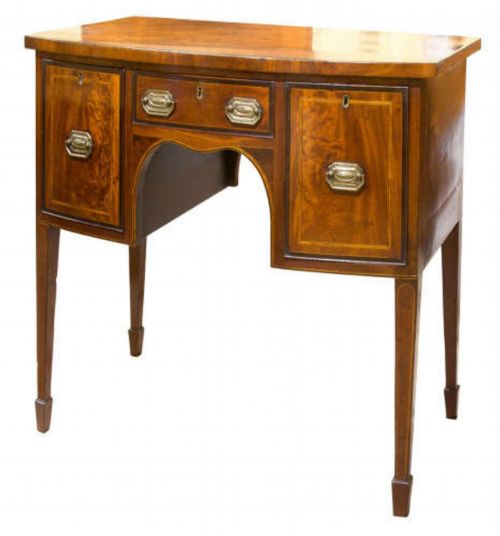
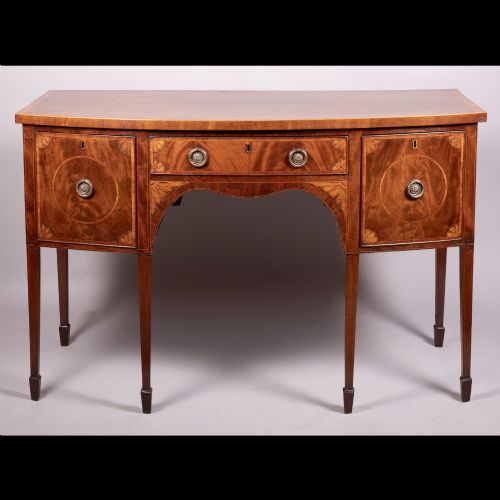


Rich Brown Mahogany Sideboard
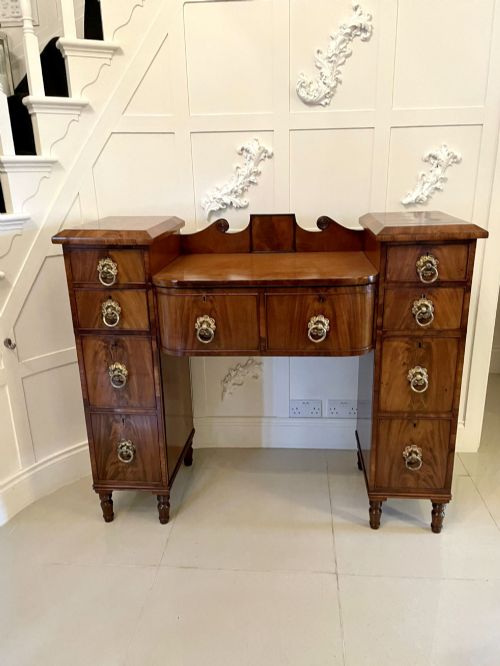
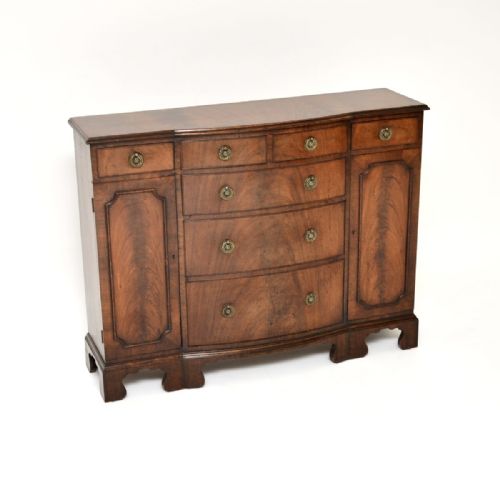
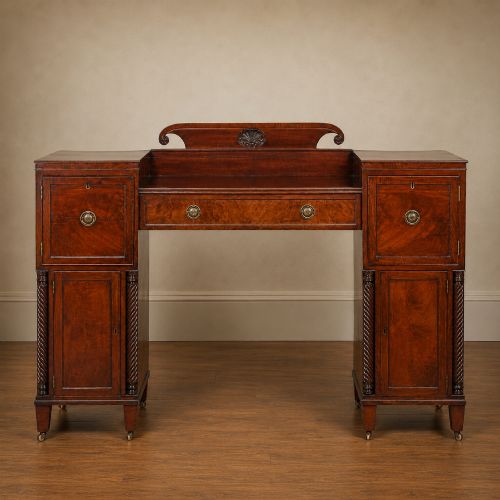
A rich brown mahogany sideboard grounds a dining room with deep timber tones, offering generous storage through pedestal, bow-front, and breakfront forms.
Rich Brown Mahogany Sideboard
A rich brown mahogany sideboard serves as a commanding dining room focal point, designed to store tableware and display serving dishes. These substantial timber pieces appear across Georgian, Regency, and Victorian periods, alongside later revival interpretations.
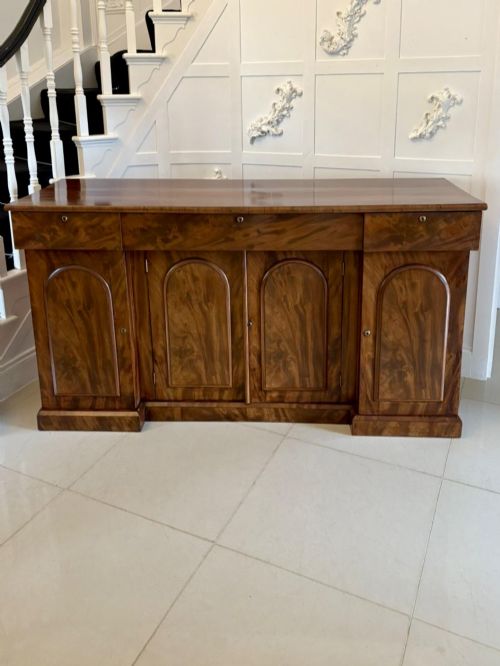
The most frequent form met on this page is the bow-front or straight-front sideboard in solid mahogany and mahogany veneer, often featuring cupboard doors and central drawers. Pedestal and breakfront layouts also emerge regularly, spanning the eighteenth century through to the late Victorian era.
Makers utilised contrasting stringing in boxwood or satinwood to delineate drawer fronts and tabletops. Structural variations include four-door configurations and smaller proportions suited to compact dining spaces.
Materials and construction methods
Cabinetmakers built these pieces using solid mahogany and flame mahogany veneer applied over secondary timbers, often accenting the rich brown surfaces with boxwood and satinwood banding. Brass hardware, including handles and drawer pulls, provides functional contrast to the dark timber.
Advanced joinery techniques allowed craftsmen to shape complex serpentine and bow-front outlines from dense hardwoods. Interior compartments frequently incorporate oak or pine linings behind hinged or sliding doors.
Some Victorian sideboards hide discreet cellarette drawers designed to keep wine bottles cool near the dining table.
Distinctions in craftsmanship and finish
The quality of a rich brown mahogany sideboard depends largely on the selection of timber veneers, where highly figured flame mahogany commands greater visual depth than plain stock. Crispness in carved details, such as rope-twist columns or brass inlay work, separates standard production from superior workshop output.
Original hardware, sound door alignment, and stable carcass construction maintain the integrity of these antique pieces over centuries of domestic use.
Edwards and Roberts·Gillow
The Rich Brown Mahogany Sideboard Glossary
- Bow-front
- A cabinet design featuring a convex, curved front facade that softens the rectangular lines of a room. This shape gained popularity during the Georgian period.
- Breakfront
- A large piece of furniture where the central section projects forward from the flanking outer sections. This architectural arrangement creates a dynamic play of shadow and light across timber surfaces.
- Pedestal sideboard
- A form comprising two separate pedestals linked by a central serving table or board. This layout dominated high-status dining rooms during the Regency era.
- Flame mahogany
- A veneer cut from the branch junctions of the tree, producing a distinctive flickering flame pattern. Cabinetmakers reserved this striking grain for primary display surfaces.
- Stringing
- Thin lines of contrasting timber inlaid into the surface of a piece to create decorative borders. Boxwood and satinwood were common choices for this delicate work.
Rich Brown Mahogany Sideboard: Frequently Asked Questions
What is the difference between a sideboard and a serving table?
A serving table typically stands on four legs with minimal enclosed storage, designed primarily for holding dishes during a meal. Sideboards incorporate deep drawers, cupboards, and sometimes pedestal compartments for permanent tableware storage.
Both forms utilise rich brown mahogany timbers, but serving tables offer a lighter visual footprint within a dining room.
How should I maintain a mahogany surface?
Maintaining rich brown mahogany requires regular dusting with a soft cloth and occasional application of traditional beeswax to nourish the timber. Avoid placing these pieces in direct sunlight or near heat sources to prevent veneer lifting.
Gentle care preserves the depth of the grain and the warm patina developed over centuries of use.
Where were these sideboards originally placed?
Dining rooms formed the primary setting for these timber pieces, where they held silver, glassware, and serving platters. Servants prepared courses on the tabletops before presenting them to guests.
Smaller proportions also suited withdrawing rooms and hallways, functioning as decorative display surfaces.