


French Art Deco Credenza
A French Art Deco credenza brings sculptural presence and rich hardwoods to a room, offering generous storage through refined modernist design.
French Art Deco Credenza
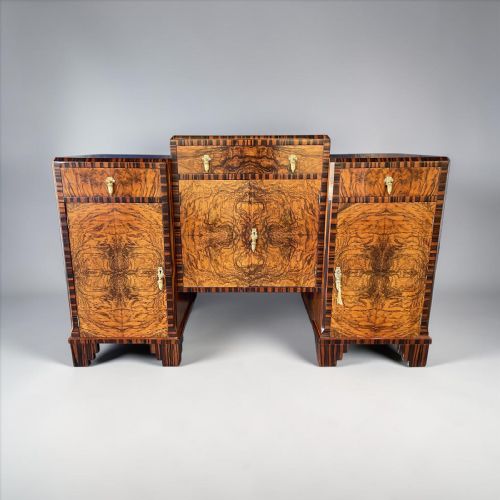
When you search for a french art deco credenza, you are looking at substantial storage furniture originating primarily from the nineteen-thirties, though pieces span from nineteen-twenty to nineteen-forty. These works function as sideboards, side cabinets, commodes, and washstands rather than purely formal dining buffets.
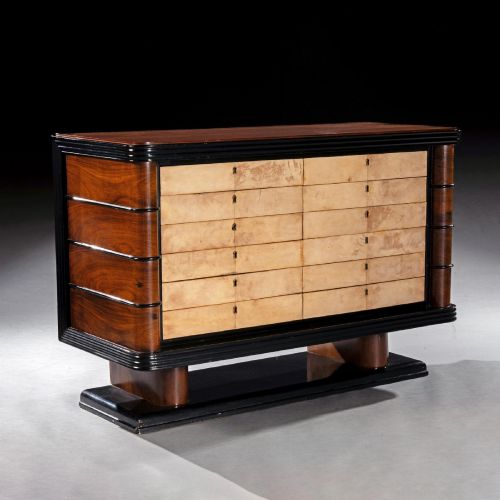
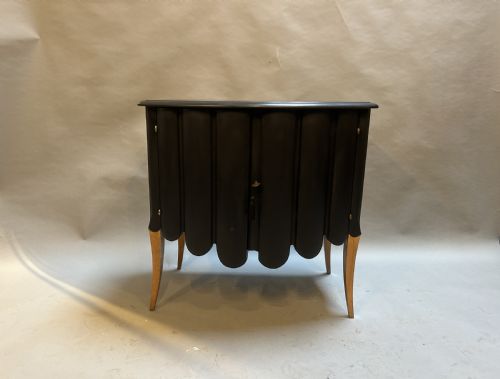
The versions you are most likely to meet on this page include walnut and burr walnut sideboards alongside models featuring mahogany, oak, macassar, and palisander rosewood. Many pieces employ serpentine fronts, parchment-covered drawers, or brass and glass details that define the style.
How they were made
Cabinetmakers utilised robust structural woods such as oak and mahogany as a foundation, applying decorative veneers like walnut, burr walnut, ebony, and palisander rosewood across the exterior surfaces. This technique created striking grain patterns and contrasting colour panels.
Makers integrated tactile details including brass hardware, inset marble tops, and parchment drawer coverings to accent the dark timber frames and curved silhouettes.
Materials recorded across the inventory include walnut, burr walnut, mahogany, oak, ebony, palisander rosewood, brass, marble, and glass.
What varies in quality
The distinction between standard production and exceptional work rests on the choice of exotic veneers and the precision of the cabinetmaker's joinery. Superior pieces display book-matched grain patterns and harmonious proportions across serpentine or unusual curved forms.
The integration of contrasting materials, such as parchment panels set within rich rosewood or macassar, separates ambitious Parisian workshops from simpler regional production.
Charles Dudouyt
The French Art Deco Credenza Glossary
- Credenza
- A sideboard or cabinet used for storage and display. These pieces typically sit low to the ground with enclosed cupboards flanking central drawers.
- Palisander
- A dense, heavily figured rosewood valued for its deep colour and dark grain streaks. Cabinetmakers prized this timber for high-status modernist furniture.
- Burr walnut
- A decorative wood cut from walnut tree growths, yielding intricate swirling patterns. It provides a striking textural contrast on flat cabinet doors and drawer fronts.
- Serpentine
- A cabinet front featuring a gentle wavy contour that curves outward in the centre and inward at the sides. This shape requires advanced woodworking skill to execute cleanly.
- Macassar
- A distinctive striped ebony originating from Indonesia, characterised by dark brown and black banding. It forms a dramatic surface finish on French storage cabinets.
French Art Deco Credenza: Frequently Asked Questions
What is a french art deco credenza used for?
These pieces serve primarily as functional storage furniture for dining rooms, hallways, or living spaces. They hold tableware, linens, or household items while providing a substantial surface for display.
The enclosed cupboards and deep drawers keep contents out of sight, maintaining clean lines within an interior.
How do I date a french art deco credenza?
Dating relies on stylistic markers and materials associated with the nineteen-twenties and nineteen-thirties. Pieces from this era often combine traditional carcase construction with modernist geometric silhouettes and exotic veneers.
Later works extending into nineteen-forty show shifts in timber choice, such as heavier use of solid oak alongside characteristic hardware.
Where were these cabinets made?
The majority originate from workshops and studios in France, particularly Parisian centres of design and cabinetmaking. These makers set international trends through innovative use of exotic woods and sculptural forms.
Regional French makers also produced notable variations in oak and walnut, adapting urban styles to local tastes.
How do I care for wood veneers?
Protect delicate surfaces like walnut, mahogany, and rosewood by keeping them away from direct sunlight and excessive heat fluctuations. Regular dusting with a soft, dry cloth preserves the polished finish.
A light application of appropriate furniture wax helps maintain the moisture and sheen of antique timber without building up residue.