

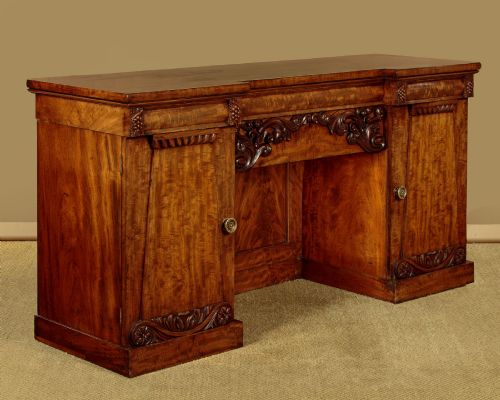
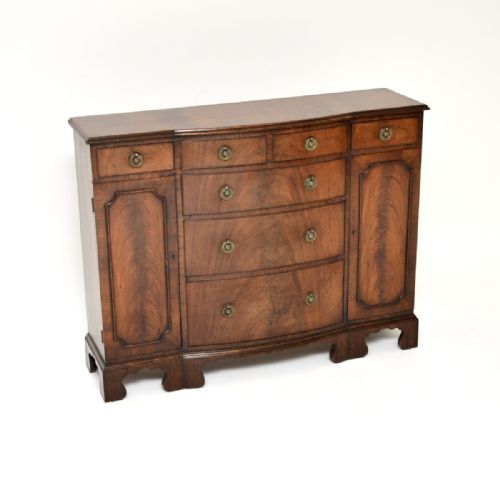
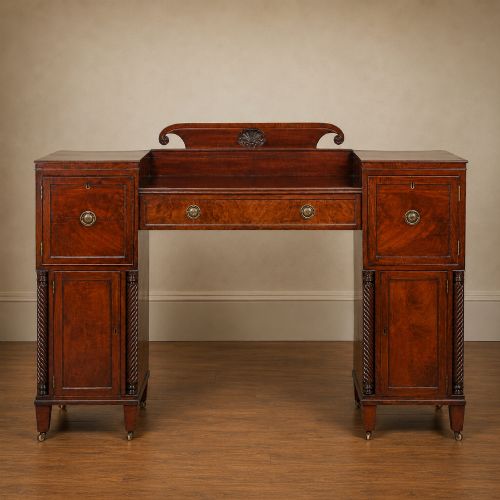
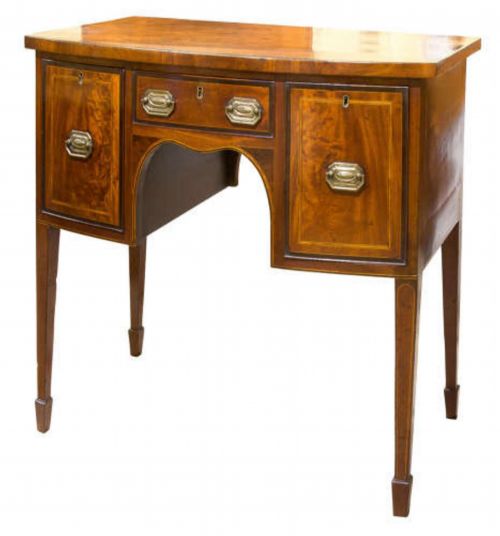




Rich Brown Mahogany Buffet
A rich brown mahogany buffet is a stately dining room essential offering deep timber grain and practical surface space for service.
Rich Brown Mahogany Buffet
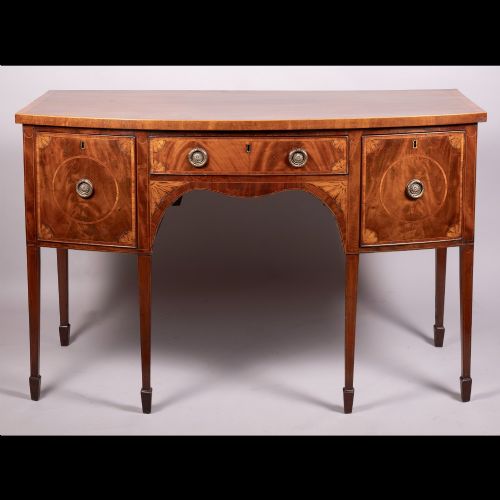
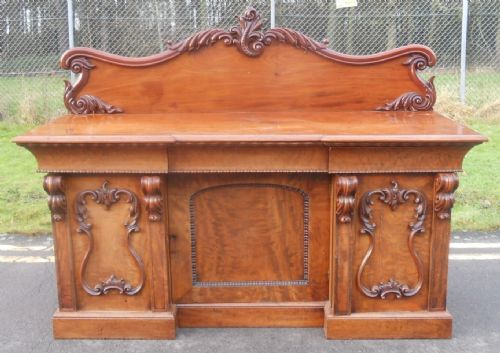
A rich brown mahogany buffet spans forms such as pedestal sideboards, bow-front servers, and serpentine serving tables across Georgian, Regency, and Victorian periods. These substantial dining room pieces are designed for displaying and serving food.
The version most commonly met on this page is the Victorian or Georgian mahogany sideboard, often featuring pedestals, four doors, or bow-front profiles in solid timber and veneer.
How they were made
Cabinet makers utilised solid mahogany alongside flame mahogany veneer to construct these serving tables and sideboards. Selected cuts displayed strong figuring across broad door panels and drawer fronts.
Details incorporate purpleheart banding, satinwood, walnut, and maple inlays, complemented by brass hardware such as handles and rails on pedestals.
Rich Brown Mahogany Buffet Retail Price Guide 2026
Typical asking prices for rich brown mahogany buffet among the pieces listed under this phrase on Sellingantiques today, from the lower quarter to the upper quarter. They describe what is for sale here now, not the wider market.
Listings span 18th Century, Regency, and Victorian periods, utilising mahogany, flame mahogany veneer, walnut, purpleheart, and satinwood.
What varies in quality
The distinction in these sideboards rests on the selection of timber, particularly the depth of the figured grain in flame mahogany veneer. Superior examples display careful matching of the grain across multiple doors and drawers.
Proportion and form define the upper tier of pieces, where exceptionally small dimensions or serpentine and break-front shapes show refined cabinet work rather than standard production.
Gillow
The Rich Brown Mahogany Buffet Glossary
- Breakfront
- A cabinet or sideboard whose central section projects forward from the flanking sections. This configuration creates architectural depth in large dining furniture.
- Pedestal sideboard
- A form comprising two distinct pedestals connected by a central serving section or recessed table. These pieces date prominently to the Regency and late Georgian eras.
- Flame mahogany veneer
- A thin slice of mahogany timber cut from the fork of the tree to produce a flickering, flame-like grain pattern. Cabinet makers applied this to drawer fronts and door panels for visual impact.
- Serpentine
- A curved shape resembling a snake, featuring a convex centre flanked by concave ends. This contour appears on sophisticated 18th century and later serving tables.
Rich Brown Mahogany Buffet: Frequently Asked Questions
What is a mahogany buffet used for?
These pieces served historically in dining rooms for holding dishes, silverware, and serving food during large meals.
Today, they function as substantial storage credenzas and display surfaces in dining rooms and living spaces.
How do I identify a Georgian buffet?
Georgian pieces often display clean bow-front or serpentine lines, delicate stringing, and traditional proportions dating from the 18th or early 19th century.
They rely on the natural warmth of figured timber rather than heavy Victorian carving.
Where do I place a pedestal sideboard?
Pedestal sideboards require a generous wall space, typically in a dining room, to allow their flanking columns and pedestals to be fully seen.
Ensure the room has sufficient clearance for the projecting doors and central table sections.
How do I care for mahogany furniture?
Maintain the rich brown surface by dusting regularly with a soft, dry cloth and avoiding direct sunlight that can fade the timber.
Apply a quality beeswax occasionally to nourish the wood and preserve the grain definition.