
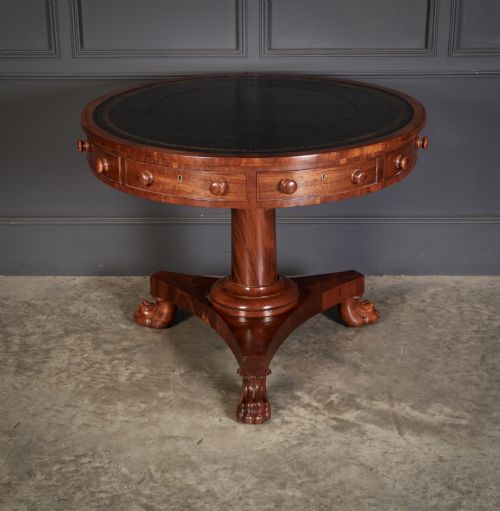


Revolving Top Table
A revolving top table serves as a functional centrepiece, offering a rotating surface designed for library use, display, or books.
Revolving Top Table
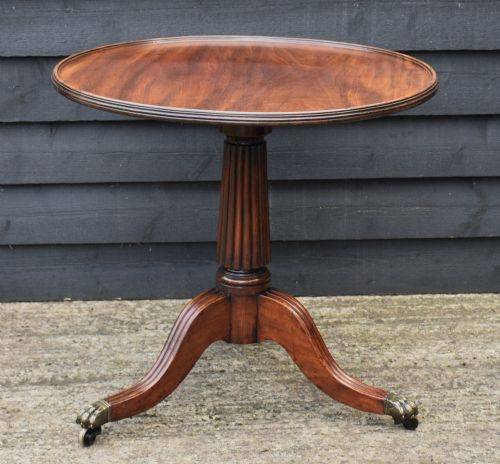
A revolving top table provides a rotating surface, frequently appearing as a drum table, a bookcase, or a tripod tea table.
The selections available here span from the 18th century through the Georgian, Regency, and Edwardian periods.
Materials and Construction
Cabinet makers utilised dense hardwoods such as mahogany, rosewood, and oak to build stable revolving structures.
Inlays of brass, leather inserts, and marble tops appear on selected pieces from the Regency and Victorian eras.
The site listings include revolving top tables in mahogany, oak, rosewood, burr walnut, and cast iron across Georgian, Regency, and Edwardian periods.
Assessing Quality
The smoothness of the rotation mechanism and the selection of figured timber distinguish finer examples from standard production.
Proportions, subtle brass inlay, and the integration of functional drawers define the upper tier of the range.
The Revolving Top Table Glossary
- Drum table
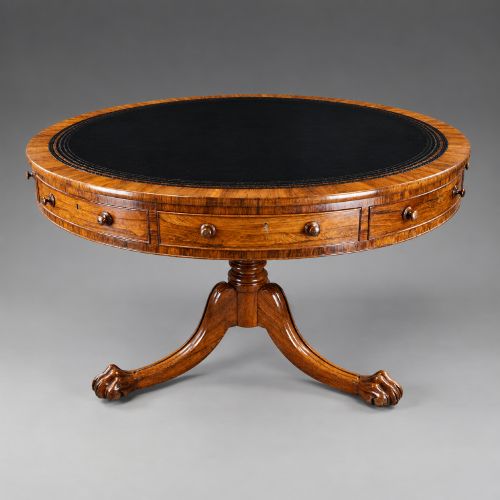
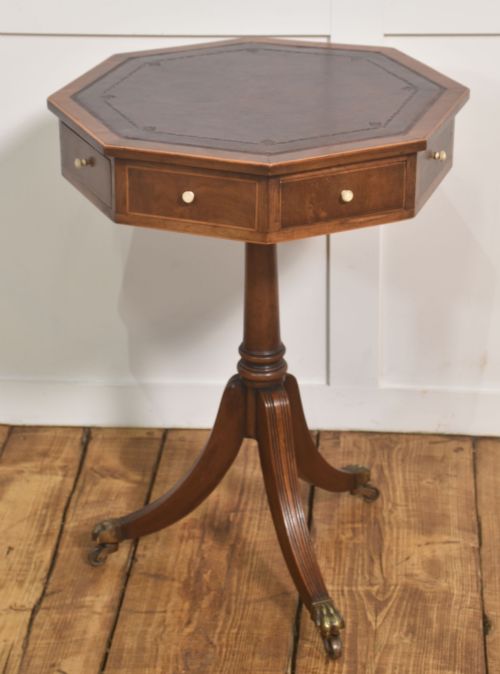
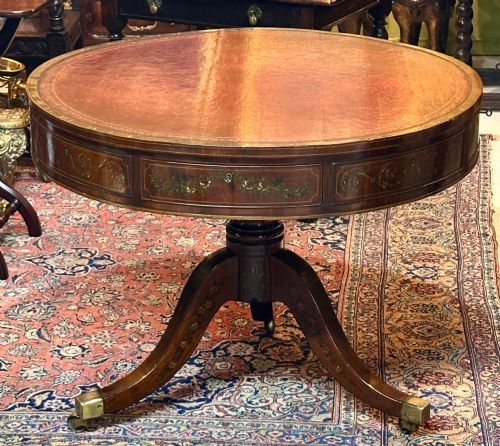
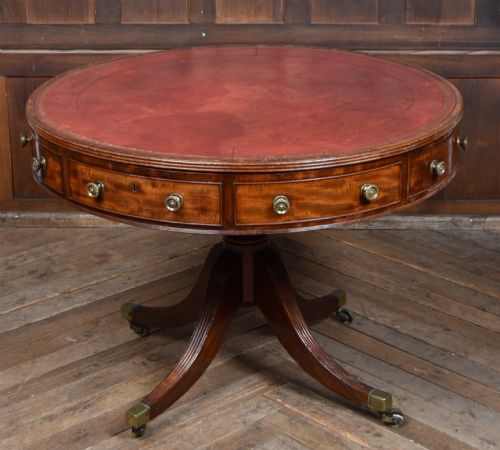
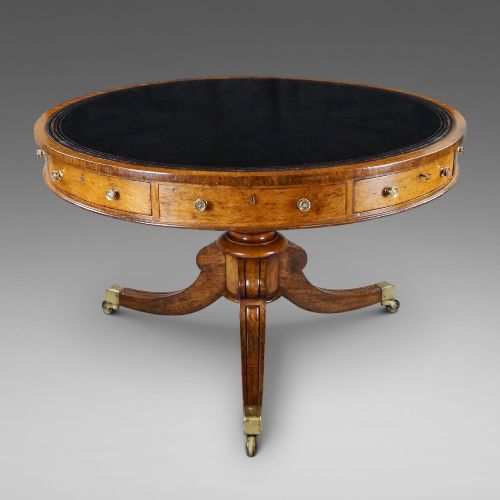
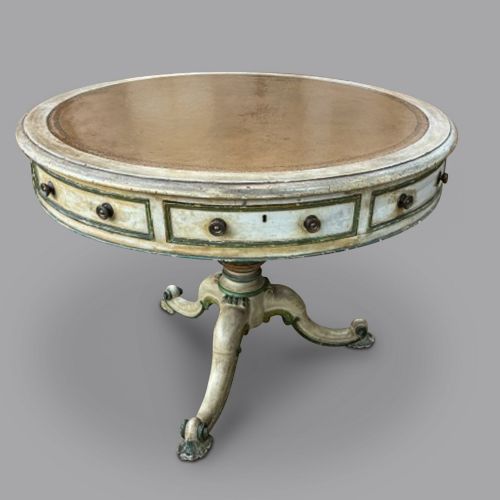
- A circular library table with a deep top resembling a drum, often fitted with drawers around the perimeter. These tables frequently feature leather-lined writing surfaces.
- Revolving bookcase
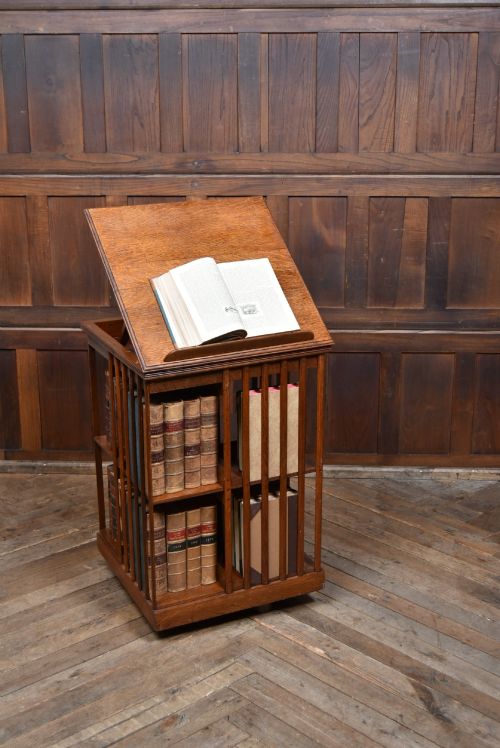
- A compact shelving unit mounted on a rotating base, designed to sit on a floor or tabletop for easy access to volumes. Edwardian examples often incorporate inlaid details.
- Tripod table
- A small stand supported by three legs branching from a central pillar, occasionally fitted with a mechanism allowing the top to turn. 18th-century versions sometimes feature dish tops.
- Lazy Susan
- A revolving circular tray or stand placed on a table surface to share dishes or items. Georgian iterations occasionally use mahogany construction.
Revolving Top Table: Frequently Asked Questions
What is a revolving top table?
A revolving top table is a piece of furniture featuring a top surface or mechanism that rotates on its base. These range from large library drum tables to compact tabletop bookcases.
Cabinet makers designed them for practical use in studies, libraries, and living spaces to provide easy access to books or items without moving the entire piece.
How were drum tables used?
Drum tables functioned primarily as library or writing tables for storing documents, books, and writing implements. The rotating top allowed users to reach drawers positioned around the circumference.
Wealthy households placed them centrally in libraries where multiple people could access the contents from various angles.
How do I date a revolving bookcase?
Dating relies on timber selection, construction methods, and stylistic markers such as inlay or crossbanding. Earlier pieces from the Georgian and Regency periods utilise solid mahogany or rosewood.
Edwardian and later iterations frequently display lighter inlaid decoration and occasional smaller proportions suited for tabletops.
Are revolving bookcases meant for tabletops?
Both tabletop and floor-standing versions exist within the historical record. Smaller Edwardian models were built specifically to sit on desks or tables to hold reference books.
Larger variations stand directly on the floor and rotate on heavy cruciform or cast-iron bases.