





Revolving Dumb Waiter
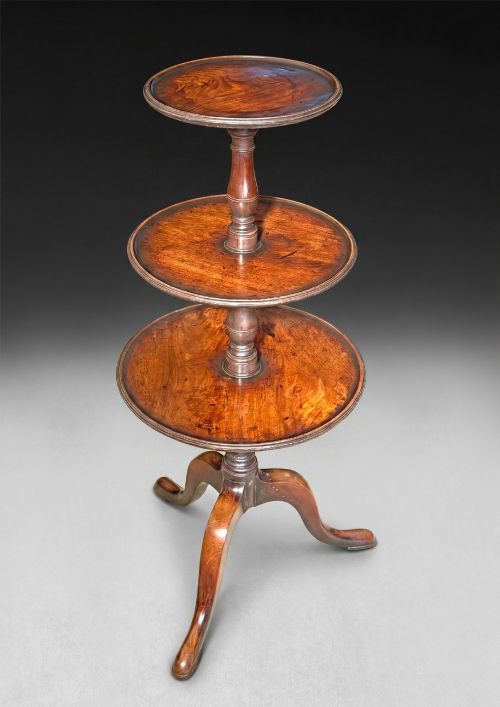
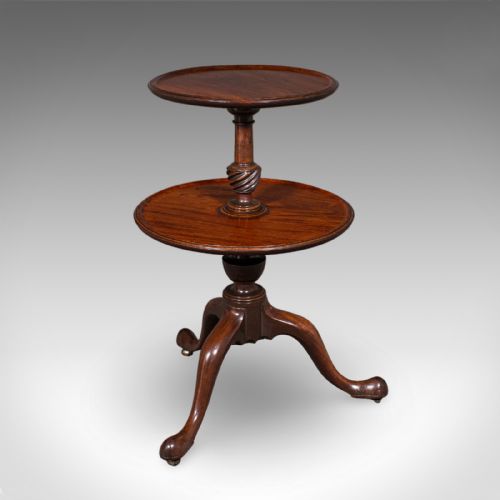
A revolving dumb waiter is a tiered rotating server designed to hold dishes and drinks within reach during dining.
Revolving Dumb Waiter
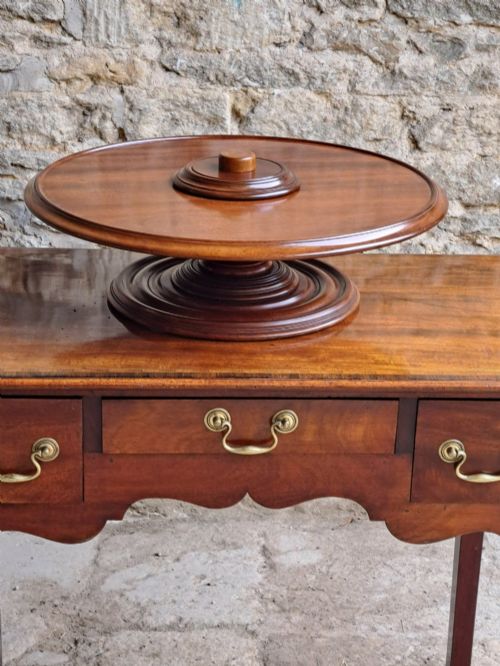
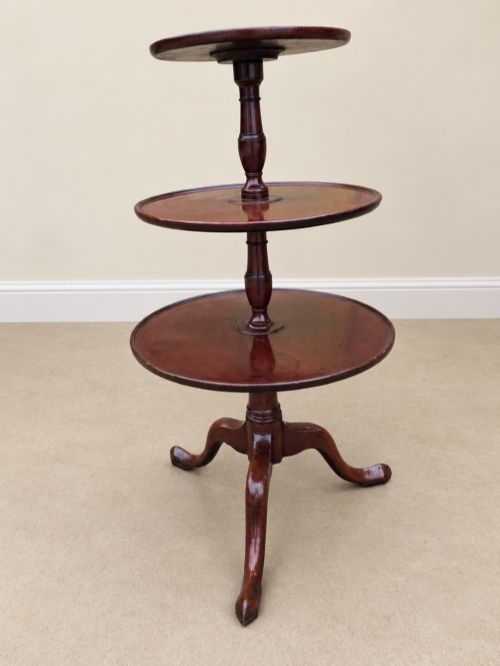
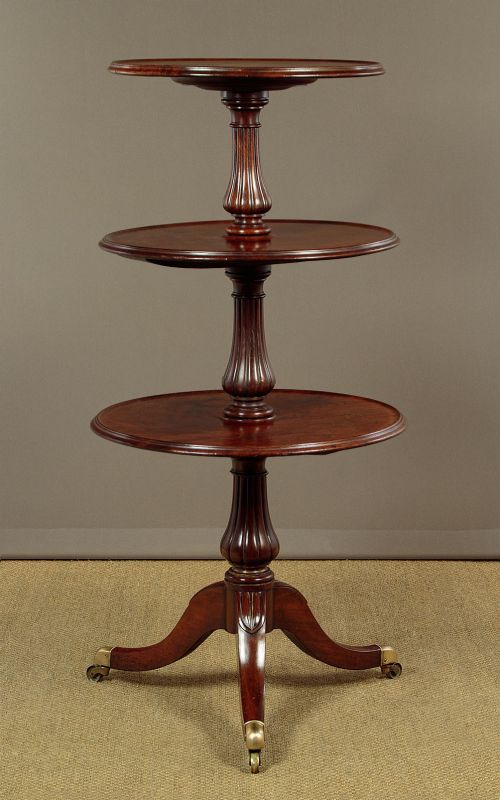
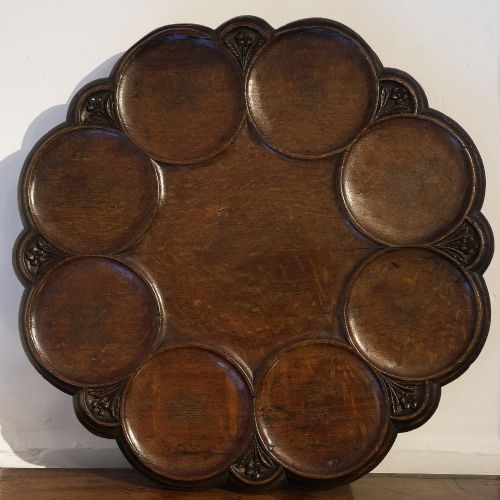
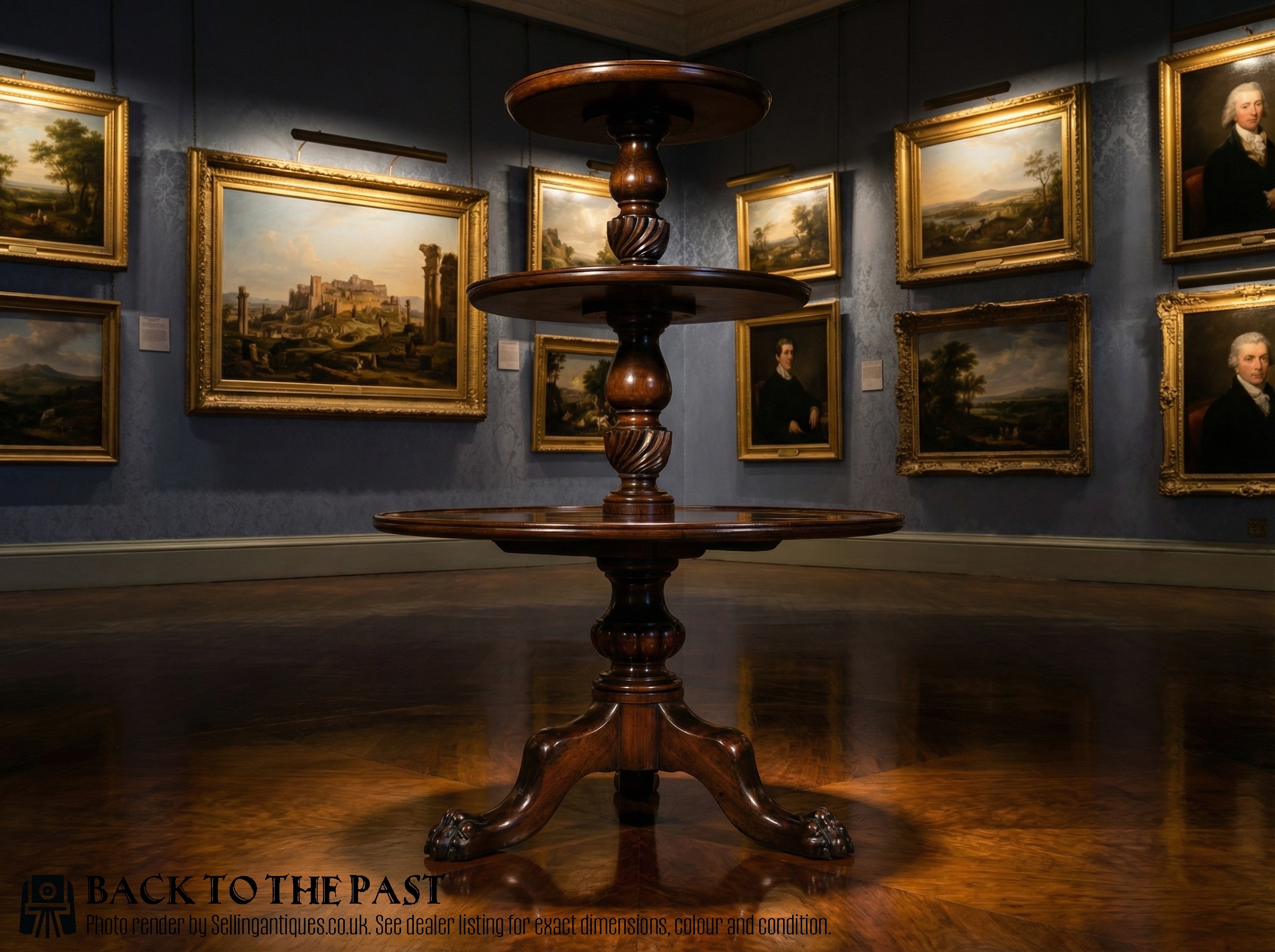
A revolving dumb waiter serves as a rotating tiered table designed to hold dishes and drinks near a dining table. When you search for a revolving dumb waiter, you find rotating servers that typically feature two or three circular tiers. These pieces appear in forms such as tiered tables, serving stands, and lazy susans.
The versions most common on this page date from the Georgian, Regency, and Victorian periods, alongside later examples up to the nineteen-twenties. Mahogany forms the primary structure of these dining room accessories, accompanied by occasional examples in oak, walnut, and marquetry inlay.
Makers constructed these servers to stand independently on tripod bases or centralized supports. Their revolving mechanism allows diners to access food and drink without needing a servant present during the meal.
What varies in quality
The precision of the rotating mechanism dictates the smoothness of the tier movement. Superior examples exhibit tightly fitted joints and stable tripod bases that prevent wobbling when loaded.
The selection of timber grain and the crispness of turned columns separate standard servers from finer pieces. Marquetry inlay work and brass detailing indicate the level of craftsmanship applied by the maker.
Revolving Dumb Waiter Retail Price Guide 2026
Typical asking prices for revolving dumb waiter among the pieces listed under this phrase on Sellingantiques today, from the lower quarter to the upper quarter. They describe what is for sale here now, not the wider market.
Mahogany dominates the material selections across Georgian, Regency, and Victorian periods.
The Revolving Dumb Waiter Glossary
- Dumb waiter
- A freestanding tiered serving table designed to hold food and tableware during meals. These pieces rotate to allow access from a seated position.
- Lazy susan
- A revolving tray or tabletop placed on a surface to assist in moving food between diners. This term shares usage with smaller rotating servers.
- Marquetry inlay
- Pieces of contrasting timber fitted into a wooden surface to form decorative patterns. This technique appears on select eighteenth-century tabletops.
- Tripod base
- A three-legged support structure used beneath the central column of the tier assembly. This design provides stability on uneven dining room floors.
Revolving Dumb Waiter: Frequently Asked Questions
How did people use a revolving dumb waiter?
Dinners relied on these tiered servers to hold extra plates, dishes, and bottles during long meals. Guests rotated the tiers to help themselves without servant assistance.
They stood beside the main dining table as practical serving furniture.
How do I tell a Georgian piece from a Victorian one?
Georgian and George III examples often display cleaner turned columns and proportioned mahogany tiers from the eighteenth and early nineteenth centuries. Victorian pieces tend to feature heavier carving or alternative turnings from the later nineteenth century.
Material finishes and base designs also help distinguish the eras.
Where should I place a dumb waiter in my home?
These rotating servers fit well in dining rooms or living spaces as occasional tables or display stands. Their multi-tiered design provides surface space without occupying a large floor area.
They function effectively beside seating areas or serving spaces.
What woods were used for these servers?
Mahogany forms the vast majority of surviving pieces across the Georgian, Regency, and Victorian eras. Oak, walnut, and marquetry inlay appear less frequently in the available selection.
Brass fittings often support the rotating parts.