

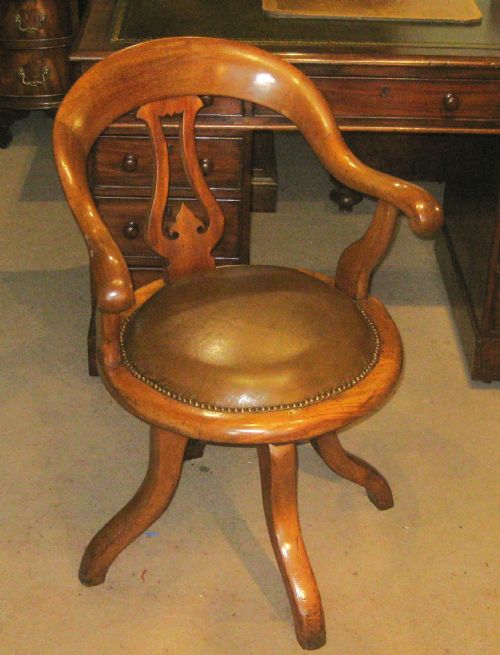
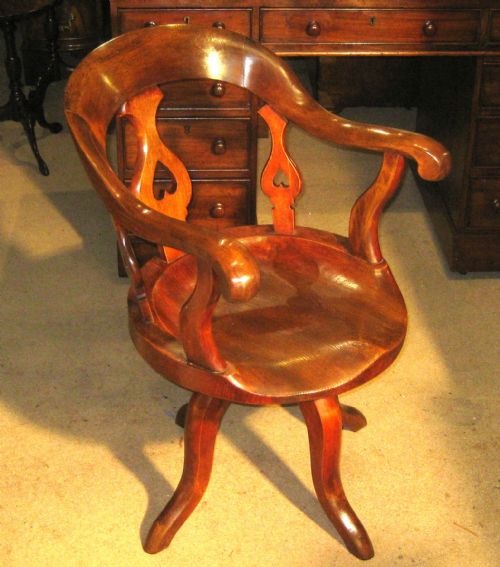
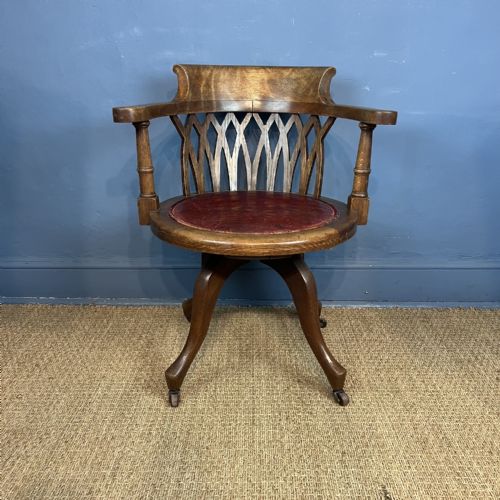
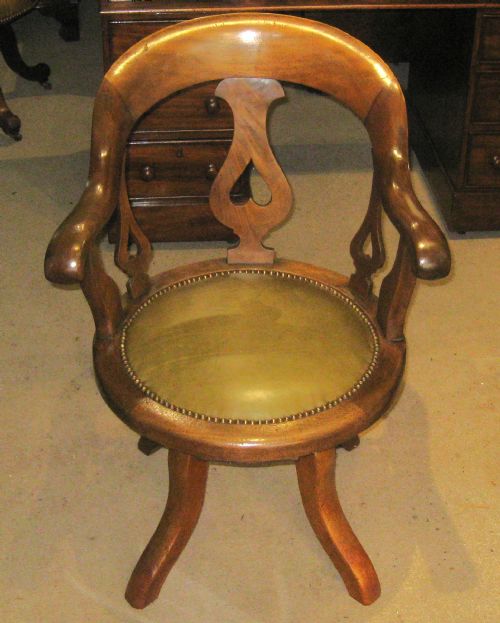
Revolving Desk Armchair
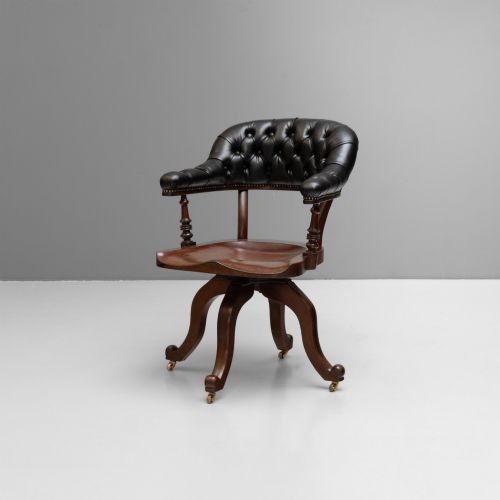
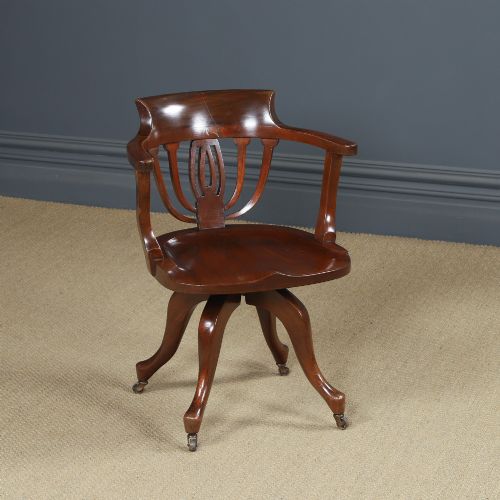
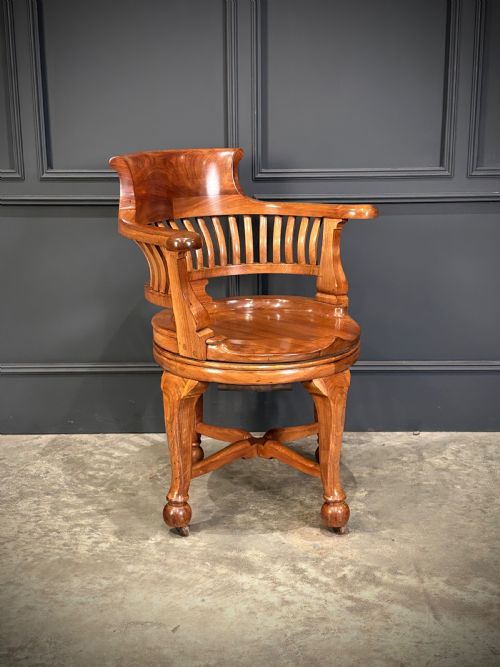
When you need a revolving desk armchair, you are looking for a heavy timber seat built to turn and tilt while you work.
Revolving Desk Armchair
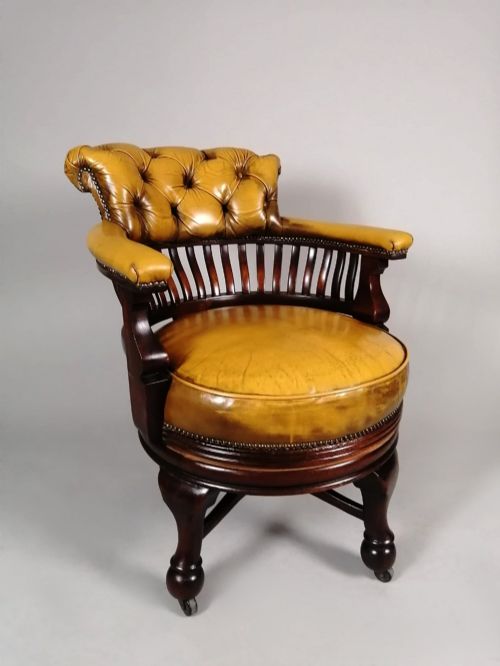
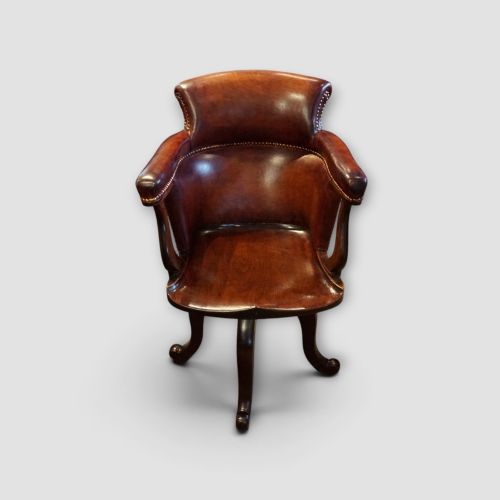
A revolving desk armchair provides seating for a study or office, engineered to rotate and often tilt on a central spindle. You will most frequently meet Victorian and Edwardian examples on this page, spanning the late nineteenth century through to the early twentieth century.
The forms range from standard office armchairs and captain's chairs to specialised ship's chairs rooted in maritime use. Makers built them to withstand daily administration, utilising sturdy timber frames paired with upholstered or cane seats.
How they were made
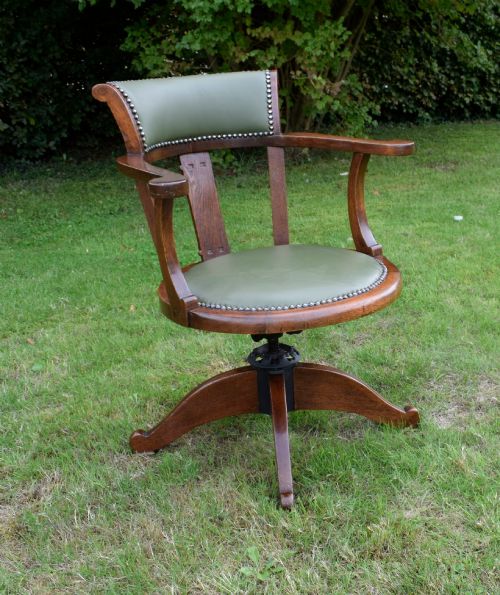
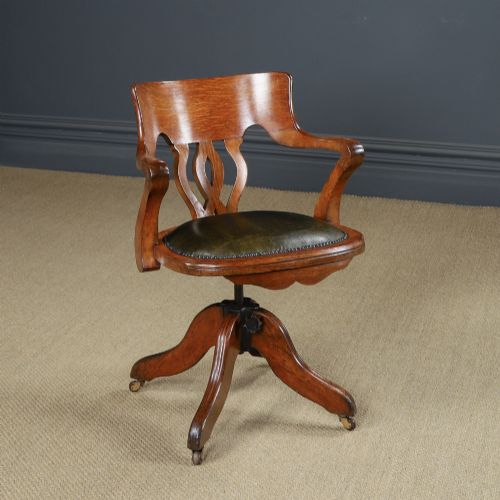
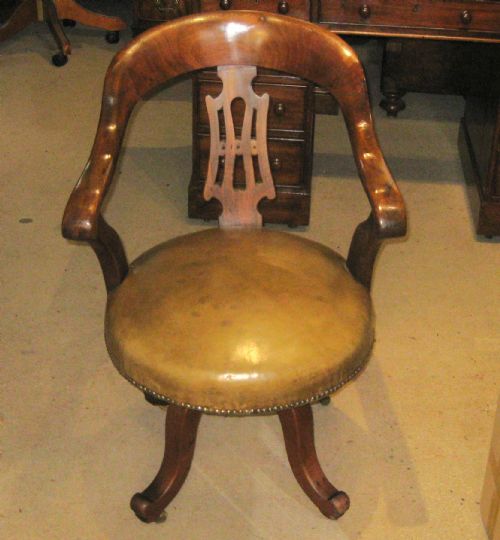
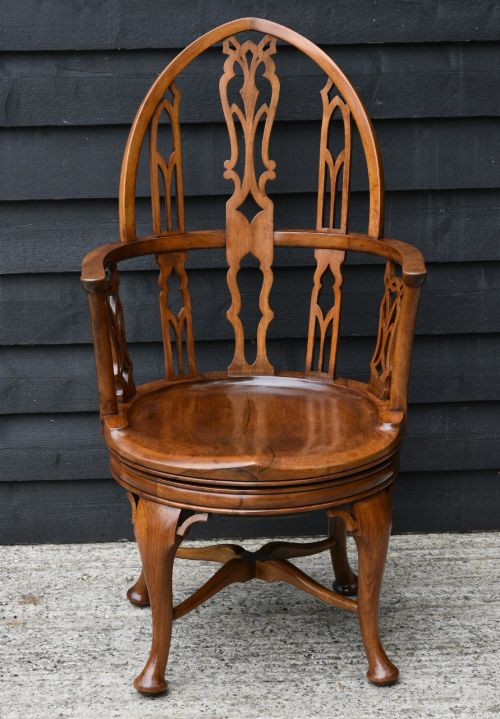
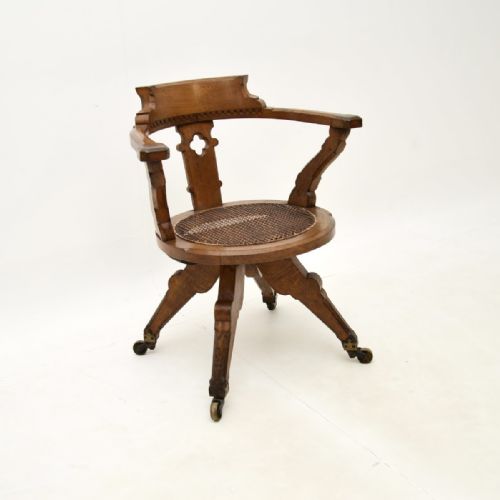
Makers constructed these frames primarily from hardwoods like mahogany, oak, and walnut, frequently incorporating carved details in Gothic Revival or Arts and Crafts styles. Metal mechanisms, brass fixings, and cast iron components provided the essential swivel and tilt functions beneath the seat.
Leather formed the primary upholstery material for seats and backrests, often secured with brass studs, though cane panels also appear. Workshops combined these durable materials to handle the constant movement demanded by office environments.
Several heavy oak armchairs left the sea behind entirely, trading passenger liner decks for quiet studies.
What varies in quality
The sophistication of the timber turning and the depth of the carving separate standard workshop output from exceptional pieces. Heavier framing, substantial brass hardware, and specialised mechanisms indicate higher grade construction.
The choice of dense golden mahogany or figured walnut over plain oak shifts a chair from utility to a superior visual standard. Superior examples maintain the original integrity of their swivel and tilt apparatus without excessive play in the spindle.
Kendrick & Jefferson·SHOOLBRED·Maple & Co.
The Revolving Desk Armchair Glossary
- Swivel
- A mechanism allowing the upper portion of the chair to rotate fully around the central base. This function became standard in office seating during the nineteenth century.
- Captain's chair
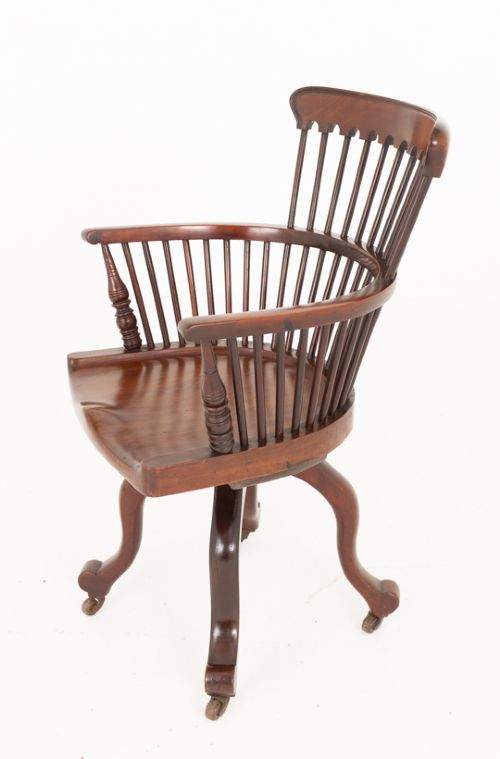
- A low-backed armchair designed with a rounded top rail supported by spindles. These forms were adapted for desk use with the addition of a revolving base.
- Bergere
- A type of enclosed upholstered armchair with wooden framing and woven cane panels. It appears on lighter office seating from the Edwardian period.
- Gothic Revival
- A nineteenth-century design style drawing on medieval architectural motifs. Pieces in this style often feature pointed arches and heavy geometric carving.
- Aesthetic Movement
- A late nineteenth-century design current emphasising visual beauty over narrative function. Furniture from this circle utilises refined lines and ebonised finishes.
Revolving Desk Armchair: Frequently Asked Questions
How do I adjust the height?
Many period swivel chairs utilise a central wooden screw thread hidden within the column. Turning the seat clockwise or anti-clockwise raises or lowers the sitting position.
Later models incorporate metal spindles and mechanical levers to control both height and tilt tension.
Are these chairs comfortable for daily work?
These seats were designed for administrative tasks and feature supportive curved armrests and padded backs. Leather upholstery and deep timber frames offer solid support for modern desk use.
Caned variants provide a firmer sit, while tilting mechanisms allow the user to lean back during long hours.
How do I distinguish Victorian from Edwardian examples?
Victorian models frequently display darker mahogany timbers, heavier proportions, and ornate carving associated with Gothic Revival or Aesthetic Movement styles. They date from the mid-nineteenth century up to 1901.
Edwardian pieces tend to utilise brighter oak and simpler Arts and Crafts lines, reflecting lighter domestic tastes from the early twentieth century.
What is a ship's chair?
Maritime environments required specialised seating that remained stable during rolling seas. These chairs often feature weighted bases or secure swivel mechanisms adapted from naval architecture.
Examples originating from passenger liners bring robust construction and unusual pivoting hardware to domestic studies.