
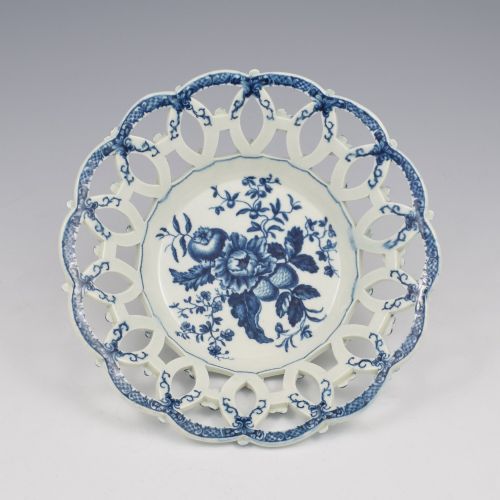


Reticulated Porcelain Basket Dish
A reticulated porcelain basket dish brings openwork piercing and delicate modelling together, offering a traditional centrepiece for a table or sideboard.
Reticulated Porcelain Basket Dish
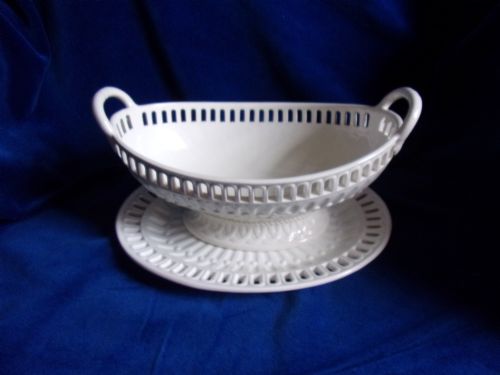
A reticulated porcelain basket dish combines pierced openwork walls with sturdy bases, taking the form of chestnut baskets, sweetmeat dishes, and large centrepieces. These items emerge across the eighteenth and nineteenth centuries in various stylistic guises, from Georgian and Regency creations to elaborate Victorian rococo revival interpretations.
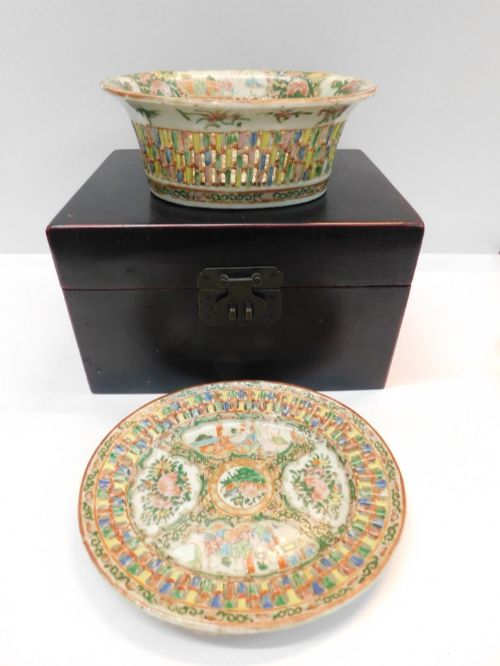
Buyers encounter objects originating from diverse European and Asian kilns, including Worcester, Meissen, Sevres, and Chinese export workshops. The pieces frequently include matching stands or trays, creating dual-component table ornaments designed for display.
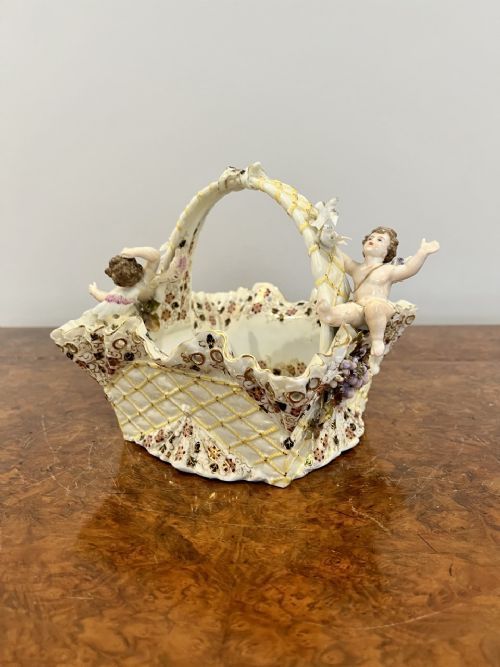
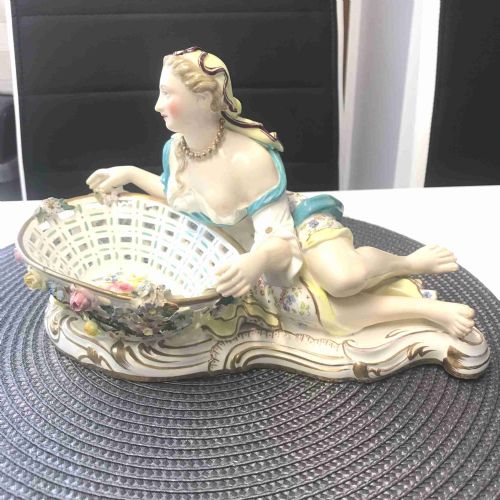
The decorative schemes span Chinese famille rose enamels, pine cone patterns, figural additions such as cherubs or maidens, and gilt highlights. Such variety ensures that each reticulated porcelain basket dish presents a distinct visual character dependent on its specific period and origin.
Materials and construction methods
Potters utilised hard-paste porcelain, soft-paste porcelain, and ironstone ceramic bodies, shaping them into openwork lattices before firing. The piercing requires careful knife work or cutting while the clay remains leather-hard to achieve clean geometric or floral apertures without distorting the vessel.
Enamel colours, gold leaf, and gilding are applied over or under the glaze depending on the factory tradition, then fixed in a secondary kiln firing. Artisans incorporated moulded floral elements, applied leaves, and modelled figures like cherubs onto the exterior surfaces of the baskets and centrepieces.
Listings feature hard-paste and soft-paste porcelain alongside ironstone ceramic, decorated with enamel, gold leaf, and gilding across the eighteenth and nineteenth centuries.
Assessing craftsmanship and execution
Painting quality separates standard production from superior output, visible in the brushwork of floral sprays, famille rose palettes, and pine cone patterns. The crispness of the gilding and the smoothness of the porcelain glaze further indicate the skill invested by the original manufacturer.
Meissen·Sevres·Mason
The Reticulated Porcelain Basket Dish Glossary
- Reticulated
- Pierced or netted work forming an openwork pattern resembling a lattice or net. This technique defines the walls of chestnut baskets and decorative dishes.
- Chestnut basket
- A deep, handled serving vessel with a matching tray or stand, intended for holding roasted chestnuts at the table. These pieces often feature pierced sides.
- Sweetmeat dish
- A small compartmented or open dish designed for serving confectioneries, nuts, or dried fruits. They appear in porcelain across the eighteenth and nineteenth centuries.
- Famille rose
- A palette of opaque enamel colours dominated by pink or rose hues, introduced in Chinese ceramics during the Qing dynasty. This style heavily influenced European porcelain decorators.
- Ironstone
- A type of durable heavy earthenware or semi-porcelain patented in the nineteenth century. It provides a sturdy alternative to softer ceramic bodies.
Reticulated Porcelain Basket Dish: Frequently Asked Questions
What were reticulated porcelain basket dishes used for?
These pieces served practical dining functions, holding provisions like roasted chestnuts, sweetmeats, or fruits during formal meals. Their openwork design also suited decorative display on sideboards and centre tables.
Over time, many transitioned into purely ornamental objects as dining rituals changed. Today, owners continue to use them as centrepieces or retain them for display.
How do I identify eighteenth century pieces?
Eighteenth century examples often exhibit specific paste characteristics, such as the translucent bodies of early Worcester or the distinctive weight of soft-paste porcelain. Stylistic cues like rococo moulding and hand-painted pine cone motifs further point to this era.
Examining the underside and foot rim reveals unglazed areas and throwing marks characteristic of early factory production. Comparing these traits against known patterns helps confirm the date.
What is the difference between hard-paste and soft-paste porcelain?
Hard-paste porcelain utilises petuntse and kaolin, fired at high temperatures to produce a vitrified, durable body that resists scratching. It forms the basis of many continental and Chinese export items.
Soft-paste porcelain incorporates glass frit and white clay, fired at lower temperatures to yield a warmer, slightly softer texture beneath the glaze. This material appears frequently in early English factory production.
How should I display a basket dish?
Displaying these items requires stable placement on flat surfaces where the openwork lattice and any matching stands remain visible. Keeping them away from high-traffic areas prevents accidental knocks to delicate applied flowers and handles.
Adequate lighting helps illuminate the pierced patterns and painted enamel details. Many collectors place them on dining tables or within glass-front cabinets.