




Antique Cherub Fruit Bowl
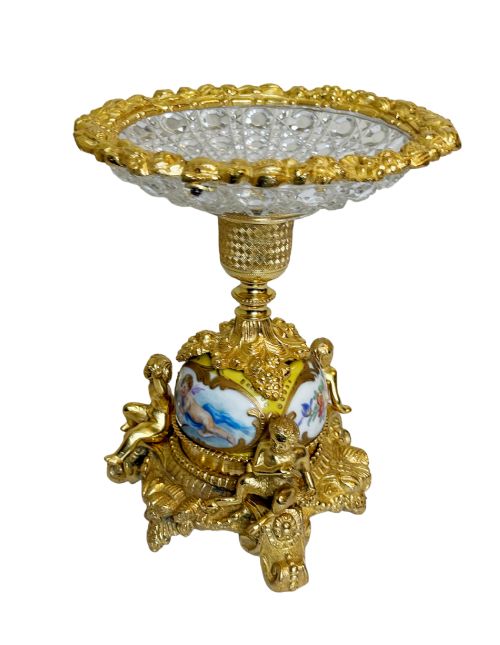
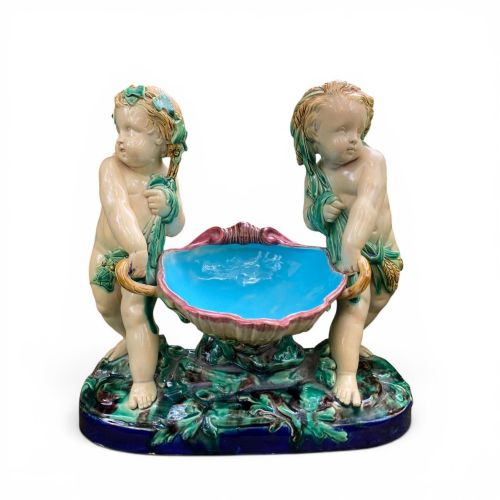
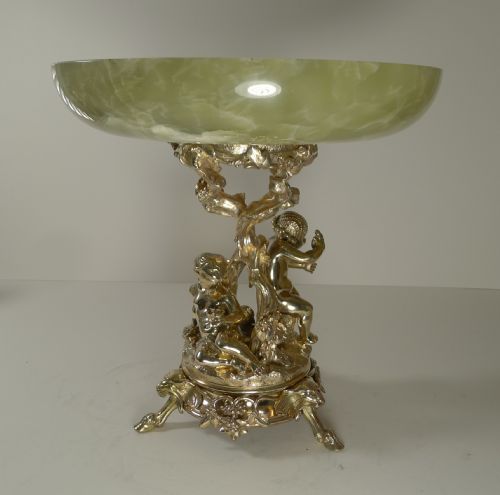
These antique cherub fruit bowl pieces are elaborate table centrepieces featuring figural putti that bring sculptural drama to a dining room.
Antique Cherub Fruit Bowl
An antique cherub fruit bowl combines a functional vessel with figural sculpture, typically taking the form of a table centrepiece, tazza, or comport. These pieces serve as dramatic table focal points, often elevated on pedestals or supported by multiple putti figures engaged in playful scenes.
The selections span the Victorian and Edwardian eras, with notable representation from the late nineteenth century. Forms range from circular cut crystal basins mounted in gilt bronze to majolica baskets and elaborate porcelain compositions adorned with applied flowers.
Origin points across the continent appear frequently, with German factories like Schierholz and Dresden sitting alongside French gilt bronze works and English majolica pieces. Buyers encounter everything from compact porcelain compotes to large musical putti centrepieces designed for grand dining displays.
How they were made
Makers utilised a combination of hard-paste porcelain, earthenware, and cast metals, frequently pairing gilded or patinated bronze with heavy cut crystal. Ceramic works often combined moulded earthenware bodies with colourful lead glazes, while metal pieces relied on precision casting and subsequent gold leaf application.
Musical putti hold tiny instruments in place of fruit, proving that nineteenth-century cherubs brought their own soundtrack to dinner.
What varies in quality
The standard of modelling in the cherub figures dictates much of the visual success, separating lively, deeply undercut sculpting from flat, mass-produced moulding. Finer pieces display careful attention to anatomy, hair texture, and expression rather than relying solely on surface paint.
Material integration also defines the better examples, where mounts fit snugly against crystal or porcelain components without excessive solder or visible gaps. The crispness of the chasing on bronze mounts and the depth of the glaze on majolica and porcelain indicate the level of workshop care.
Minton·Schierholz Plaue·Christofle Paris
The Antique Cherub Fruit Bowl Glossary
- Putto
- A plump, naked male child figure frequently depicted in classical art and decorative objects. Often termed a cherub or cupid in nineteenth-century contexts.
- Majolica
- A type of earthenware coated with an opaque tin glaze and painted with brightly coloured metallic oxide pigments. This technique produces rich, glossy surfaces favoured by Victorian potteries.
- Comport
- An ornamental dish or bowl raised on a high foot, used for serving fruit or sweets on a dining table. They frequently appear in pairs alongside matching centrepieces.
- Tazza
- A shallow bowl or cup mounted on a stem and foot, originating from Renaissance plate forms. In nineteenth-century dining, these functioned as elevated fruit containers.
- Gilt bronze
- Bronze that has been coated with a thin layer of gold or gold leaf to produce a rich metallic finish. Also known by the French term bronze dore.
Antique Cherub Fruit Bowl: Frequently Asked Questions
What were cherub fruit bowls used for?
These centrepieces served as decorative focal points on formal dining tables, often holding fresh fruit or confectioneries during large meals.
Their elevated design allowed guests to converse underneath or across the floral and figural arrangements while displaying the host's taste and wealth.
How do I style an antique centrepiece today?
Place the bowl in the centre of a dining table or on a large sideboard where the detailed figures can be appreciated from multiple angles.
Keep the surrounding surface clear of clutter, and consider displaying seasonal fruit or leaving the vessel empty to showcase the craftsmanship of the base.
How can I tell German porcelain from French bronze?
German porcelain pieces often feature intricate hand-modelled flowers and glazed ceramic putti marked by factory stamps from regions like Saxony or Thuringia.
French works typically rely on metal casting, using patinated or gilded bronze mounts combined with heavy cut crystal or mother-of-pearl dishes.
What is the difference between a comport and a centrepiece?
A comport generally refers to an elevated stemmed dish designed specifically for serving fruit or sweetmeats as part of a table service.
A centrepiece is a broader category that can include large multi-part garnitures, baskets, and elaborate sculptural arrangements placed firmly in the middle of the table.