


Reticulated Ceramic Bowl
A reticulated ceramic bowl is a pierced vessel formed for display or service, combining delicate openwork with traditional earthenware or porcelain.
Reticulated Ceramic Bowl
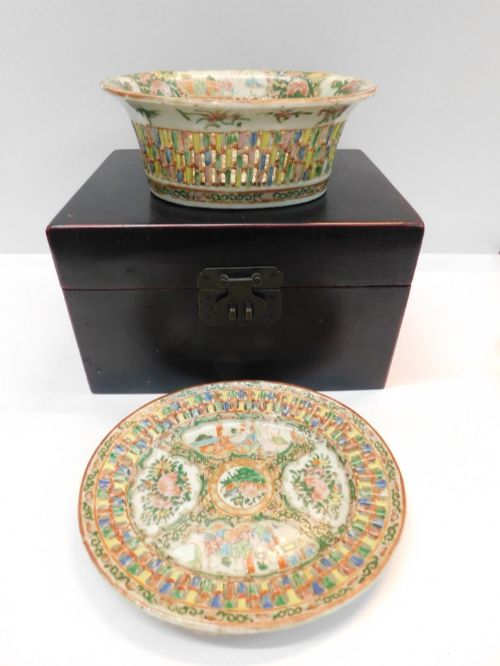
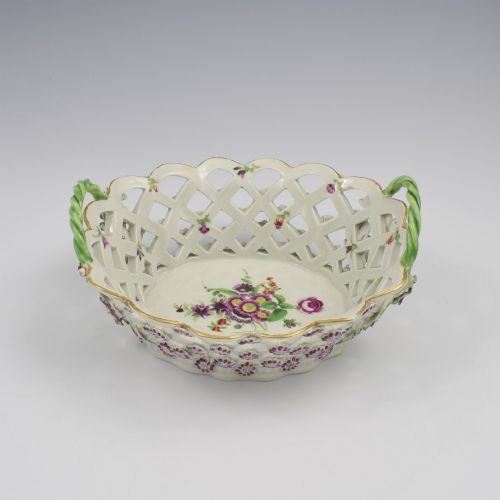
A reticulated ceramic bowl encompasses forms such as chestnut baskets, centrepieces, sweetmeat dishes, and pierced gallery punch bowls designed across the eighteenth and nineteenth centuries. These pieces originate from English factories like Worcester, Spode, and Coalport, as well as continental European kilns in Meissen, Germany, and Chinese export workshops.
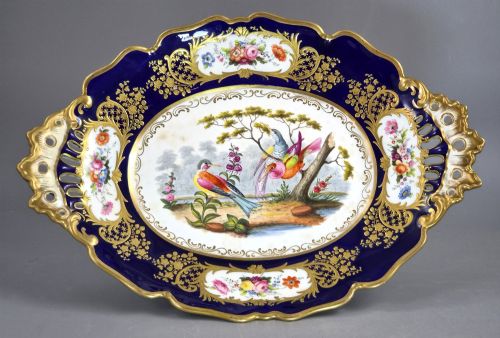
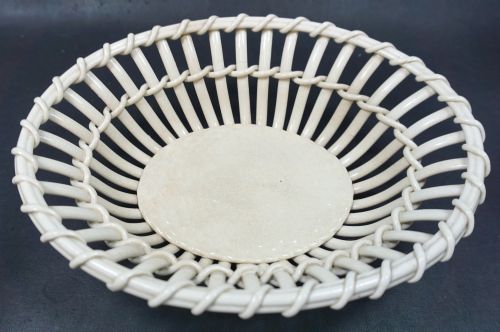
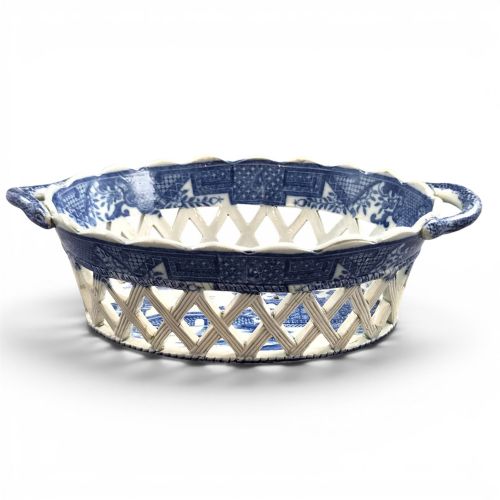
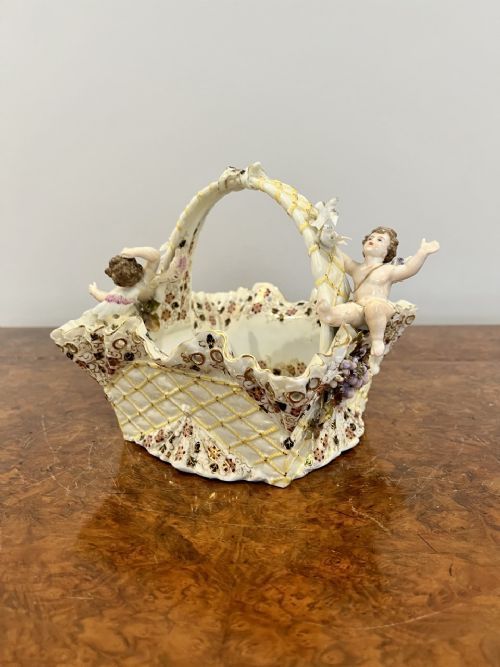
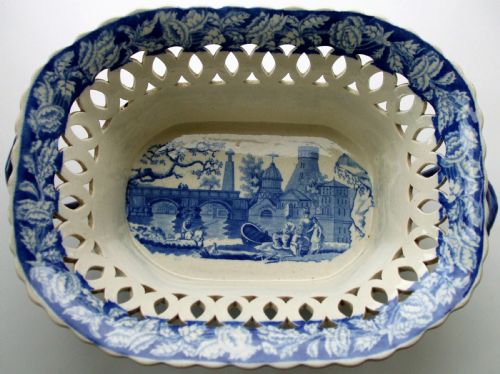
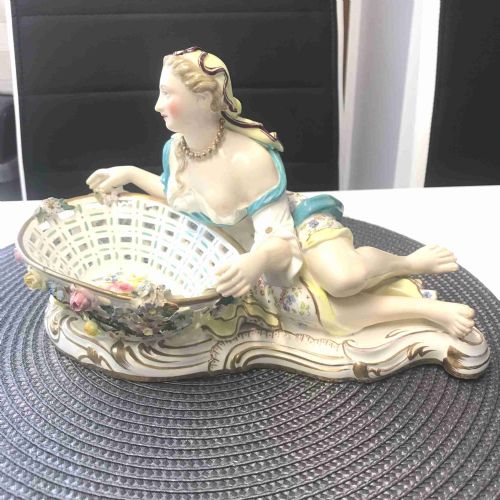
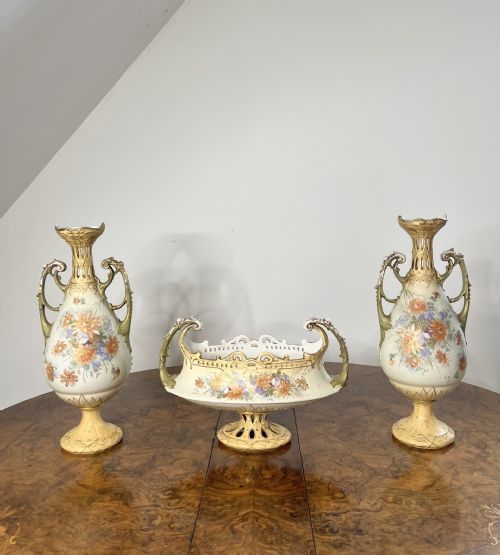
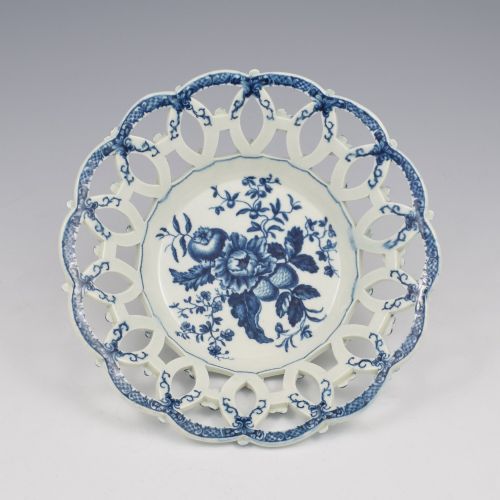
The version most commonly met on this page is the nineteenth-century porcelain or pearlware chestnut basket, often accompanied by a matching stand and decorated with transfer printing, floral painting, or blue and white patterns. English creamware and pearlware examples sit alongside elaborate German centrepieces adorned with putti and applied flowers, reflecting diverse styles from Rococo Revival to Chinese Export.
Buyers seeking a reticulated ceramic bowl encounter items shaped for specific dining and decorative uses, spanning from Georgian basketware to Edwardian centrepieces. The selection reflects both domestic English production and continental porcelain output, offering varied depths of piercing and lattice detailing.
How They Were Made
Potters formed these pieces using porcelain, earthenware, and pearlware, shaping the body before cutting the openwork lattice by hand while the clay remained leather-hard. Manufacturers applied glazes, cobalt blue underglaze transfers, polychrome enamels, and occasional gilding or gold leaf before firing the ceramic in kilns.
Continental and English factories employed distinct moulding and piercing techniques, sometimes combining hand-modelled figurines such as putti and applied roses with pierced galleries. Ironstone and creamware bodies underwent specialised firing processes to achieve the durable finishes seen in nineteenth-century chestnut baskets and centrepieces.
Listings feature porcelain, earthenware, and pearlware materials across the eighteenth and nineteenth centuries.
What Varies in Quality
Quality rests upon the crispness of the reticulation and the precision of the piercing, where cleanly cut lattice walls distinguish superior vessels from heavier, blunt mouldings. The delicacy of applied elements, such as modelled flowers and putti figures, further separates standard production from finer continental and English output.
The execution of the painted or transfer-printed decoration dictates the standing of a piece, with finely detailed polychrome enamels and sharp blue and white transfer prints showing greater artistic investment. Preservation of the original glaze, gilt highlights, and matching stands completes the distinction between ordinary utility wares and high-status display items.
Coalport·Wedgwood·Spode·Dr Wall Worcester·J. & R. Clews·Meissen·Royal Vienna·Schierholz·Royal Worcester·Mason’s Ironstone·Dresden
The Reticulated Ceramic Bowl Glossary
- Reticulated
- Pierced or patterned in a net-like openwork design. This technique creates lattice walls on baskets and bowls.
- Chestnut Basket
- A specialised covered or open vessel used at the dining table for serving chestnuts or fruit. These pieces frequently include matching under-stands.
- Pearlware
- An earthenware body developed in the late eighteenth century featuring a faint bluish glaze. It imitated the whiteness of Chinese porcelain.
- Centrepiece
- A large decorative vessel placed in the middle of a table for display. Examples often incorporate figural groups and elaborate bowl sections.
- Transfer Printing
- A method of applying pre-printed designs to ceramic surfaces using engraved copper plates and tissue paper. This technique mechanised blue and white pottery decoration.
Reticulated Ceramic Bowl: Frequently Asked Questions
What was a reticulated ceramic bowl used for?
These vessels served functional roles on formal dining tables, holding dry foods like chestnuts, sweetmeats, or fruit during service. Their openwork design allowed air circulation for specific foods while acting as decorative centrepieces.
Over time, many transitioned purely into display pieces, showcased on sideboards or within cabinets for their intricate lattice work and painted scenes.
How do I identify an eighteenth century piece?
Eighteenth-century examples often exhibit characteristic paste bodies, such as early soft-paste porcelain from Worcester or pearlware bodies with characteristic blue-tinted glazes. Hand-cut reticulation and early underglaze blue painting styles help distinguish them from later nineteenth-century revivals.
Examine the base for factory marks, footring construction, and wear patterns consistent with age. Continental pieces from this era frequently feature distinct hand-modelled porcelain figures.
Are these bowls dishwasher safe?
These antique ceramics require hand washing in lukewarm water with mild soap. Their delicate openwork and historic glazes cannot withstand modern machine washing.
Harsh detergents and sudden temperature changes risk cracking the ceramic body or damaging delicate applied elements like gold leaf and enamel.
What is the difference between pearlware and creamware?
Creamware utilises a yellowish earthenware body covered in a pale yellow-tinted transparent glaze, popular during the Georgian period. Pearlware was developed later to mimic porcelain whiteness by adding cobalt to the glaze, resulting in a slightly bluish pooling in crevices.
Both materials formed the foundation for many pierced chestnut baskets and transfer-printed dishes seen in early nineteenth-century production.