
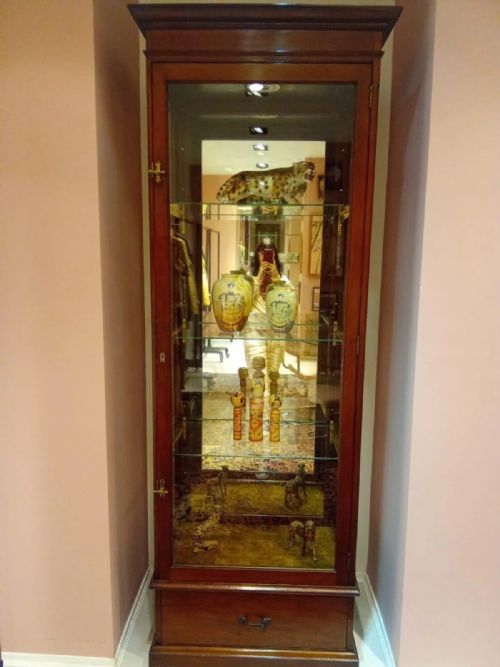
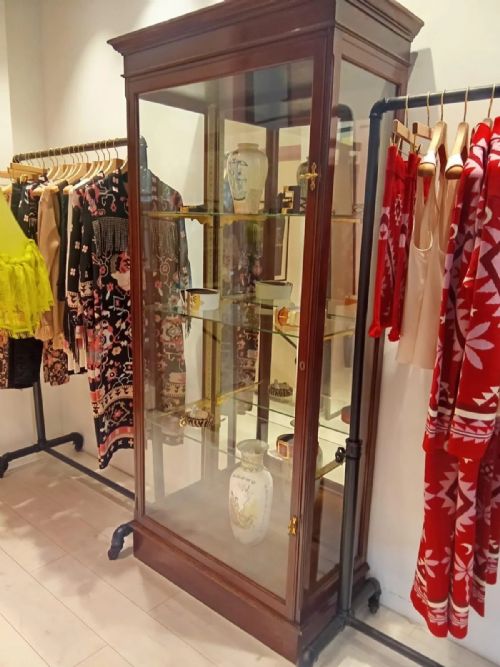
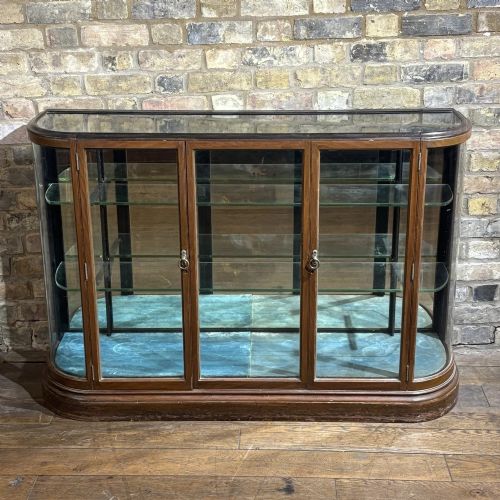


Retail Shop Display Case
A retail shop display case organises merchandise for trade, bringing period British commerce into domestic interiors.
Retail Shop Display Case
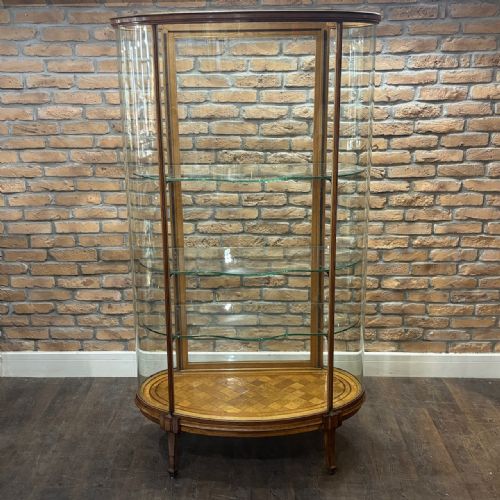
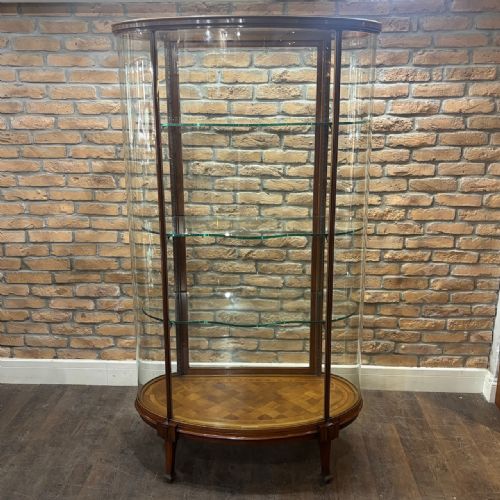
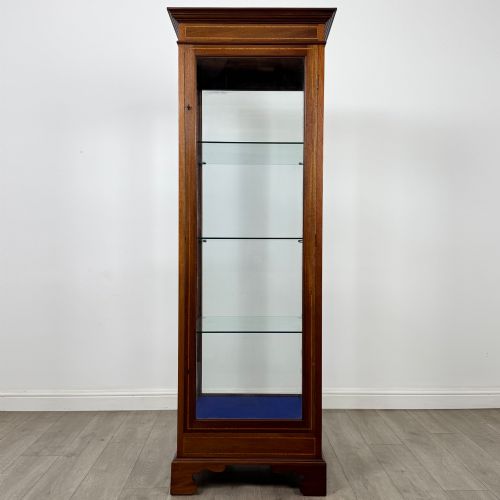
A retail shop display case serves to present merchandise clearly to customers, originating in commercial premises during the Victorian, Edwardian, and 1930s periods. These items take the form of tall freestanding cabinets, long serving counters, and compact tabletops designed for visibility.
Mahogany and oak provide the primary timber structures, combined with extensive glass panels to enclose goods securely while maintaining light. Interiors often feature adjustable glass shelves and mirrored backs to enhance the presentation of stored items.
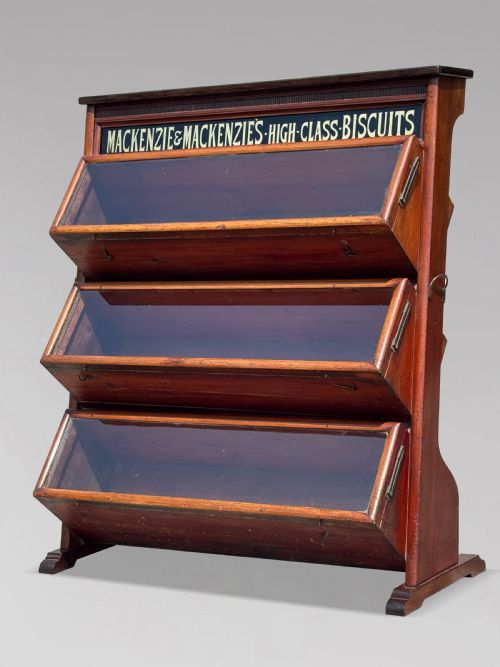
Specialised examples include branded chocolate and biscuit advertising units, pharmacy counters, and jewellers' showcases. The pieces available range from large commercial counters to smaller table cases suited to domestic collecting.
Construction and Materials
Cabinet makers utilised dense hardwoods such as mahogany and oak to construct sturdy frames capable of supporting heavy glass panels. Ebonised wood and metal frames also appear, particularly in later twentieth-century commercial designs.
Joinery techniques focused on durability for daily retail use, integrating brass hardware, locks, and mirror glass into the timber structures. Countertops frequently incorporated bow ends and pentagonal geometries to fit specific shop layouts.
Materials recorded across the inventory include oak, mahogany, ebonised wood, brass, aluminium, and mirrored glass.
Distinctions in Quality
Quality rests upon the calibre of timber selection and the sophistication of the joinery, particularly in curved bow ends and tailored framing. Maker attribution to known firms elevates a piece through documented commercial provenance.
The integrity of the original glass, mirrors, and internal shelving distinguishes superior examples from heavily altered or restored stock. Robust brass hardware and specialised interior fittings reflect higher original expenditure by commercial furnishers.
F. Sage & Co·John Stow Ltd of Bradford·Saml. Elliott & Sons
The Retail Shop Display Case Glossary
- Bow end
- A curved glass or timber termination on a cabinet or counter. This shape softens the profile of long display units.
- Countertop
- A smaller display case designed to sit upon a shop counter for close customer inspection. These portable units often housed confectionery or small miscellaneous goods.
- Ebonised wood
- Timber treated to resemble ebony through staining or painting. This dark finish provides a formal contrast to clear glass panels.
- Mirrored interior
- A reflective backing fitted inside the display space to multiply light and visibility. It assists in illuminating items from behind.
Retail Shop Display Case: Frequently Asked Questions
How were retail display cases originally used?
Merchants utilised these glazed cabinets and counters to protect goods from handling while permitting clear visibility for shoppers. They stood on sales floors or counters to showcase confectionery, jewellery, and pharmaceuticals.
Interior shelving allowed tiered arrangement of stock, whilst locked doors ensured security during busy trading hours. Many incorporated maker plaques or branding to advertise specific confectionery and goods.
What periods do these display cases cover?
The available pieces span from the late nineteenth century through the Edwardian era and into the 1930s. Victorian and Edwardian examples typically feature heavy mahogany or oak frames with traditional joinery.
Later pieces from the nineteen-twenties and thirties introduce ebonised finishes and aluminium framing alongside Art Deco stylistic touches. This progression mirrors changes in high street shop design over six decades.
How do I fit a shop counter at home?
Large freestanding counters and tall cabinets require substantial floor space and careful positioning away from direct sunlight. They serve well in kitchens, dining rooms, or hallways as practical storage with visual impact.
Tabletop versions sit comfortably on sideboards or desks to display collections of small antiques or ceramics. Ensure floor levels are even when placing heavy timber and glass furniture.
What is an advertising display cabinet?
These specialised units were produced for specific confectioners and manufacturers to promote brand names directly inside retail premises. Companies such as Fry's, Rowntree's, and Cadbury supplied branded cabinets to shops.
Such pieces combine standard commercial glazing with painted or etched company lettering on the timber or glass. They represent a distinct intersection of retail history and corporate advertising.