




Restoration Walnut Chair
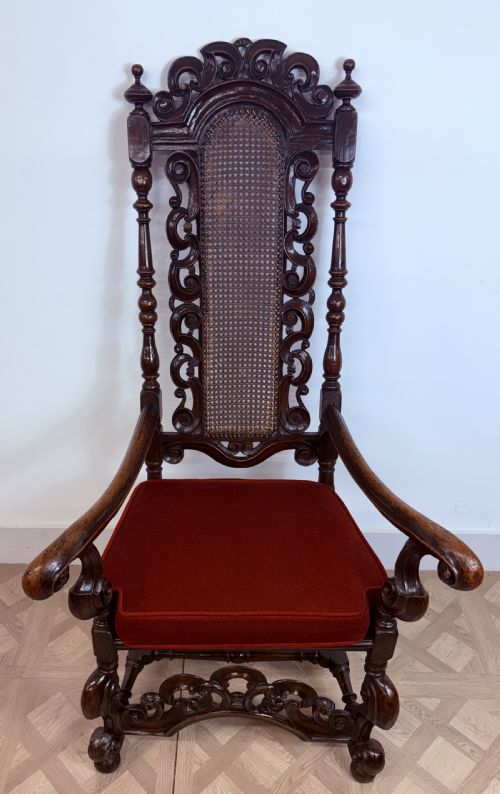
A restoration walnut chair brings robust seventeenth-century timber and deep carving straight into a modern room.
Restoration Walnut Chair
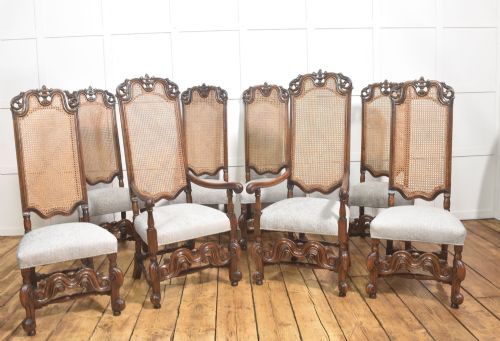
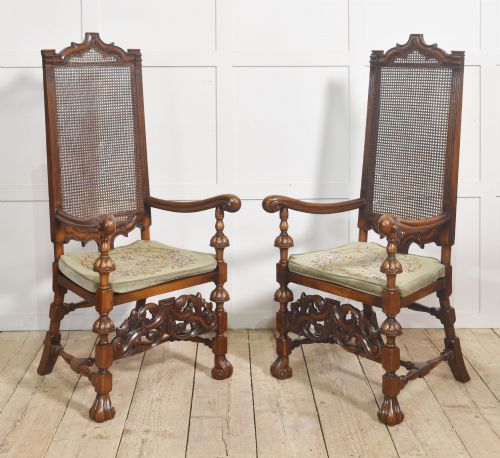
A restoration walnut chair unites the high-backed proportions of the seventeenth century with the rich grain of walnut timber. These pieces span original seventeenth-century examples from the Charles II, James II, and Carolean periods alongside later nineteenth- and early twentieth-century revivals.
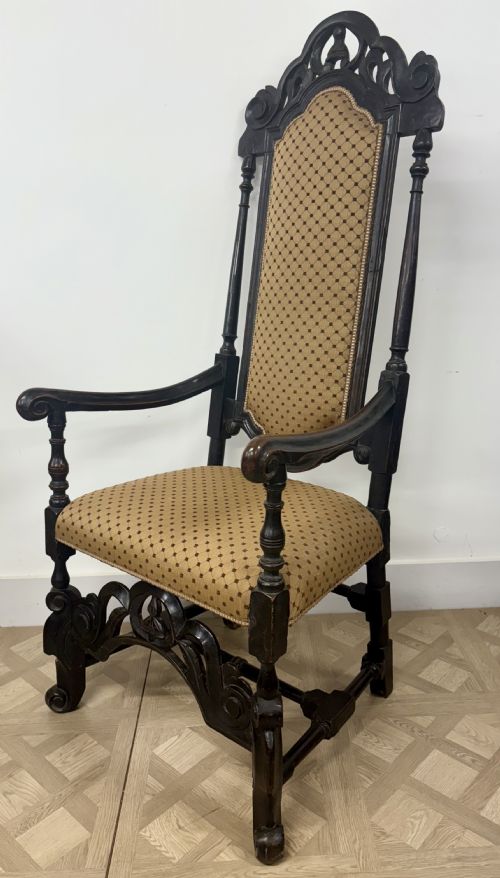
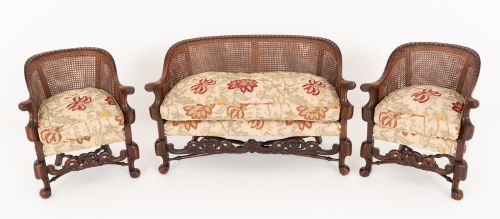
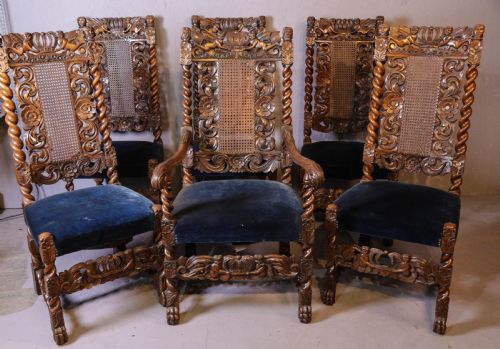
The selection encompasses diverse seating forms including single armchairs, sets of high-back dining chairs, and larger sets or settees. Many feature woven cane panels or upholstered pads in velvet and patterned textiles.
Original seventeenth-century pieces share the floor with nineteenth-century revival interpretations built in the Carolean and William & Mary styles. Buyers encounter both single statement elbow chairs and matched sets suitable for formal dining.
How they were made
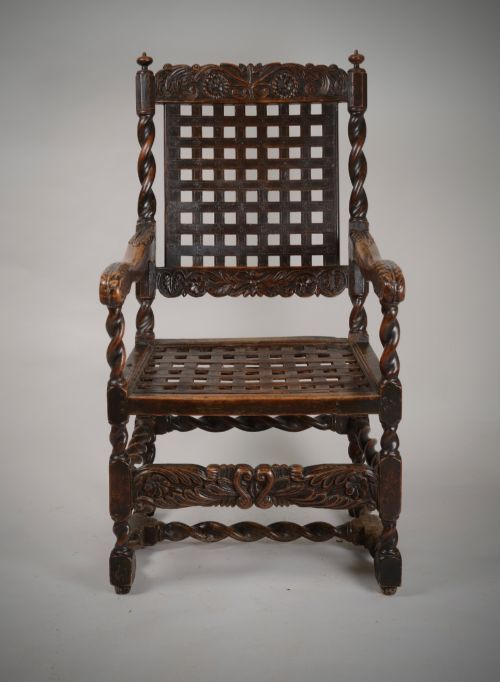
Craftsmen built these frames primarily from solid walnut, shaping the timber with deep, intricate carving along the crest rails, stretchers, and scroll arms. Joinery relied on traditional mortise and tenon construction to support the heavy upright frames.
Seating surfaces utilised natural woven cane threaded through frame drillings or relied on drop-in pads upholstered in velvet and woven fabrics. Brass details sometimes supplemented the structural woodwork on specific revival iterations.
Listings span the seventeenth century through to 1910, uniting walnut frames with cane, velvet, and brass.
What varies in quality
The depth and crispness of the hand-carved ornamentation separate exceptional examples from simpler production. Original seventeenth-century execution displays distinct tool marks and patination that later nineteenth-century revivals imitate with varying degrees of vigour.
The integrity of the original walnut frame and the condition of the woven cane or period upholstery define the structural hierarchy. Pieces retaining their original timber surfaces without excessive later intervention command greater attention.
Howard and sons·Waring & Gillow
The Restoration Walnut Chair Glossary
- Carolean
- A style spanning the reign of Charles II characterised by rich carving, scrolling foliage, and high upholstered or caned backs. It forms the primary aesthetic foundation for restoration seating.
- Cane
- Split rattan woven into patterned mesh panels for chair backs and seats. This technique provides lightweight strength and textural contrast against heavy carved walnut framing.
- Scroll arm
- An armrest shaped into an outward or inward-curling volute. This feature defines the profile of seventeenth-century and revival elbow chairs.
- Stretcher
- A horizontal wooden brace connecting the legs of a chair to provide structural rigidity. In restoration seating, these stretchers frequently carry ornate central carvings matching the crest rail.
Restoration Walnut Chair: Frequently Asked Questions
Can I use these chairs for daily dining?
Many restoration and revival dining chairs remain structurally sound for regular use when the frames and joinery are secure. Sets from the nineteenth-century revival period often offer robust everyday practicality.
Consider the condition of woven cane panels or upholstery support before daily seating. Fragile antique cane may require careful use or professional reinforcement to support modern weights.
What is a Carolean style chair?
A Carolean style chair echoes the ornate aesthetic of the English Restoration court under Charles II. These pieces feature prominent crown and scroll motifs, pierced crest rails, and twisted or carved legs.
Revival versions appeared in the Victorian era and early twentieth century, recreating seventeenth-century grandeur for later domestic interiors. They utilise heavy carved walnut and high backs just like the originals.
How should I care for antique walnut?
Maintain antique walnut furniture by keeping it away from direct heat sources and sudden humidity shifts. Regular dusting with a soft, dry cloth preserves the natural timber finish without sealing the pores.
Avoid modern silicone polishes that can penetrate old wood and alter the surface sheen. Professional wax application occasionally nourishes the dry grain of seventeenth-century timber.