




Restoration Throne Chair
A restoration throne chair brings heavy seventeenth-century carved timber and high backs straight into a room.
Restoration Throne Chair
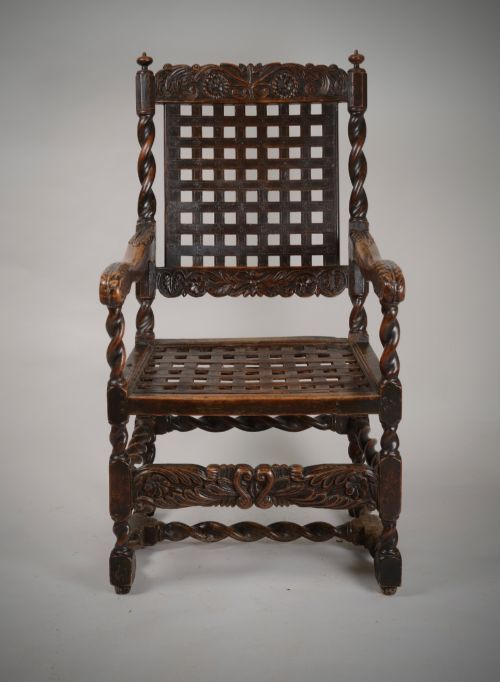
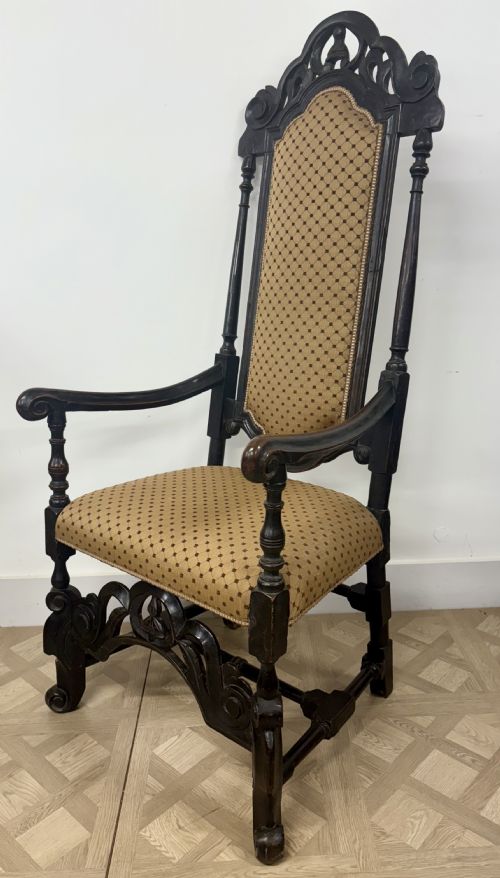
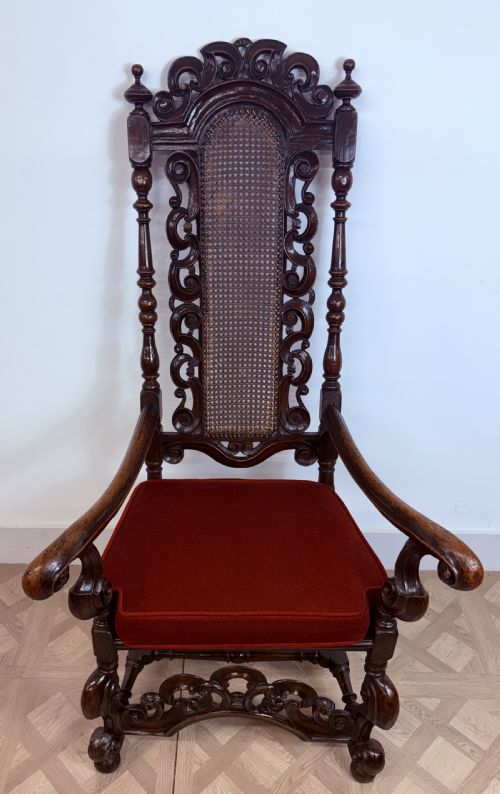
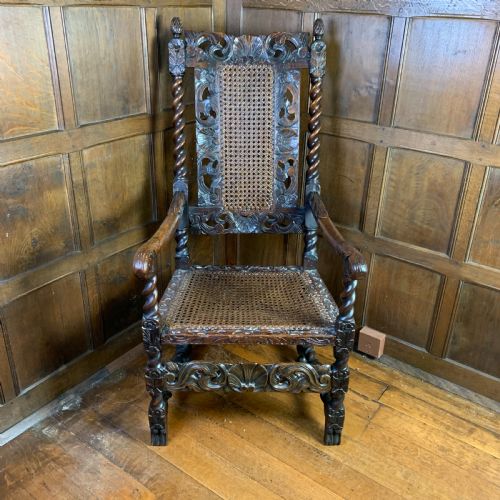
A restoration throne chair stands as a tall, imposing seat rooted in seventeenth-century English seating design. These armchairs present high backs, scroll arms, and deep carving that define the Carolean and Jacobean styles. When exploring a restoration throne chair, buyers encounter genuine seventeenth-century pieces alongside nineteenth-century revival interpretations.
The seventeenth-century examples utilise walnut or laburnum with cane or upholstery panels. Nineteenth-century revival pieces echo the earlier Charles II aesthetic through heavy oak and elaborate carvings. Both eras deliver the commanding silhouette that collectors seek for a focal seating arrangement.
How they were made
Carpenters and joiners built these frames from native hardwoods like walnut, oak, and laburnum. Artisans shaped the timbers with deep relief carving, executing scrolls, foliage, and crests along the high backs and stretchers. Joinery relied on traditional mortise and tenon construction to support the substantial upright frame.
Seating areas and back panels combined turned wooden framing with woven cane or textile upholstery. Later revival pieces incorporated velvet, fabric, and textile fringes to finish the opulent aesthetic. Every element served to project status through dense ornamentation and substantial timber weight.
Seventeenth-century carvers clearly enjoyed adding hidden faces and swirling foliage into places where hands rarely touched.
What varies in quality
The distinction between ordinary and exceptional work lies in the crispness of the timber carving and the integrity of the frame. Superior examples display deep, sharp chisel work on the scroll arms and crest rails without softening from wear or over-enthusiastic cleaning. Original timber surfaces and period cane or textile integration hold greater appeal than heavily replaced components.
Proportion and scale also separate standard revival items from masterworks of the seventeenth century. The balance between the high back, the rake of the legs, and the height of the arms dictates the visual presence of the chair. Authentic period patination on walnut or oak provides a depth of colour that later copies struggle to replicate.
The Restoration Throne Chair Glossary
- Carolean
- The period spanning the reign of Charles II, characterised by lavishly carved walnut furniture and scrollwork. This style forms the direct precedent for later revival throne chairs.
- Cane
- Woven rattan material used for chair backs and seats during the seventeenth century. It provides light flexibility within a rigid wooden frame.
- Scroll arm
- An armrest terminating in a tight spiral or curved scroll shape. This motif is a hallmark of seventeenth-century Carolean seating design.
- Jacobean revival
- A nineteenth-century artistic movement that copied or reinterpreted seventeenth-century English joinery and heavy oak forms. Revival pieces often exaggerate the scale of the original carvings.
Restoration Throne Chair: Frequently Asked Questions
What is a restoration throne chair?
A restoration throne chair is a tall-backed wooden armchair originating from seventeenth-century England or later nineteenth-century revivals. These pieces feature elaborate scrollwork, carved crests, and substantial armrests.
Collectors prize them for their dramatic silhouette and association with the Carolean period. They serve as striking statement furniture in traditional interiors.
How do I date a restoration throne chair?
Dating relies on examining timber species, tool marks, and construction methods. Seventeenth-century originals typically employ walnut or laburnum with hand-cut joinery and period wear.
Nineteenth-century revival pieces often utilise heavier oak with machine-influenced cuts or softer carving styles. Comparing the patination against known period examples clarifies the age of the frame.
Where should I place one?
These imposing armchairs demand space to showcase their high backs and carved details. Placing one in a hallway, library, or as a focal point in a living room allows the silhouette to command the space.
Keep them away from direct heat sources and strong sunlight to protect vulnerable cane work and antique textiles. Pairing them with simpler furniture prevents the room from feeling overcrowded.
Are nineteenth-century revival chairs authentic?
Nineteenth-century revival chairs are authentic antiques in their own right, representing the Victorian fascination with earlier styles. They faithfully reproduce the Carolean aesthetic using nineteenth-century workshop methods.
Distinguishing a revival piece from a seventeenth-century original involves studying the timber ageing and construction details. Both hold distinct historical value for collectors.