



17th Century Carver Chair
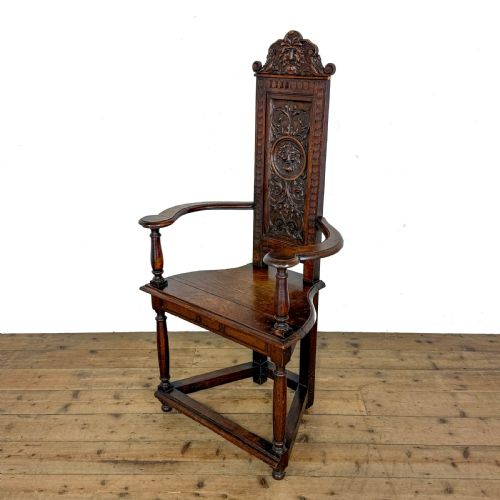
A 17th century carver chair offers substantial timber framing and arms, bringing authentic early English seating character into a modern room.
17th Century Carver Chair
A 17th century carver chair is a sturdy armchair designed for the head of a table or a fireside, typically constructed during the 1600s or in later revival periods. You will regularly encounter genuine period examples alongside later 19th-century and early 20th-century revivals created in similar historic styles.
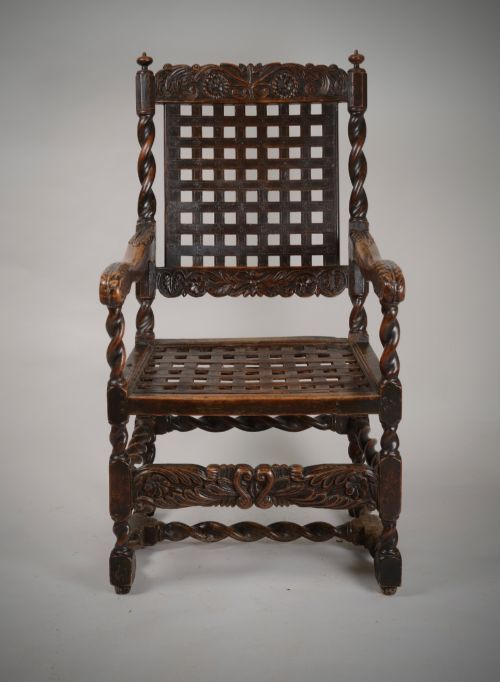
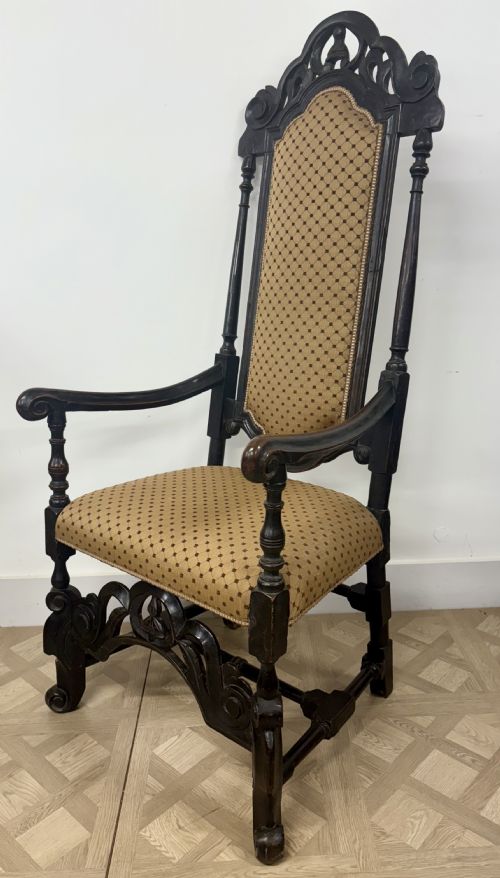
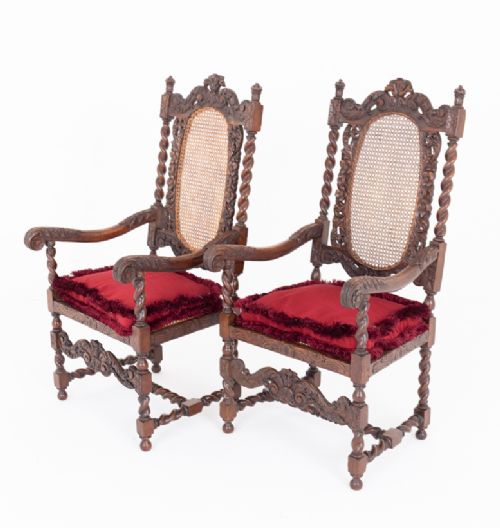
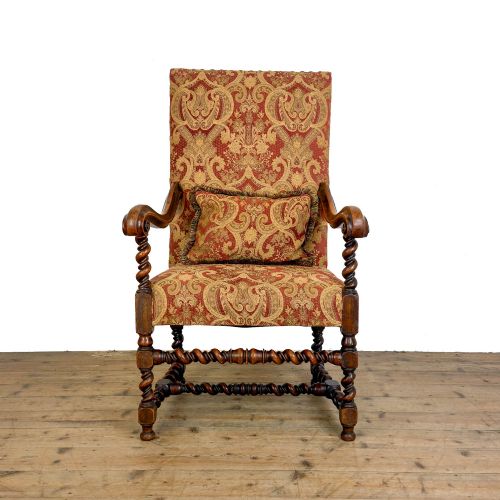
The common form on this page is an oak or walnut elbow chair, often featuring carved woodwork, high backs, and upholstered or cane seats. Makers throughout the Jacobean, Carolean, and William and Mary periods shaped these armchairs with prominent upright posts and sturdy armrests.
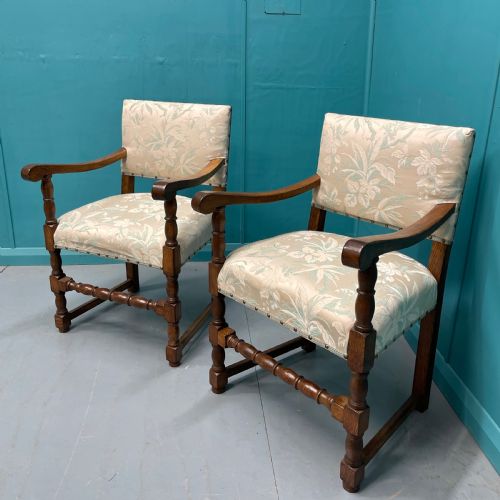
Regional variations appear across the selection, including examples from Yorkshire and the West Country, alongside pairs and larger sets intended for dining spaces. Whether period or revival, these armchairs provide a commanding silhouette defined by architectural turned legs and supportive stretchers.
What varies in quality
The integrity of the timber frame determines the foundational quality, separating pieces that retain their original structural strength from those with extensive timber replacement. Crispness in the hand-carved details indicates the skill of the original maker.
Surface patination reveals age and handling, with superior examples exhibiting a rich, warm finish developed over centuries rather than artificial distressing. Original upholstery details and period hardware further elevate the standing of an individual chair.
Listings span multiple centuries, uniting authentic 17th-century oak and walnut items with 19th-century and 1920s revival interpretations.
The 17th Century Carver Chair Glossary
- Carver chair
- An armchair, typically placed at the head of a dining table, featuring wooden armrests integrated into the frame. These chairs match or complement a set of smaller dining chairs.
- Carolean
- The period spanning the reign of Charles II, known for lavishly carved walnut furniture and rich upholstery. Pieces from this era often display dynamic scrolls and crown motifs.
- Jacobean style
- A heavy, architectural design aesthetic popular during the early 17th century and later revived in the 19th century. It emphasises rectilinear forms and deep geometric carvings in oak.
- Stretcher
- A horizontal timber connecting the legs of a chair to provide structural rigidity. These elements are frequently turned to match the decorative style of the legs.
- Cane
- Woven material made from rattan plant stems, utilised for chair backs and seats. This technique provides a lighter, resilient surface within a heavy wooden frame.
17th Century Carver Chair: Frequently Asked Questions
How do I tell a real 17th-century chair from a revival?
Original pieces from the 1600s display distinct tool marks, natural timber shrinkage, and deep surface patination accumulated over centuries of use. Examining the joinery and underside often reveals the methods and wear patterns characteristic of early craftsmanship.
Revival pieces, manufactured during the 19th and early 20th centuries, often utilise machine tooling alongside hand finishing. While built to mimic earlier styles, their timber movement and construction details align with Victorian or Edwardian manufacturing standards.
Were these chairs used at dining tables?
Historically, armchairs of this scale served as status seating at the head of a long table, reserved for the head of the household. They provided a more commanding seat compared to standard side chairs.
Today, buyers frequently utilise these armchairs as desk chairs, fireside seating, or paired at opposite ends of a dining table. Their sturdy proportions allow them to function comfortably in various domestic spaces.
What is the difference between oak and walnut models?
Oak furniture tends to be associated with the earlier 17th century and regional British workshops, offering a dense, heavy structure with deep grain patterns. It forms the backbone of traditional joined furniture.
Walnut gained prominence later in the century, particularly during the Carolean and William and Mary periods, allowing for finer carved details and a smoother, darker finish. Walnut pieces often convey a lighter, more decorative aesthetic.
How should I care for historic timber and cane?
Historic timber benefits from occasional applications of appropriate furniture wax to nourish the wood and maintain its surface sheen. Avoid placing these chairs near direct heat sources or in environments with fluctuating humidity to prevent wood splitting.
Cane seats require gentle cleaning with a damp cloth and should not be subjected to heavy concentrated weight. Maintaining consistent indoor humidity helps prevent the natural plant fibres from becoming brittle.