
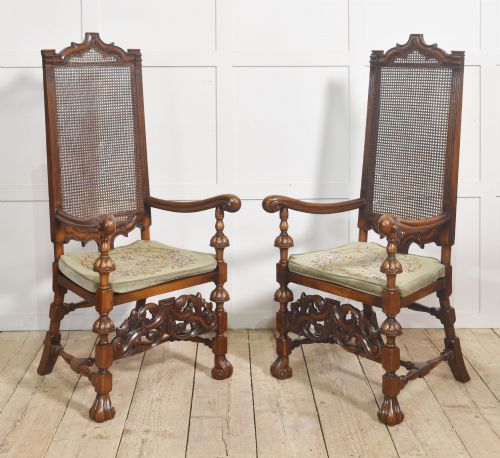


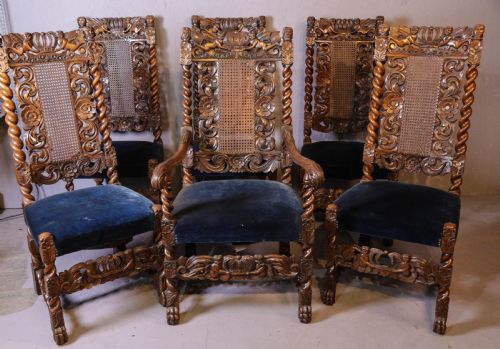

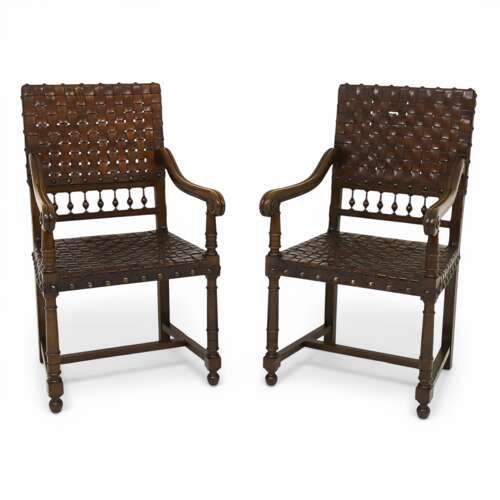


Restoration Style Chairs
Restoration style chairs bring seventeenth-century revival seating into modern rooms through heavily carved wood, high backs, and turned elements.
Restoration Style Chairs
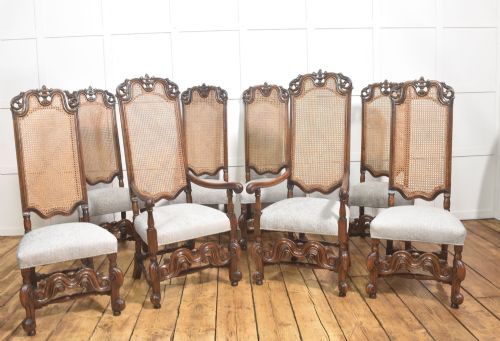
Restoration style chairs draw heavily from seventeenth-century Carolean and Charles II designs, featuring prominent upright frames built for formal reception rooms. Buyers encounter nineteenth-century revivals most frequently on this page, alongside genuine seventeenth-century examples and later twentieth-century interpretations.
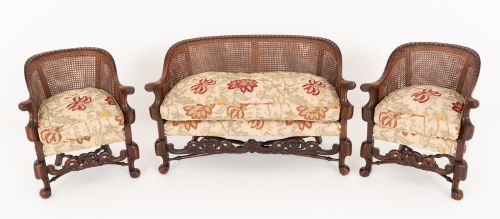
The selections span various seating forms, including dining chairs, high-back side chairs, open armchairs, wingbacks, and larger settees or benches. Walnut and oak dominate the construction, often shaped into sets or matched pairs intended for dining spaces and parlours.
How they were made
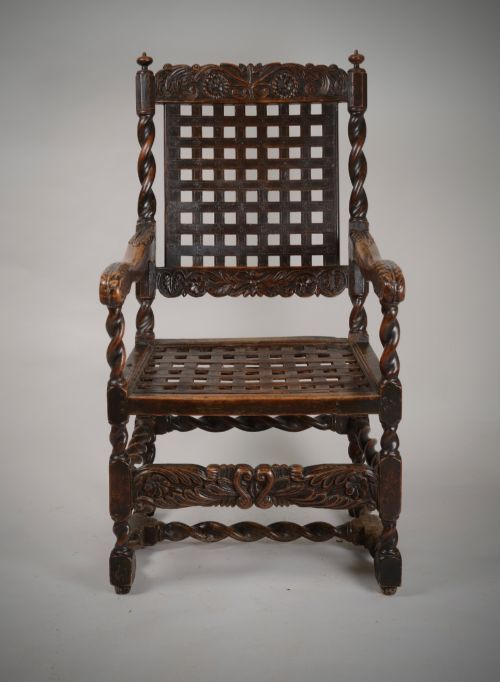
Carpenters utilised dense hardwoods like walnut and oak, shaping the frames with deep, intricate carving and scrollwork. Turning lathes produced complex legs and stretchers that support the upright posture of each seat.
Cane weaving and upholstery fabric provided the primary seating surfaces. Craftsmen integrated cane panels into high chair backs and seats, while other forms relied on velvet, leather, brass accents, and various textiles.
Some chairs require serious commitment, arriving proudly labelled as needing full restauration.
What varies in quality
The depth and crispness of the carving distinguish finer pieces from simpler productions, with skilled hand-work creating sharp relief on scrolls and crest rails. Substantial walnut frames generally indicate higher ambition than basic oak alternatives.
The integrity of the structural joinery and the condition of original cane work or period upholstery dictate the overall standard. Pieces retaining their original turned components and unified timber patination hold greater distinction.
Jacob Desmalter·Waring and Gillow·Howard and Sons
The Restoration Style Chairs Glossary
- Carolean
- Pertaining to the reign of Charles II, characterised by exuberant baroque carving, scrollwork, and rich textiles. This aesthetic forms the core inspiration for nineteenth-century revival seating.
- Cane
- Plant material woven into open mesh patterns for chair backs and seats. It offers lightweight flexibility while displaying intricate geometric designs.
- Fauteuil
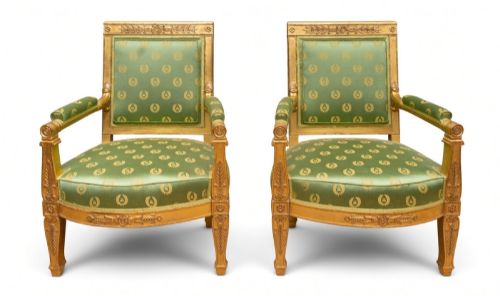
- An open-armed upholstered armchair with exposed wooden framing. French examples bring a lighter neoclassical form compared to heavier British revivals.
- Scroll arm
- A structural arm shaped into an inward or outward curve resembling a scroll. This profile appears frequently on seventeenth-century and revival armchairs.
Restoration Style Chairs: Frequently Asked Questions
How do I identify restoration style chairs?
Look for characteristic high backs, intricate carved scrollwork, and turned wooden legs that echo seventeenth-century models. Many pieces on the market are nineteenth-century revivals rather than original seventeenth-century items.
Check the timber and construction methods to determine age. Walnut and oak framing combined with cane work or heavy upholstery typically point toward this revival aesthetic.
Are these chairs comfortable for daily use?
Many high-back side chairs and dining chairs were designed for formal posture rather than lounging. Upholstered armchairs and wingbacks offer a more relaxed seating experience.
Consider adding supportive cushions if you plan to use dining sets for prolonged periods. The upright wooden framework prioritises architectural presence over deep padding.
How should I care for cane panels?
Keep cane work away from direct heat sources and moisture to prevent the natural material from drying out or snapping. Dust the woven surfaces regularly with a soft brush.
Occasional light dampening can help maintain the flexibility of older cane fibres. Avoid placing heavy weight on weakened mesh sections.
Can I mix these chairs with modern tables?
The strong architectural lines of carved oak and walnut pair effectively with clean, contemporary dining tables. Contrast helps highlight the intricate detail of the woodwork.
Sets of dining chairs work well as feature seating around a minimalist centrepiece. Single armchairs also function as standalone accent pieces in modern living spaces.