


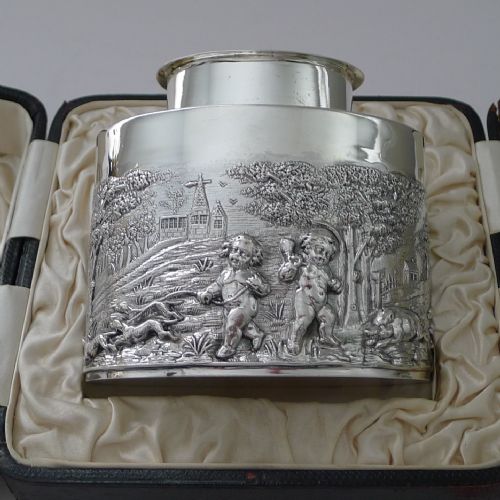


Repousse Tea Canister
These repousse tea canisters are raised metal vessels shaped to preserve dry leaf, turning a daily kitchen habit into a heavy display piece on the sideboard.
Repousse Tea Canister
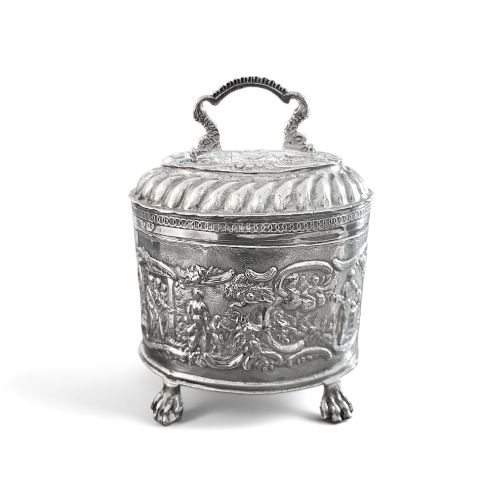
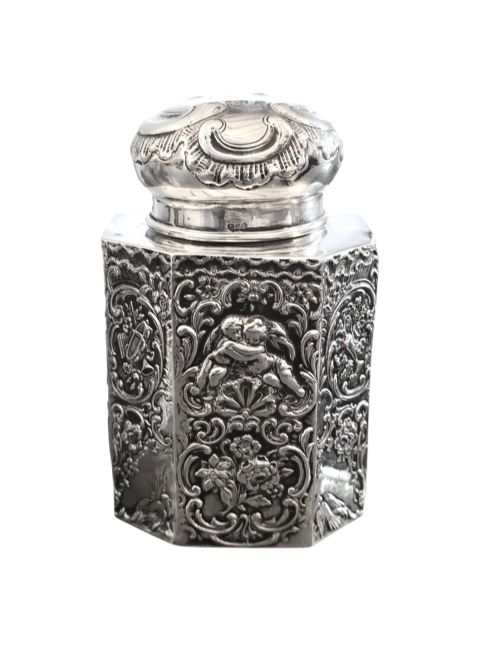
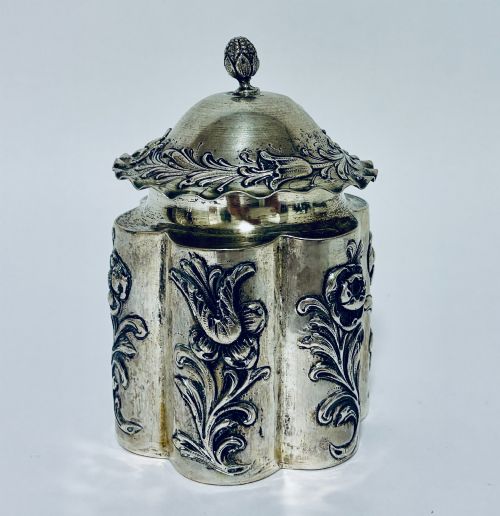
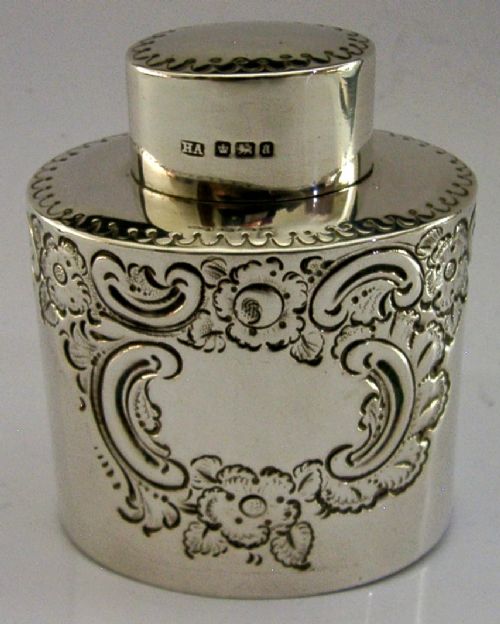
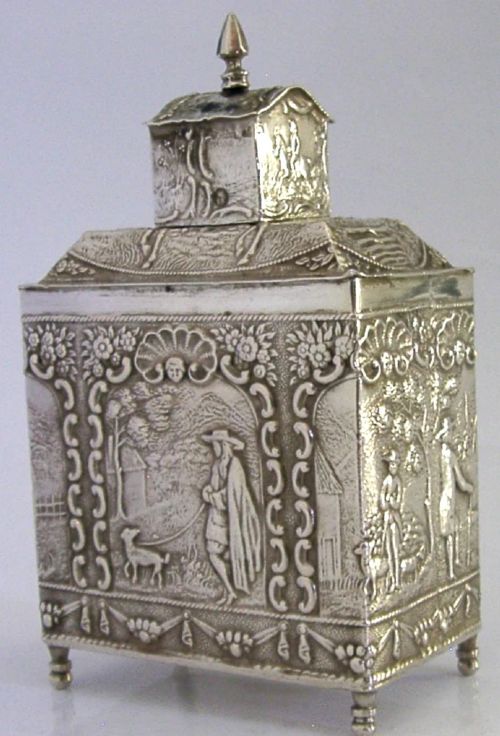
A repousse tea canister is a domestic storage box designed to keep dry leaves fresh while displaying decorative metalwork on the tea table. When you search for this phrase, you are looking at hollowware containers shaped to hold tea, most commonly encountered here in Victorian and Edwardian iterations.
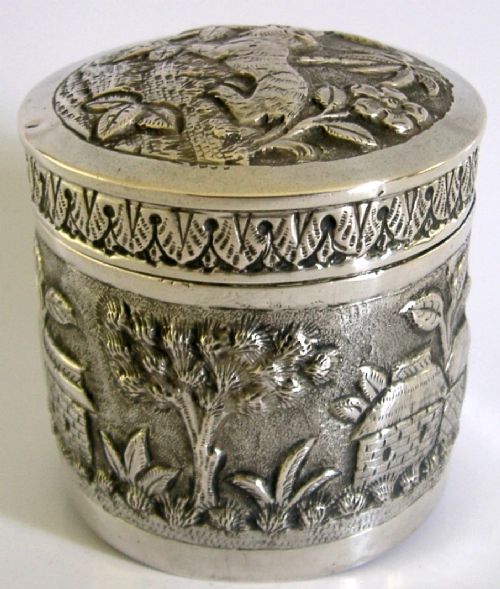
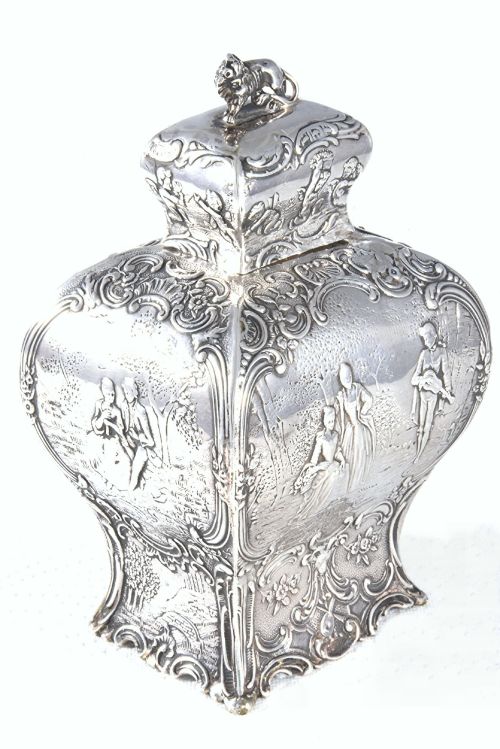
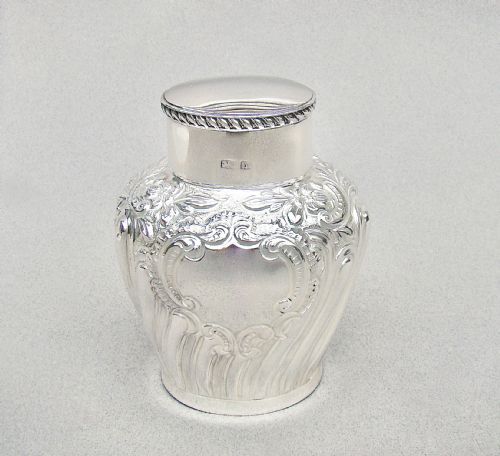
The pieces appearing on this page span several distinct forms, including hexagonal boxes, oval bodies, and bombe profiles with pull-off lids. You will find them created in styles ranging from Dutch Rococo Revival and Rococo Revival to Anglo-Indian and Georgian Revival.
Origins stretch from English provincial assay offices to continental workshops and Indian production, with sterling silver and silver plate providing the primary substance. Most examples date from the later nineteenth and early twentieth centuries, alongside earlier Georgian precursors.
Materials and construction
Makers shaped these containers primarily from sterling silver, solid silver, and silver plate, occasionally turning to copper for a darker, warmer tone. Ebony components sometimes appear in handles or trims, providing a sharp contrast to the pale metal body.
The defining decorative technique involves hammering and punching the metal sheet from the reverse side to push out rich, high-relief floral, scroll, or figural motifs. Artisans then refined the surface details from the front using chasing tools to sharpen lines and textures.
Repousse Tea Canister Retail Price Guide 2026
Typical asking prices for repousse tea canister among the pieces listed under this phrase on Sellingantiques today, from the lower quarter to the upper quarter. They describe what is for sale here now, not the wider market.
Listings on this page unite sterling silver, solid silver, silver plate, and copper across Victorian, Edwardian, and Georgian periods.
Measures of quality
Quality rests on the crispness and depth of the hammered relief work, where sharply defined chasing separates superior ornamentation from soft, shallow stamping. The weight of the metal relative to the size of the vessel also dictates the structural integrity of the container.
Assay marks and maker stamps provide clear evidence of origin and standard, adding historical weight to the piece. Furthermore, the precision with which the pull-off lid fits the collar determines the original sealing ability of the canister.
Berthold Muller·Thomas Hayes·William Hutton and Sons Ltd
The Repousse Tea Canister Glossary
- Repousse
- A metalworking technique where the artisan hammers and pushes the design from the reverse side to create a raised pattern in relief. This method gives tea canisters their characteristic three-dimensional surface texture.
- Sterling silver
- An alloy consisting of silver and other metals, usually copper, standardised for purity in British manufacturing. It provides the durable, lustrous foundation for many Victorian and Edwardian caddies.
- Bombe
- A swollen, convex furniture or vessel shape curving outward toward the base. In tea canisters, this profile adds visual weight and sculptural presence.
- Old Sheffield plate
- An early fused plating technique involving a thin sheet of silver applied to a copper core. This material appears on select Georgian-style pieces on the page.
- Assay mark
- A stamp or series of stamps applied by an official office to guarantee the fineness of precious metal. These marks often record the town, maker, and year of testing.
Repousse Tea Canister: Frequently Asked Questions
What were tea canisters originally used for?
These vessels were utilised to store precious loose tea leaves in domestic parlours during periods when tea was an expensive imported commodity. Their tight-fitting lids helped protect the dry leaves from moisture and loss of aroma.
Over time, the tea canister evolved from a purely functional kitchen container into an ornamental table piece displayed prominently during social gatherings.
How do I date a silver tea canister?
Dating relies primarily upon the hallmarks stamped into the metal by official assay offices, which indicate specific towns and active years for the maker. Stylistic clues such as Rococo revival scrolls or Edwardian proportions also help place the piece in its era.
Comparing the lid construction and overall silhouette against documented pieces from the same decade confirms the likely period of manufacture.
How should I clean my antique silver canister?
Maintenance requires gentle dusting with a soft cloth to remove everyday particles without abrading the raised relief work. Avoid harsh chemical dips that strip away the dark oxidation highlighting the chased details.
Professional silver polish should be used sparingly and only with non-abrasive cloths to preserve the integrity of the antique surface.
Can I still store tea inside these boxes?
While these canisters were built to hold tea leaves, modern storage requires caution regarding the condition of the interior lining and lid seal. Many collectors prefer to exhibit them empty rather than risk tarnishing the inside with organic residues.
If utilised for dry goods, ensure the interior is clean and dry to prevent any chemical reaction with the silver or plated surface.