



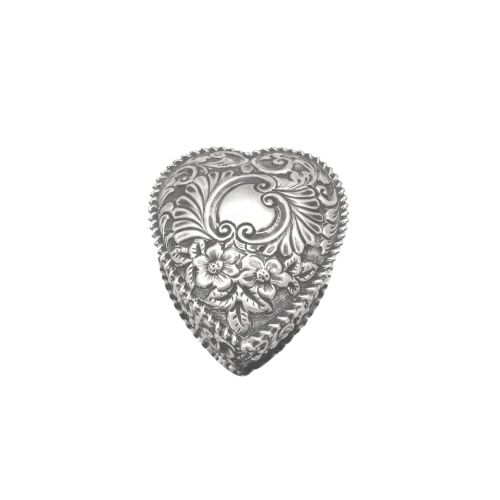
Repousse Silver Jewellery Box
A repousse silver jewellery box brings hammered relief work to the dressing table, storing small treasures in style.
Repousse Silver Jewellery Box
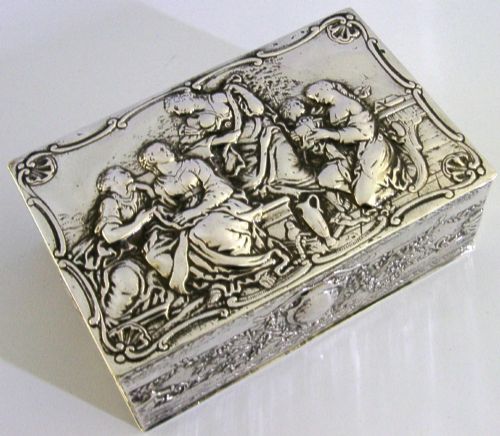
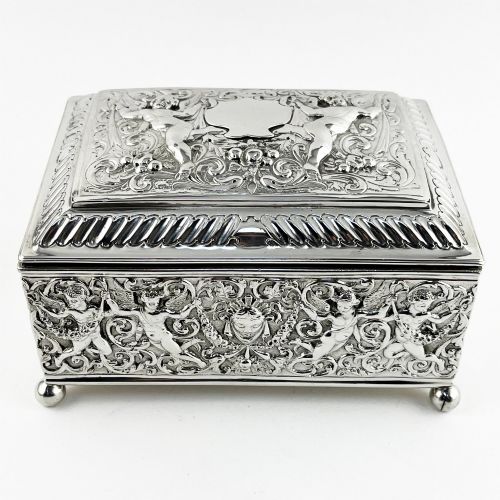
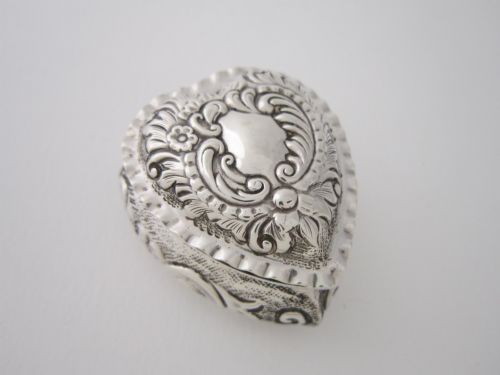
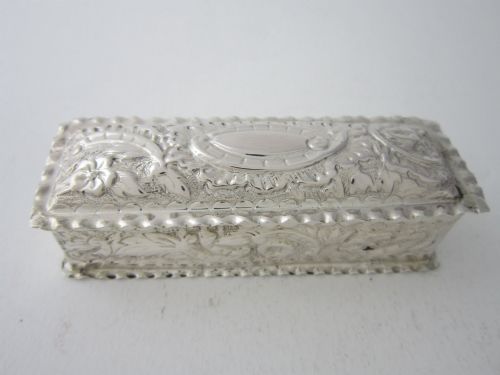
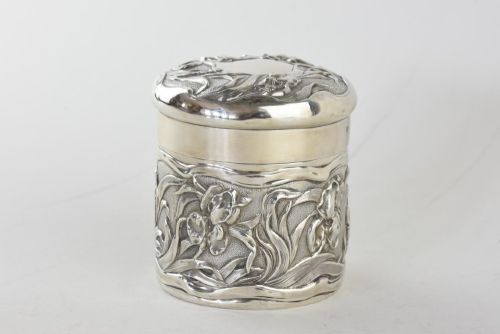
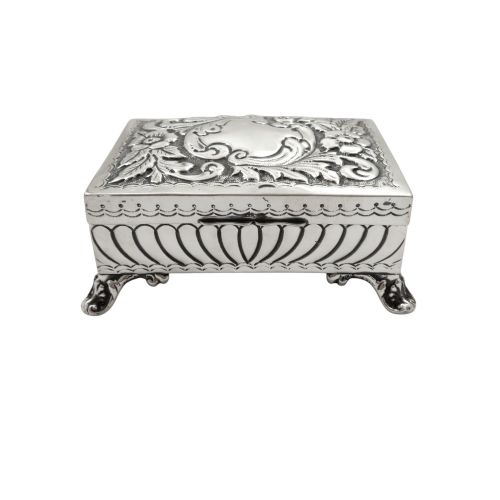
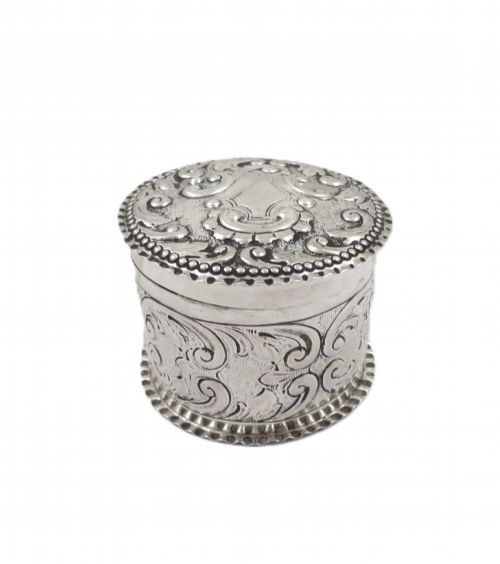
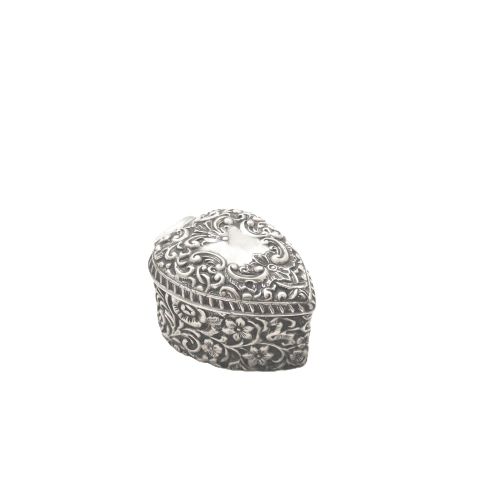
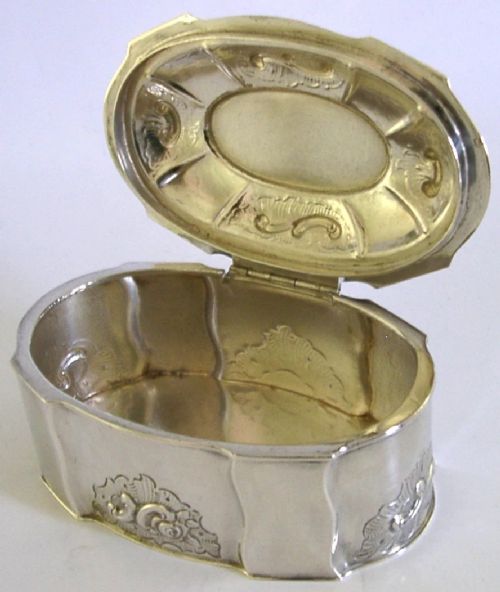
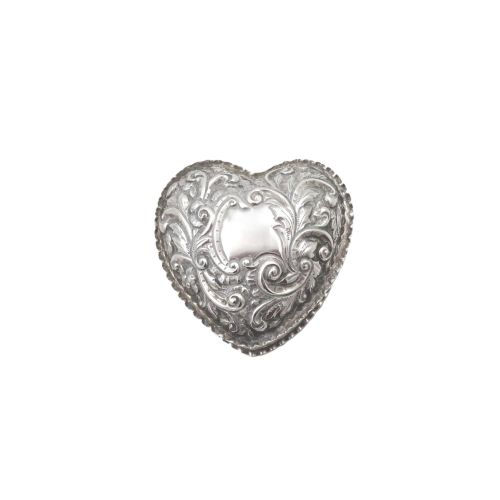
A repousse silver jewellery box is a small lidded container designed for trinkets, rings, and keepsakes, shaped from sterling silver or solid silver and decorated with hammered relief designs. These pieces often appear as compact dressing table boxes, heart-shaped trinket dishes, or larger rectangular jewellery caskets.
The pieces on this page span the Victorian and Edwardian eras, alongside late nineteenth century export pieces and mid-century Scandinavian designs. Heart shapes, oval forms, and heavy dressing table boxes dominate the selection, frequently lined with gilt interiors or velvet pads.
How they were made
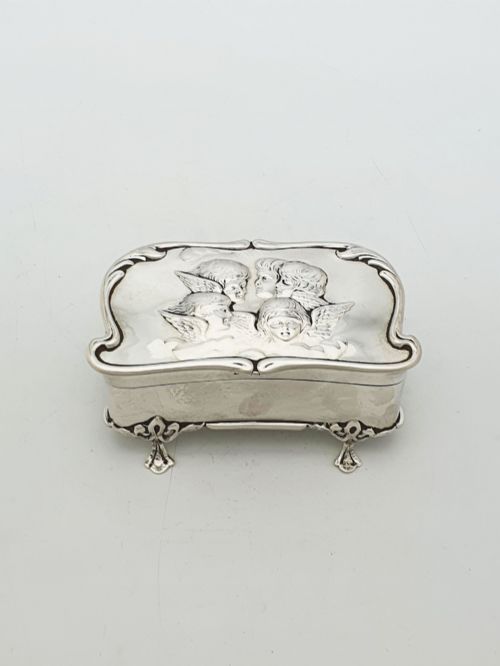
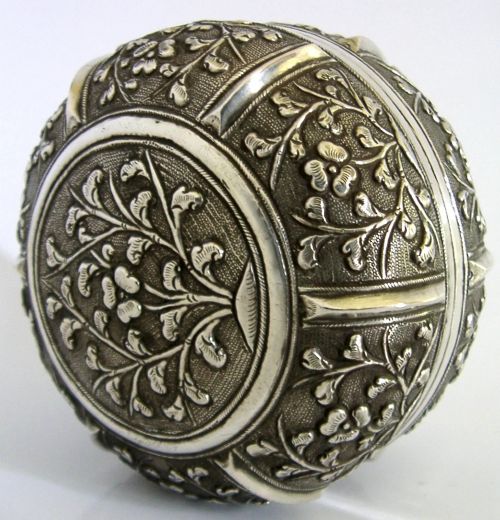
Silversmiths formed these boxes from sterling silver sheets, solid silver, or occasionally silver plate, beating the metal from the reverse side to create raised repousse scroll and flower decoration. Artisans then refined the details from the front using chasing tools, adding depth to motifs such as cherubs, dragons, and floral scrolls.
Many examples incorporate glass bodies with silver tops, or feature interior gilding to protect the metal from tarnishing. Makers often mounted these boxes on small feet, fitting the hinged lids with precise bezels to ensure a tight closure.
Listings feature Victorian and Edwardian styles alongside continental export pieces from Germany, Denmark, and China.
What varies in quality
Quality rests upon the crispness of the hammered relief work and the thickness of the silver itself. Pieces by notable silversmiths display deep, sharply defined repousse motifs rather than shallow, machine-pressed imitations.
The weight of the box and the integrity of the hinges also separate standard items from superior pieces. Substantial gauge silver, intact gilt interiors, and well-fitted hallmarks indicate higher manufacturing standards.
Goldsmiths and Silversmiths Company·A & J Zimmerman Ltd·William Comyns·William Neale and Sons·Wang Hing and Company·Walker and Hall
The Repousse Silver Jewellery Box Glossary
- Repousse
- A metalworking technique where the artisan hammers a design from the reverse side to create raised relief on the front. This method gives antique silver boxes their tactile floral and scroll patterns.
- Sterling silver
- An alloy consisting of pure silver and other metals, typically copper, standardly marked to guarantee its composition. Most British pieces on this page adhere to this standard.
- Gilt interior
- A thin layer of gold applied to the inside of a silver box. This treatment protects the silver from tarnishing when in contact with cosmetics or jewellery.
- Jewellery casket
- A larger, often footed box designed to hold precious ornaments rather than single rings. These pieces frequently feature hinged lids and fitted compartments.
- Hallmark
- An official stamp applied to precious metals indicating the maker, assay office, and year of testing. These marks help date Victorian and Edwardian boxes accurately.
Repousse Silver Jewellery Box: Frequently Asked Questions
How do I clean my silver box?
Use a soft microfibre cloth and a gentle, non-abrasive silver polish to remove tarnish from the raised repousse areas. Avoid harsh chemical dips that can strip away the dark oxidation accentuating the hammered design.
Take care around hinges and maker marks to prevent wearing down the stamped details. Store the box in a dry environment to slow down future tarnishing.
Were these boxes used for jewellery?
Victorian and Edwardian owners used these containers for rings, brooches, and delicate necklaces on the dressing table. Many included fitted velvet pads or silk linings to protect precious items from scratching.
Smaller heart-shaped variants served primarily for rings and single trinkets. Larger caskets accommodated a wider assortment of daily accessories.
How do I date an antique silver box?
Examine the hallmarks stamped on the lid, base, or bezel for specific date letters, assay office symbols, and maker marks. British pieces usually carry clear town marks and standard walking lion symbols.
Stylistic clues like Art Nouveau curves or heavy Victorian rococo revival scrolls also help narrow down the decade of production. Comparative makers' marks confirm the active working periods of the silversmiths.
What is the difference between a trinket box and a casket?
Trinket boxes are generally smaller vessels meant for holding single rings, pins, or small daily accessories. They often feature shallow profiles and simple hinged lids.
Caskets describe larger, heavier receptacles with deeper storage capacities and more ornate structural framing. These substantial pieces were built to house varied collections of valuable ornaments.