



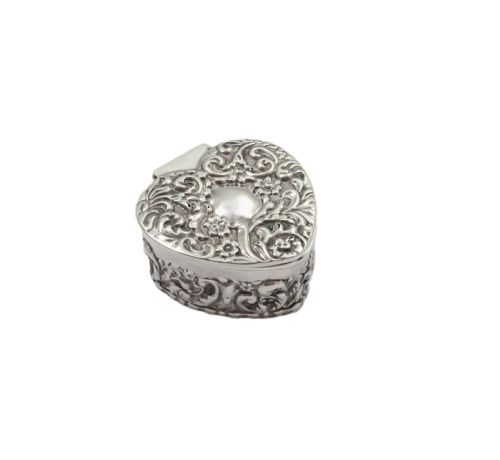
Vintage Silver Ring Box
These vintage silver ring box pieces span Victorian, Edwardian, and mid-century periods, offering fitted interiors of velvet and silk for small treasures.
Vintage Silver Ring Box
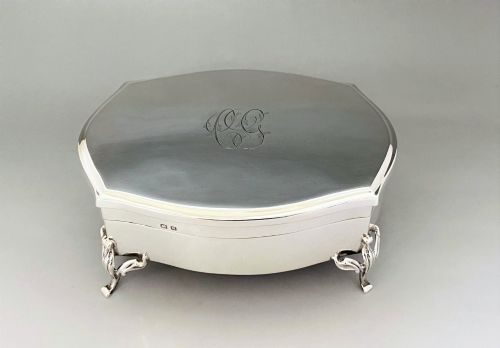
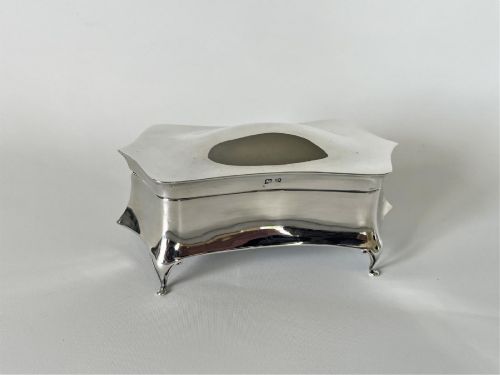
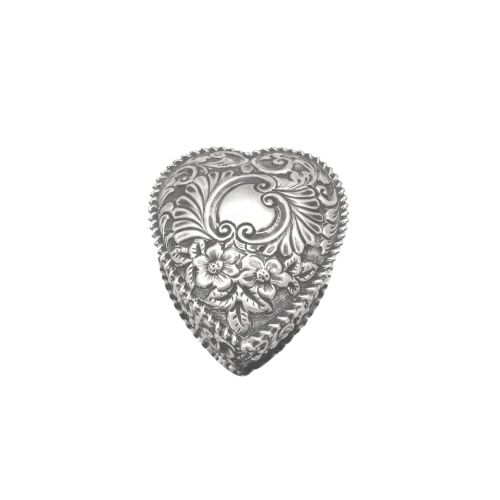
A vintage silver ring box brings together small metal containers and cased sets designed for personal adornment and dining. Buyers seeking a vintage silver ring box encounter forms including heart-shaped trinket boxes, hinged jewellery caskets, and fitted presentation boxes. The selection draws primarily from Edwardian, Victorian, and George V periods, alongside items from the 1930s and 1950s.
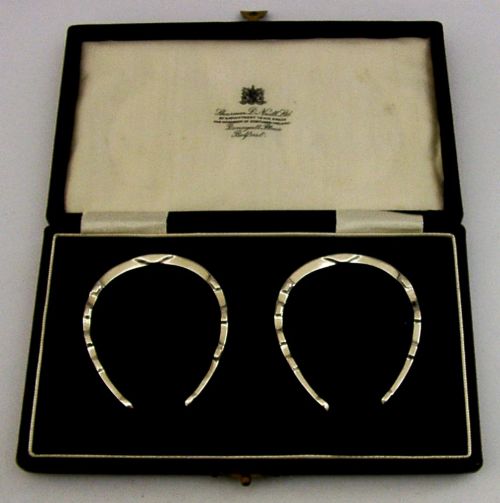
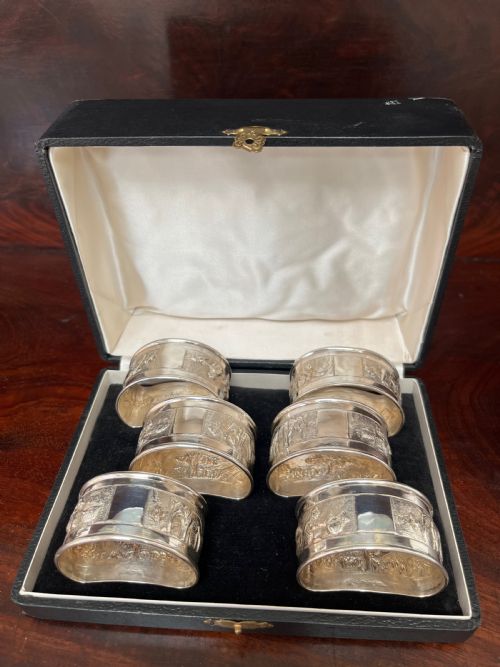
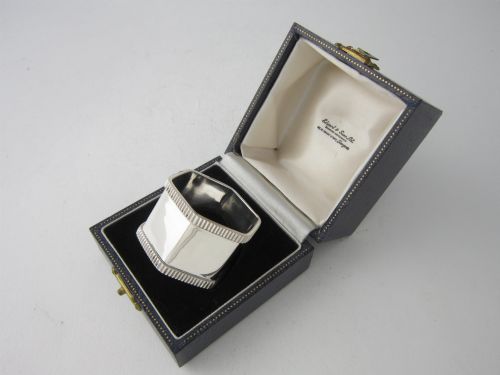
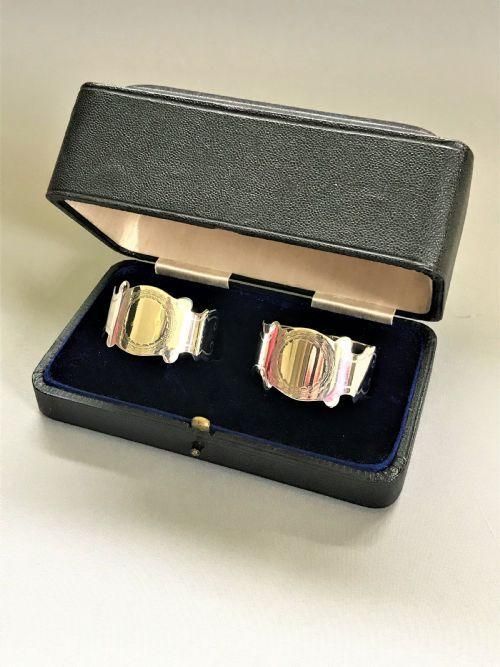
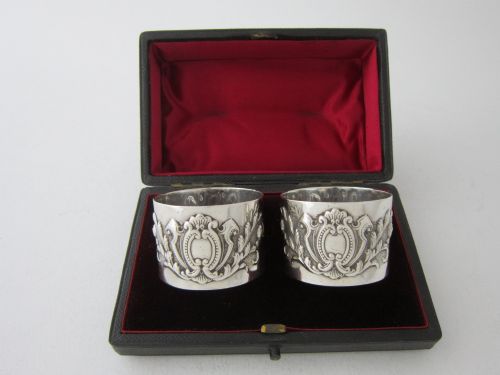
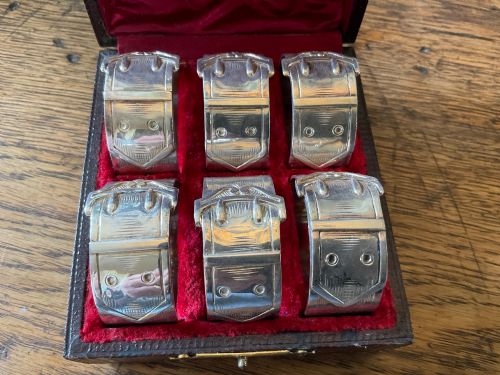
The inventory extends across various silver items, reflecting how silversmiths shaped metal for dressing tables and dining rooms. Alongside dedicated jewellery boxes and caskets, the material evidence includes cased napkin rings, christening sets, and novelty biscuit barrels. Many survive within their original fitted presentation cases lined with silk or velvet.
Makers and silversmiths active in Birmingham, London, and Chester produced these pieces using sterling silver and silver plate. The designs incorporate styles ranging from Art Nouveau curves and Art Deco geometric lines to late Victorian ornamentation. Each object demonstrates the utilitarian and decorative metalwork typical of early twentieth-century domestic life.
How they were made
Silversmiths constructed these boxes and hollowware using solid sterling silver or silver plate over a base metal. Workshops utilised pressing, stamping, and hand-chasing techniques to form hinged lids, curved bodies, and decorative borders. Hallmarks stamped directly into the metal record the assay office, city, and year of manufacture.
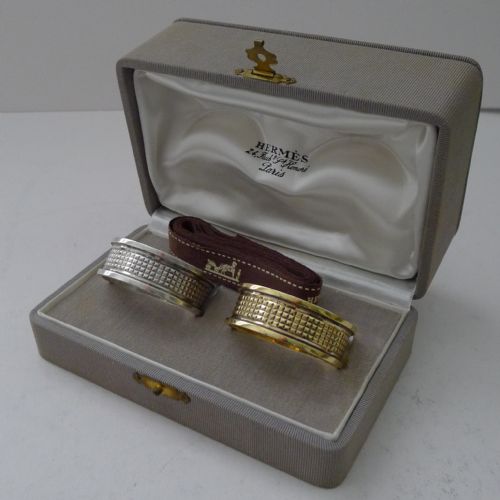
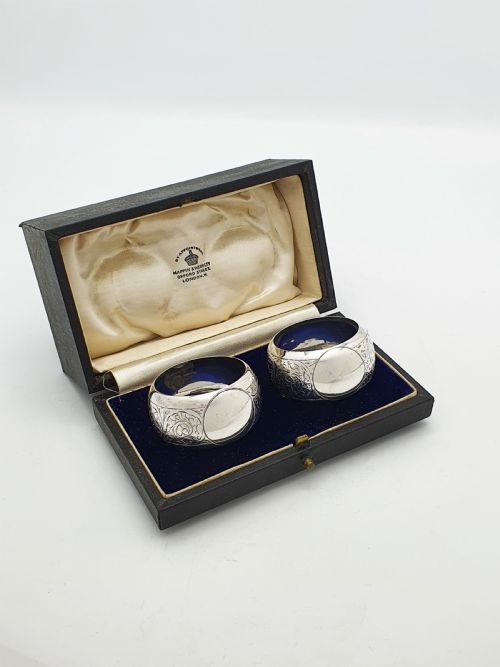
Interiors rely on tactile textiles to protect contents, utilising fitted pads of silk, velvet, satin, and leatherette. These linings are shaped specifically to hold rings, jewellery, or sets of tableware securely within their presentation cases. Exterior surfaces frequently combine the polished metal with glass, tortoiseshell, or engine-turned patterns.
One curious offering includes a novelty biscuit box shaped precisely like a heavy metal weight.
What varies in quality
Quality rests upon the weight of the silver and the crispness of the chased or stamped decorative detail. Pieces produced by established makers demonstrate superior articulation in hinges, clasps, and supportive feet. The presence of clear, legible hallmarks adds discernible merit to an item.
The preservation of the original fitted interior significantly influences the overall character of a piece. Boxes retaining intact silk, velvet, or leatherette linings maintain their original context. The integrity of internal pads and silk-lined lids distinguishes well-kept examples from those with replacement interiors.
Hermes Paris·C.T. Burrows & Sons·Tiffany & Co·Mappin & Webb·Cartier·William Neale & Sons·Henry Williamson Ltd·Deakin & Francis
The Vintage Silver Ring Box Glossary
- Sterling silver
- An alloy containing 92.5 percent silver and 7.5 percent other metals, typically copper. This standard composition was utilised for the majority of British domestic silver items.
- Hallmark
- A series of official marks stamped on precious metals indicating the standard of purity, the assay office, the maker, and the year of production. These stamps provide verifiable provenance.
- Silver plate
- A layer of silver applied to a base metal core, such as copper or nickel brass. This technique offered an accessible alternative to solid silver items.
- Engine-turned
- A mechanical decoration technique producing intricate geometric patterns of fine engraved lines on metal surfaces. It appeared frequently on lids and cases.
- Cased set
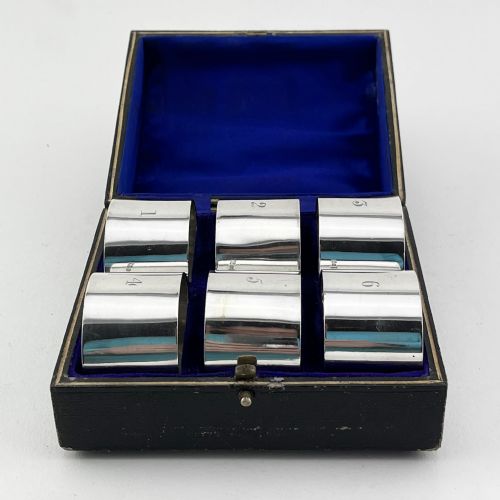
- A collection of matching items, such as napkin rings, housed in a custom-fitted box designed for storage or gifting. These sets often retain silk or velvet partitions.
Vintage Silver Ring Box: Frequently Asked Questions
What periods do these silver boxes come from?
The pieces originate primarily from the Victorian, Edwardian, and George V eras, spanning the late nineteenth century through the 1930s. Additional items represent mid-century production up to the 1950s.
Each era brought distinct design sensibilities, moving from ornate Victorian styles to the streamlined geometry of Art Deco.
How do I identify the maker?
Makers and silversmiths marked their work with registered sponsor's marks, usually consisting of initials stamped alongside the town assay mark and date letter.
These tiny punches can be examined with a loupe to trace the workshop and year of creation.
Are original boxes included?
Many pieces survive with their original custom-fitted presentation cases lined with silk, velvet, or satin. These fitted boxes were designed specifically to protect the silver items during storage.
The presence of the original case adds historical context to the piece.
How should I clean silver boxes?
Silver surfaces benefit from gentle cleaning using a specialised microfibre cloth and a mild, non-abrasive silver polish formulated to remove tarnish safely.
Care must be taken to avoid applying liquid polish or water directly onto antique fabric linings inside the boxes.