


Sterling Silver Jewellery Casket
A sterling silver jewellery casket sits on the dressing table, holding rings and trinkets while reflecting the light of an earlier century.
Sterling Silver Jewellery Casket
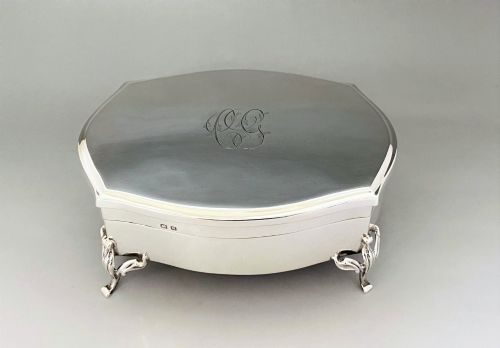
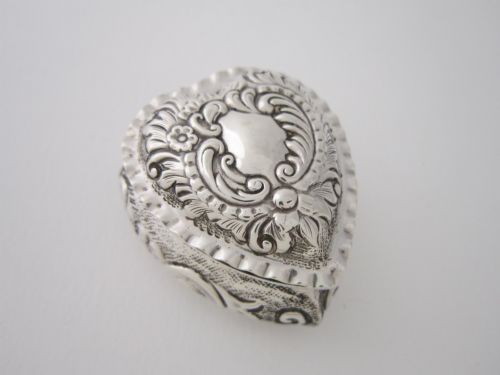
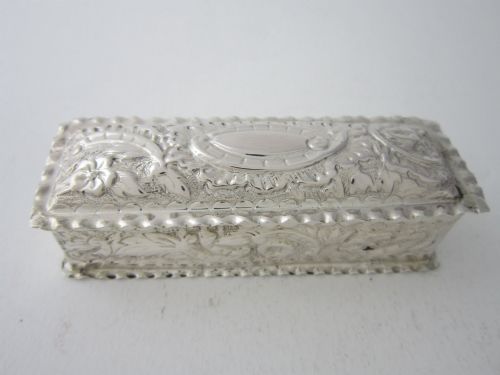
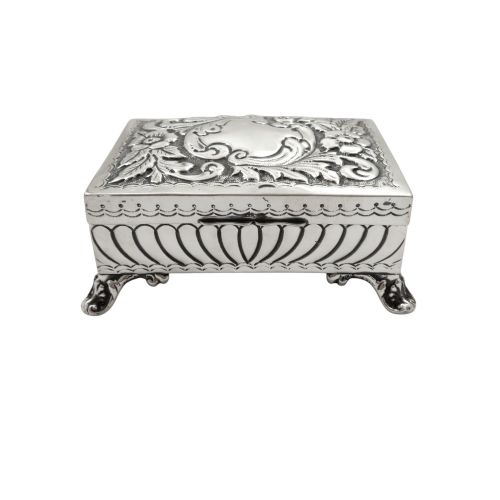
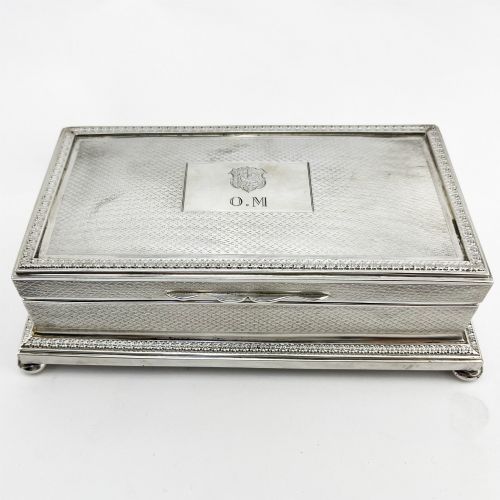
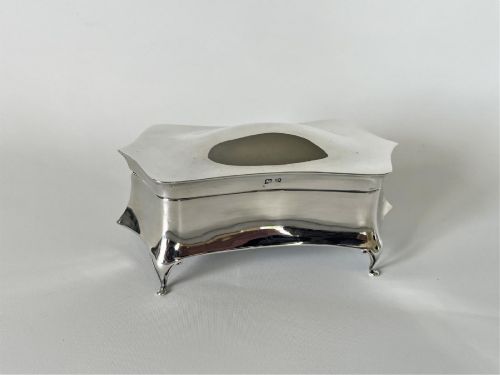
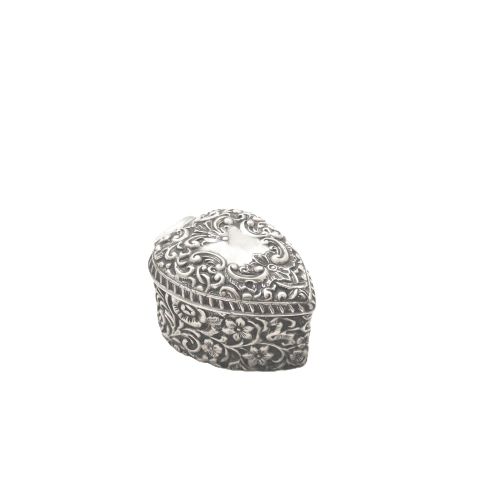
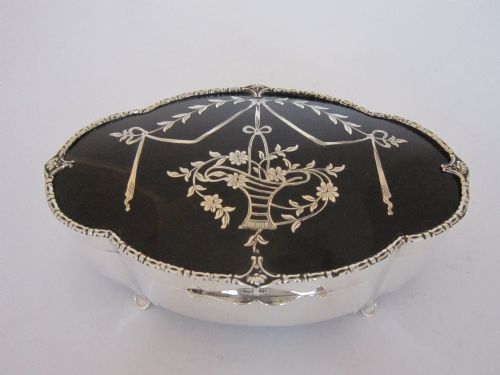
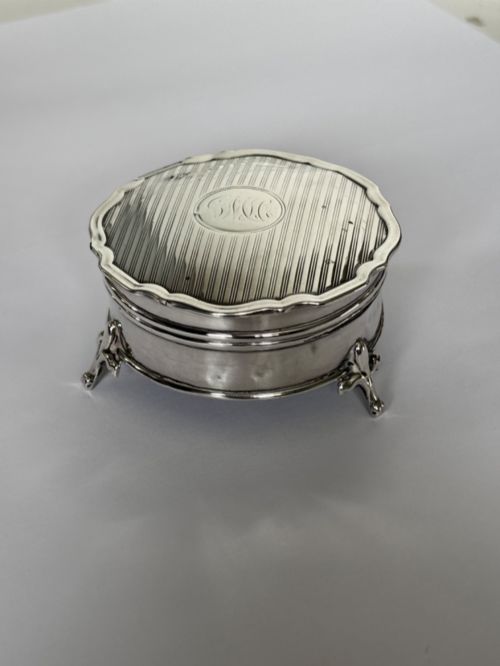
A sterling silver jewellery casket is a small, hinged box designed for dressing tables to hold rings, brooches and keepsakes. These pieces appear across Victorian, Edwardian and George V periods, taking forms from simple rectangular trunks to heart and coffin shapes.
The version most commonly met on this page is the Edwardian or late Victorian trinket box in solid sterling silver, often lined with velvet or fitted with a gilt interior. Makers span English assay offices in Birmingham, Chester and London, alongside mid-century Scandinavian output.
How They Were Made
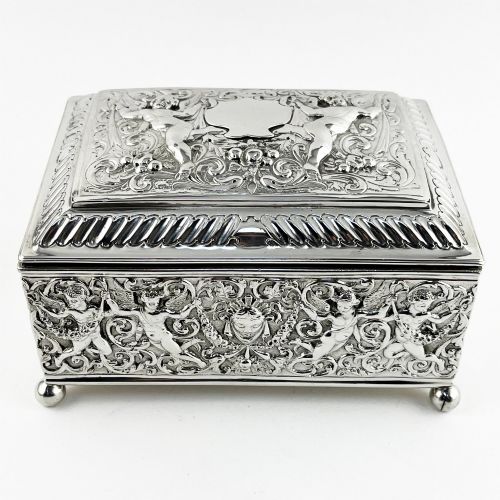
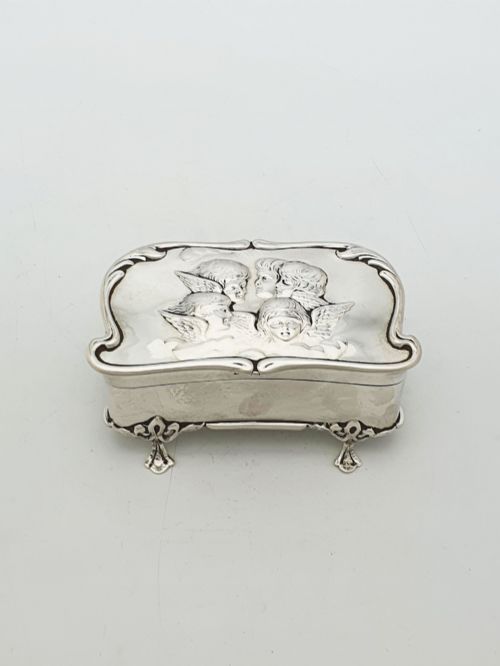
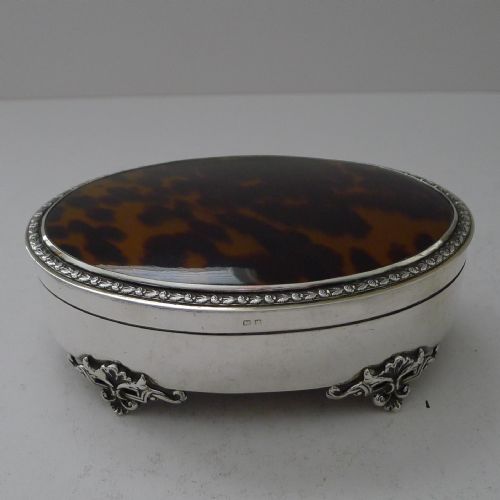
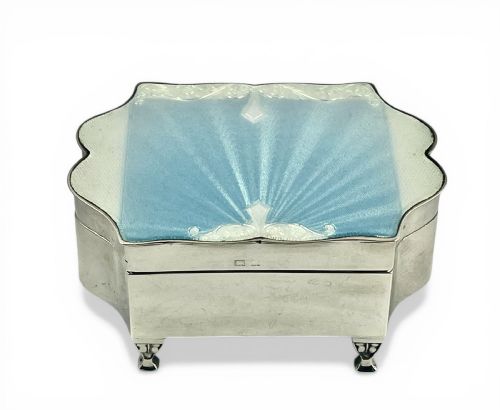
Silversmiths constructed these caskets from sterling silver sheet, raising or pressing the metal and joining seams before applying chased, embossed or relief decoration such as cherubs or Art Nouveau curves. Lids frequently incorporate inset panels of tortoiseshell or blue enamel.
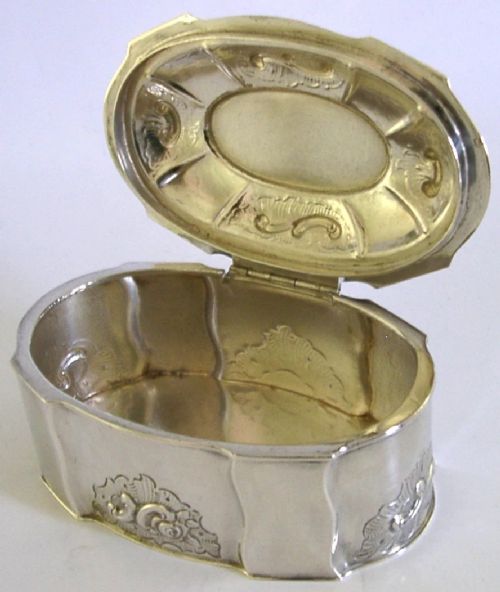
Interiors rely on wood or card carcases lined with plush velvet, silk or satin, whilst metal interiors often receive a wash of gold gilt to protect the silver from tarnishing where cosmetics rested.
Cherubs peer out from embossed silver lids, watching over decades of misplaced earrings and forgotten love letters.
What Varies in Quality
Subtlety and weight dictate the grade of a piece, separating substantial silver gauge from thin metal that yields to thumb pressure. The crispness of the repoussé relief and the depth of the chasing show the hand of a skilled maker.
Fittings tell their own story, from tight-closing hinges that hold a lid open to intact original silk linings and well-preserved tortoiseshell panels free of major cracks.
A & J Zimmerman Ltd·William Comyns & Sons·H. Matthews·William Neale & Sons·Deakin & Francis
The Sterling Silver Jewellery Casket Glossary
- Sterling silver
- An alloy containing 92.5 percent silver by mass, with the remainder usually copper. This standard composition guarantees durability for daily dressing table use.
- Gilt interior
- A thin layer of gold applied to the inside of a silver box. This treatment prevents the silver from reacting with cosmetics and powders.
- Tortoiseshell
- The mottled brown shell of certain turtle species used historically to veneer box lids. Craftsmen secured it over a pale foil to enhance the amber depth.
- Repoussé
- A metalworking technique where the artisan hammers the silver from the reverse side to form a raised design on the front. Relief work often depicts cherubs, scrolls or floral motifs.
- Hallmark
- A series of official marks stamped on precious metals indicating the maker, assay office, standard of purity and year of assay.
Sterling Silver Jewellery Casket: Frequently Asked Questions
How are these boxes cleaned?
Gentle wiping with a soft cloth keeps the silver bright without wearing away thin highlights or delicate chasing.
Harsh dips and abrasive creams should stay away from any tortoiseshell, enamel or fabric lining present inside.
What is inside the boxes?
Most interiors feature original velvet pads, silk quilting or partitioned sections designed specifically to hold rings and pins.
Some examples retain bare gilt metal linings intended for loose trinkets and small keepsakes.
How do I date a piece?
Assay office hallmarks stamped on the silver provide the exact year letter and the town where the box was tested.
Style clues such as Art Nouveau whiplash lines or Victorian Rococo scrolls also point toward a specific decade.
Can I travel with them?
These dressing table boxes serve as static display pieces for the home rather than secure travel containers for luggage.
Their hinges and catches work best when resting undisturbed on a flat surface.